Red Sea Disruptions Drive Up Costs for India's Coffee Exporters
Indian robusta and Monsooned Malabar face longer voyages and higher freight costs as Red Sea disruptions push shipping lines back to the Cape of Good Hope route.

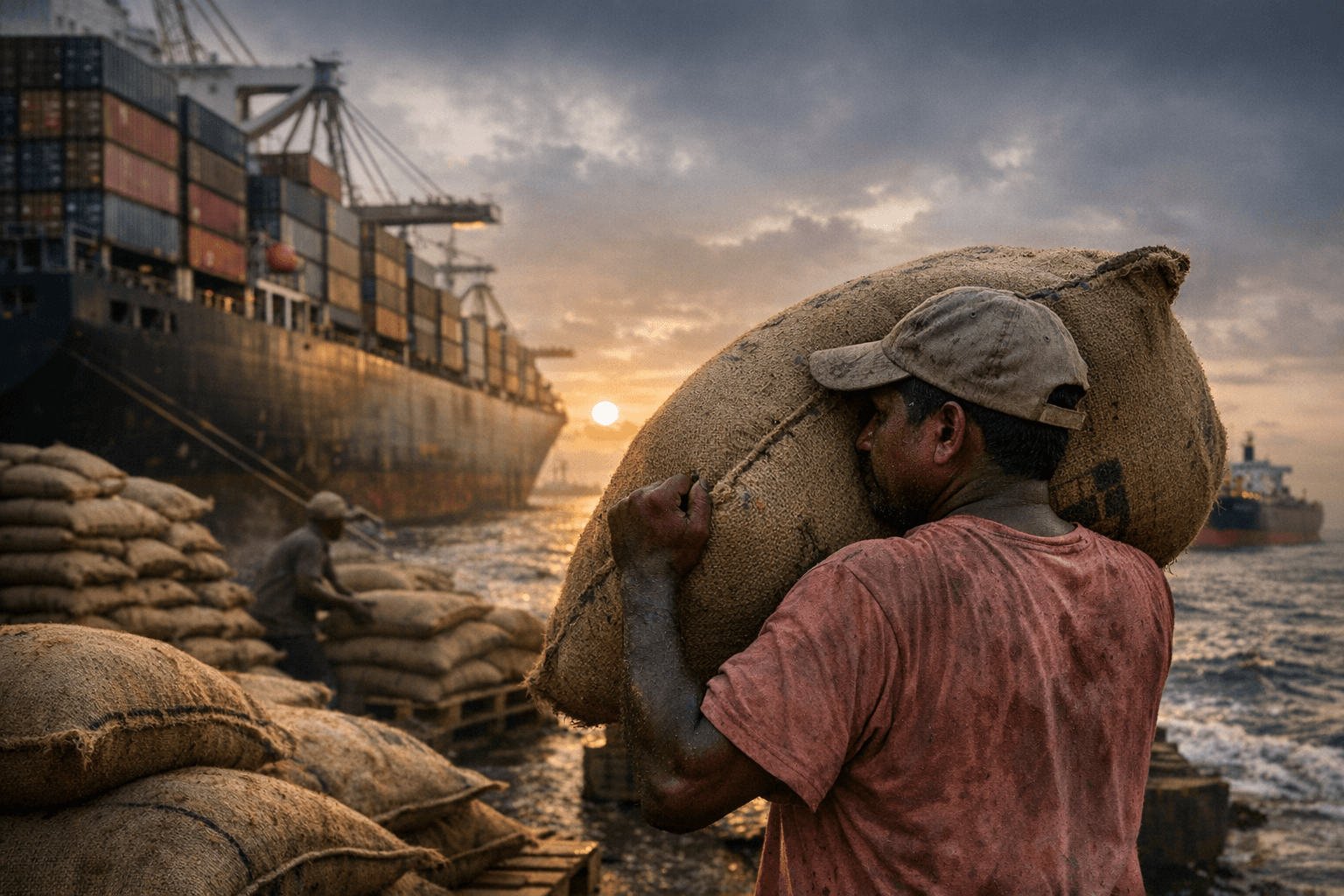
There's an irony in the current Red Sea shipping crisis that any serious home brewer should appreciate: Monsooned Malabar, the coffee whose entire identity was born from a slow, humid voyage around Africa's Cape of Good Hope, is now being shipped that same punishing route again. Only this time, it's not creating flavor. It's creating costs.
Since late 2023, Houthi attacks on commercial vessels in the Red Sea have forced major shipping lines including Maersk, MSC, CMA CGM, and Hapag-Lloyd to reroute around the Cape of Good Hope. For Indian coffee exporters, that detour is brutal: the bypass adds 10 to 15 days to voyages and inflates fuel consumption by up to 40 percent according to freight analytics from FreightAmigo. Asia-Europe container freight rates, the lanes that carry the bulk of Indian coffee to Italy, Germany, and Belgium, surged fivefold during 2024, with peak season rates hitting between $8,000 and $10,000 per forty-foot container. By early 2025, traffic through the Suez Canal had collapsed to roughly 10 percent of its March 2023 levels.
The exposure for Indian coffee specifically is significant. Robusta accounts for nearly three-quarters of India's 360,000 metric ton annual harvest, and European-bound Indian robusta travels almost entirely through the Red Sea corridor. This is the robusta that ends up in Italian espresso blends and supermarket cans across the EU, India's largest destination market where Italy alone takes more than 20 percent of exports. Shipping lines have applied emergency surcharges on Indian-origin cargo to the US ranging from $200 to $1,600 per 20-foot container, and transit delays of two to three weeks are now routine.
For roasters and green buyers on the spot market, the squeeze is real. Smaller roasters who keep lean inventory are the most exposed, facing the choice of absorbing freight surcharges or repricing their Indian-origin offerings. Espresso blends that rely on Indian robusta for body and crema stability are the most likely candidates for either quiet reformulation or visible price adjustments.
If you have a Monsooned Malabar you've been curious about, now is the time to buy rather than wait. Stocks that cleared customs before freight rates peaked represent better value than fresh shipments priced into the new cost structure. On the retail and cafe side, expect Indian-origin single origins to edge up in price, and watch Italian-style blends for any shift away from Indian robusta toward Vietnamese or Indonesian alternatives as roasters look to manage landed costs.
India's coffee exports generate around $1.3 billion annually, and the country has been steadily building its reputation for traceable, origin-driven coffees beyond commodity robusta. The Red Sea disruption doesn't reverse that trajectory, but it does make the current window for locking in familiar Indian coffees at stable prices shorter than many brewers may realize.
This article was produced by Prism’s automated news system from verified source data, official records, and press releases, then run through automated quality and moderation checks before publishing. The system is built and supervised by the people who set the standards it runs under. Read our full AI policy.
Did this article answer your question?