Remote Work and Cost Cuts Drive Americans Back to Coffee at Home
Coffee moved back to the kitchen counter as remote work and higher prices made café runs less routine, even as offices and drive-throughs kept the out-of-home market alive.
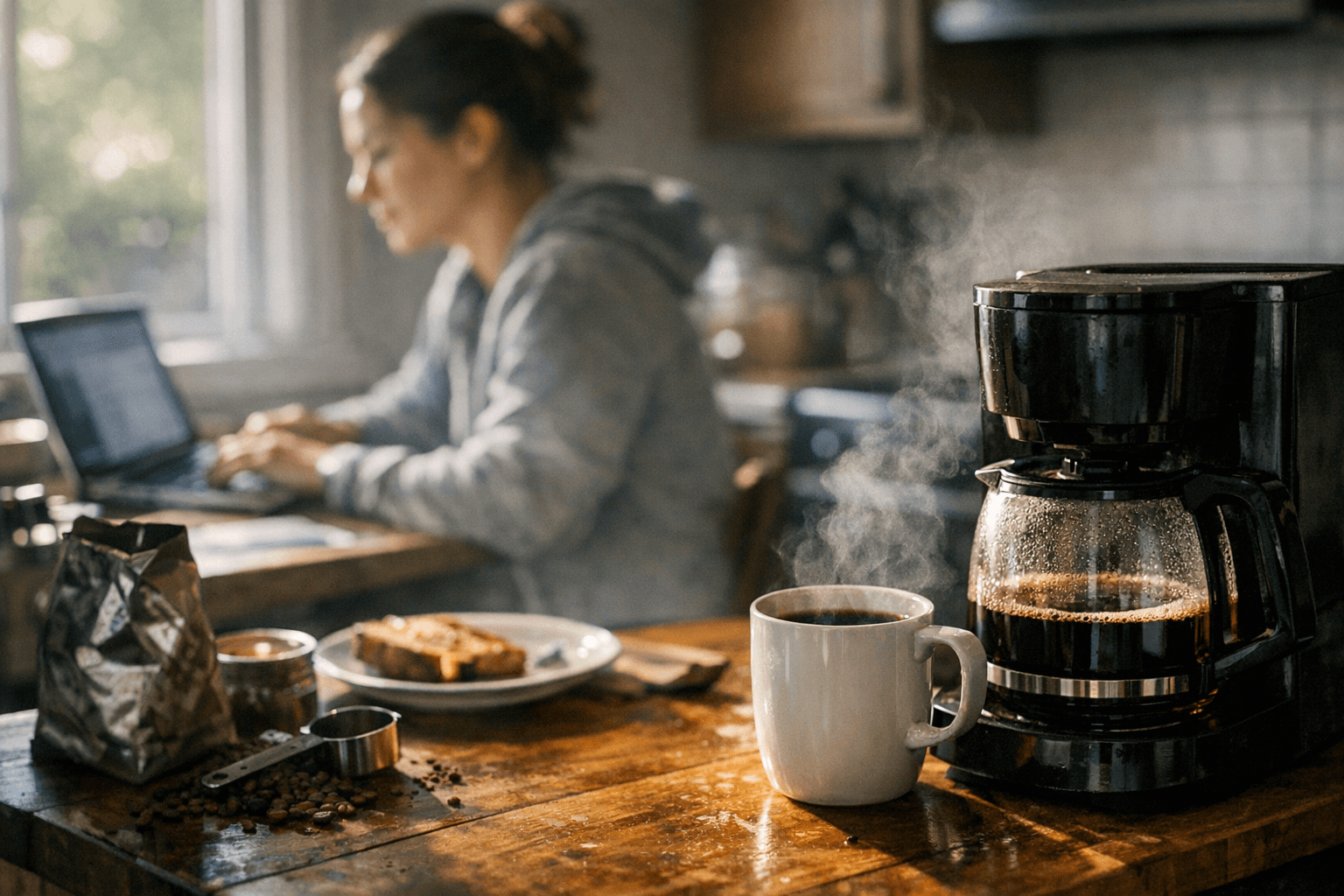
The café habit that defined pre-pandemic coffee culture has loosened again, with more Americans brewing at home as remote work and higher prices push daily coffee back into kitchens, offices and car lines. The National Coffee Association’s Spring 2026 data showed 85% of past-day coffee drinkers had coffee at home, the highest share for that measure since 2012.
The survey, conducted in January 2026 by Dig Insights for the National Coffee Association, found that nearly 195 million American adults drank coffee each week and 66% drank it daily. Even as home use climbed, coffee did not vanish outside the house. The most common away-from-home settings were offices and transit or drive-throughs, a sign that the out-of-home market has changed shape rather than disappeared.
That shift fits a country where hybrid schedules have reduced commuting and where household budgets are under pressure. Less time on the road has taken some of the edge off the café run, while high retail prices have made the at-home cup look more economical. Ground roast coffee averaged $8.41 a pound in July 2025, then rose to $9.14 a pound in September 2025. Grocery-store roasted coffee prices were also up 21.7% year over year, the fastest increase since 1997.
For the coffee business, that changes where the money flows. Roasters, pod brands and equipment makers stand to gain when more drinkers rebuild café routines at home with better beans and gear. Cafés still matter, but the occasions that support them are narrowing toward offices, drive-throughs and grab-and-go stops instead of lingering seats and sit-down orders.
The National Coffee Association, the oldest U.S. trade association representing coffee businesses, says coffee supports 2.2 million U.S. jobs and contributes nearly $350 billion to the economy each year. Its 2023 economic impact update said coffee accounts for 8% of the U.S. food service sector, which shows how even a modest shift in drinking location can ripple across roasters, chains, suppliers and retail counters.
The pattern is not new, but it is reasserting itself. The same association found that 85% of past-day coffee drinkers were at home in spring 2021, then 81% in fall 2024, when 36% drank coffee out-of-home. It also said 36% of Americans had an in-office coffee station in 2023, up from a pandemic low of 26% in January 2021. Starbucks has already felt the pressure and the opportunity in that market, saying its first-quarter fiscal 2026 results included the first U.S. comparable transaction growth in eight quarters, while elevated coffee pricing and tariffs continued to weigh on margins.
What emerges is a coffee economy spread across three dominant spaces: the kitchen counter, the office station and the drive-through lane. The café still has a role, but the center of gravity has moved.
This article was produced by Prism’s automated news system from verified source data, official records, and press releases, then run through automated quality and moderation checks before publishing. The system is built and supervised by the people who set the standards it runs under. Read our full AI policy.
Did this article answer your question?