Senator Durbin Blames Trump Tariffs for Rising Coffee and Grocery Prices
Senator Dick Durbin took to the Senate floor to say coffee is up nearly 30% — and that's just one item on a grocery bill he blames squarely on Trump's tariffs.
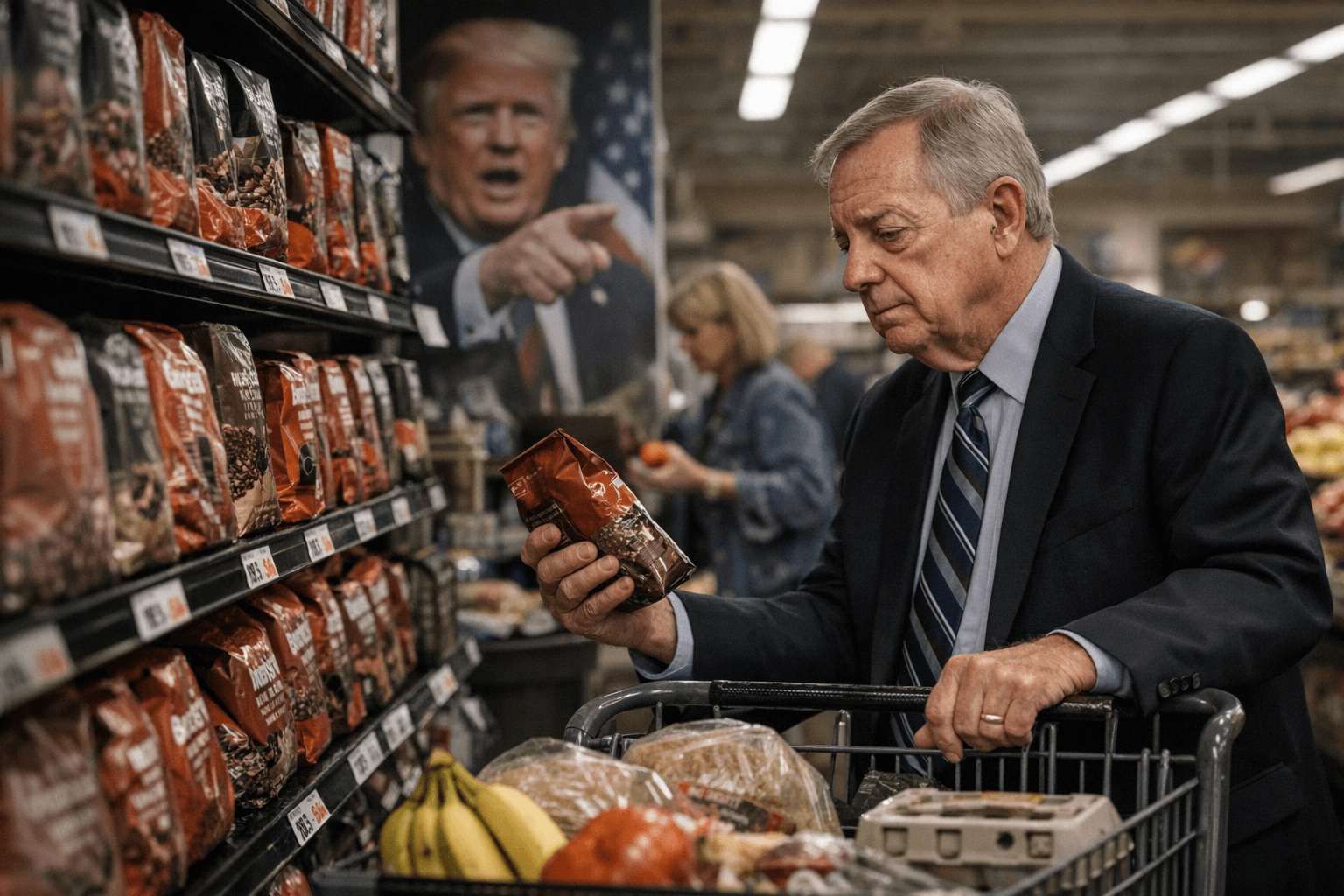
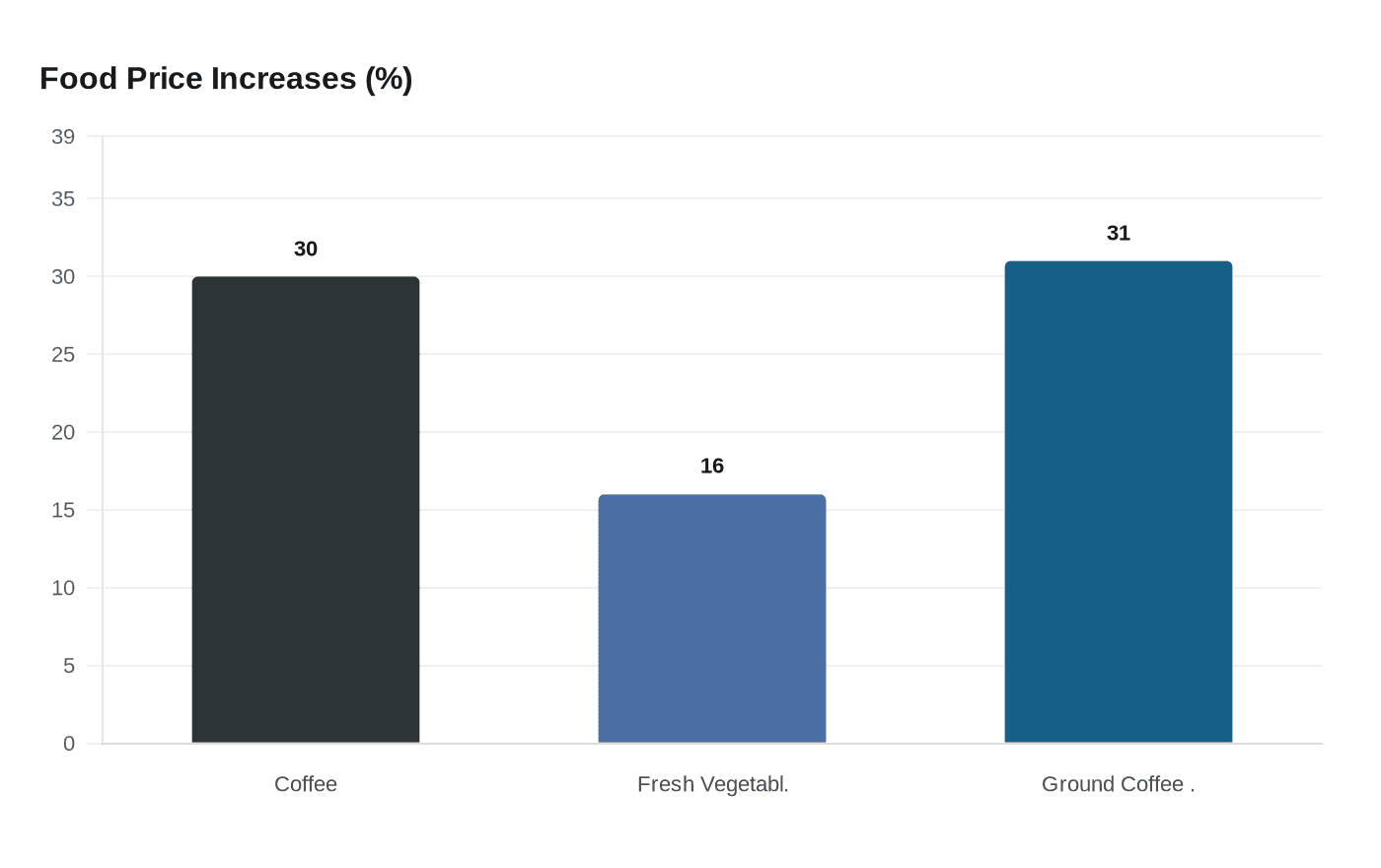
Coffee is up nearly 30 percent. Fresh vegetables have climbed more than 16 percent since June. A carton of eggs costs more than it did a year ago. Illinois Senator Dick Durbin (D-IL) rattled off those numbers from the Senate floor in Washington, attributing each one to President Donald Trump's tariff policies, and he wasn't finished.
"Instead of playing golf one day, the President should spend a day with real families in America," Durbin said in remarks that framed the speech's rhetorical center of gravity from the start. "Donald Trump campaigned on 'lowering costs on Day One' and promised his tariffs would somehow 'liberate' the American taxpayer. In reality, his misguided tariff wars have led to fear, uncertainty, and higher prices for American consumers."
The coffee figure Durbin cited isn't far off from what independent data shows. The average price of ground roast coffee hit $9.46 per pound in February, a new all-time high according to Bureau of Labor Statistics data, a 31 percent jump from a year earlier. CNBC reported the current run-up is the steepest and most sustained since the BLS began tracking coffee prices in 1980.
The price spike that Durbin is pointing to didn't come out of nowhere for people inside the industry. Trump rolled out tariffs of 10 to 15 percent on green coffee bean imports in April 2025, which then escalated to 50 percent, and the fever didn't break until mid-November, when the White House exempted green coffee from import tariffs entirely. But the exemption came with a catch that roasters are still living with. Josh Gerber, owner of 1369 Coffee House in Cambridge, which has been selling coffee for more than 30 years, said prices were "about to go through the roof," because his next batch of coffee was purchased while tariffs were still in place, and he was told by his roasters that prices would go up by more than 30 percent, or an extra $3 for a pound of beans.
That kitchen-table math is exactly what Durbin was spelling out. The Cafe Imports supply chain had already traced the same path months earlier: costs would likely be passed to the final consumer, said Noah Namowicz, chief operating officer of Cafe Imports, a green importing company, who noted that tariffs are paid at the port of entry, raising costs for importers that then impact downstream prices for roasters and consumers. "That becomes our new cost of goods, so that tariff amount is passed to the roaster and ultimately the end consumers," Namowicz said.
The hit doesn't stop at the bean itself. Coffee packaging and accessories, including bags, labels, and materials, are frequently sourced from China, and the rise in costs for those goods may lead to higher operational expenses for roasters and café owners, with small roasters being particularly affected as they often depend on more affordable equipment and packaging.
Durbin's Senate-floor speech folded the tariff argument into a broader attack on what he called Trump's "disastrous economic plan," which he said combines the "chaotic Trump Tariffs" with the One, Big Beautiful Bill Act. He argued that under the OBBA, 17 million people could lose health care, while working families earning less than $35,000 a year would see a tax break of just $3 a week, compared to billionaires who could receive more than $310,000, or $6,000 a week.
Senator Elizabeth Warren has also been pressing major coffee companies directly on the same question. Despite Trump's executive order exempting coffee and other agricultural products from tariffs, BLS data shows coffee prices jumped 18.4 percent between February 2025 and February 2026, and those prices are expected to continue climbing in 2026 as companies sell through inventory stockpiled prior to the tariff exemptions.
The Supreme Court ruled that the President's use of the International Emergency Economic Powers Act to implement tariffs was illegal, but that ruling introduced a new layer of uncertainty: large corporations are demanding refunds, while consumers remain stuck with the higher price levels that took hold under the sweeping tariff regime.
For anyone who buys a bag of beans or orders a cortado on the way to work, the receipt tells the story Durbin wanted told. The policy debate in Washington is already over for the people on the supply chain who contracted at tariff prices and now have to sell through them.
Know something we missed? Have a correction or additional information?
Submit a Tip