StoneX March Report Tracks Arabica and Robusta Futures, Supply Trends
Speculative traders boosted net-long positions in NY arabica by 54.04% in a single week as certified washed stocks climbed to 524,139 bags.
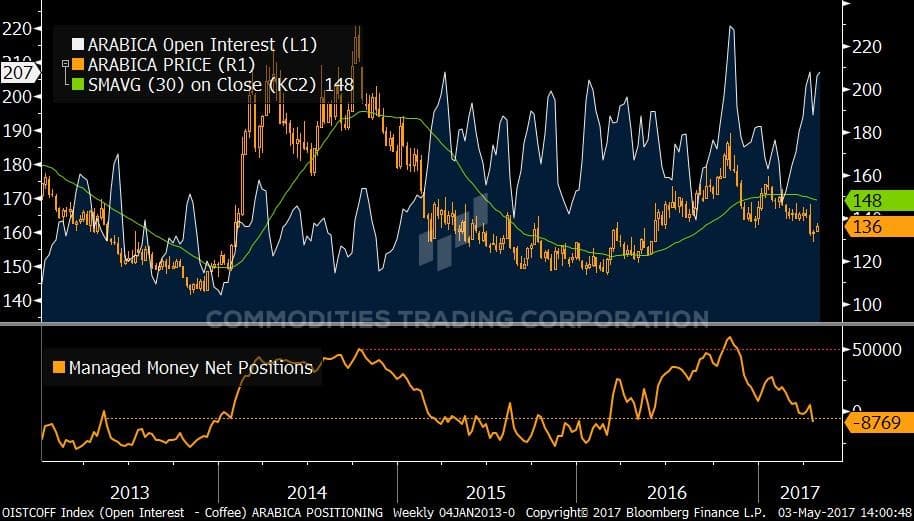
StoneX's Daily Coffee Report for March 10, 2026 landed as a dense snapshot of a market caught between rising warehouse inventories, surging speculative appetite, and meaningful supply pressure at the producer level. The brief, pitched at traders, roasters, and importers, tracks arabica and robusta futures alongside warehouse flows and supply-side developments that have been building across several weeks of reported data.
The most striking positioning shift came from the Commitment of Traders data for the New York arabica market. Non-Commercial Speculative traders increased their net-long position by 54.04% in the single week of trade ending Tuesday, February 24, 2026. The scale of that move in one week signals a strong directional bet on arabica prices among funds and managed money, though the absolute net-long figure was not available in the excerpted data.
On the warehouse side, certified washed Arabica stocks held against the New York exchange rose by 13,988 bags to reach a total of 524,139 bags. Europe dominated that inventory pool, holding 79.22% of all certified stocks at 415,233 bags. The geographic concentration in Europe is a detail worth watching for anyone tracking the arbitrage between New York ICE and London LIFFE robusta futures, since a heavily Europe-weighted certified stock profile can influence basis relationships and prompt location premiums.
Supply-side pressure rounded out the week's most consequential data points. The National Coffee Growers Federation reported that cumulative production for the first four months of the current October 2025 to September 2026 coffee year came in at 1,654,000 bags, a figure 26.44% below the same period in the prior year. The country was not identified by name in the available excerpt, but the magnitude of the year-on-year shortfall is the kind of structural deficit that can sustain bullish momentum in futures markets when speculative positioning is already moving sharply higher.
Peru added a contrasting data point from earlier in the reporting window. The Peruvian Ministry of Agrarian Development and Irrigation confirmed that the country's 2025 calendar-year export sales reached a record US$1.70 billion, with USDA data for the April 2025 to March 2026 marketing year also referenced in connection with Peru's fine coffee crop, though the full USDA projection was not included in the available excerpt.

Mid-February brought a brief lull. On February 19, with report writers away on commercial travel, the commentary noted that markets were, as they put it, "a little thin on fresh fundamentals," with Brazil wrapping up Carnival celebrations. That seasonal note mattered: Brazil, the world's largest coffee producer and exporter, typically sees labor and logistics in coffee-growing regions soften around Carnival, a calendar effect the trade watches closely every year.
The March 5 entry added a consumer-demand dimension, citing a large US study published in JAMA linking moderate consumption of caffeinated coffee or tea to long-term health outcomes. The full findings were not available in the excerpted material, but the reference reflects how the industry has increasingly leaned into health research as a demand-side narrative alongside the usual supply and price mechanics.
Taken together, the data trail from late February through the March 10 StoneX report describes a market where speculative money is piling in, certified inventories are building but concentrating heavily in Europe, and at least one major producing country is running significantly behind last year's output pace. Those dynamics rarely point in the same direction for long.
This article was produced by Prism’s automated news system from verified source data, official records, and press releases, then run through automated quality and moderation checks before publishing. The system is built and supervised by the people who set the standards it runs under. Read our full AI policy.
Did this article answer your question?