Study Finds Independent Coffee Shops Across North America Share Identical Design Aesthetics
A new study found indie coffee shops in the U.S. and Canada are so visually alike their location "cannot be picked from a lineup."
Researchers affiliated with the University at Buffalo, the University of New Orleans, and Washington University in St. Louis published a study concluding that independent coffee shops across North America have converged on a single, shared interior aesthetic, effectively functioning as an unintentional brand franchise. The study appeared in the journal City, Culture and Society, with Daily Coffee News reporter Nick Brown covering the findings on March 20, 2026.
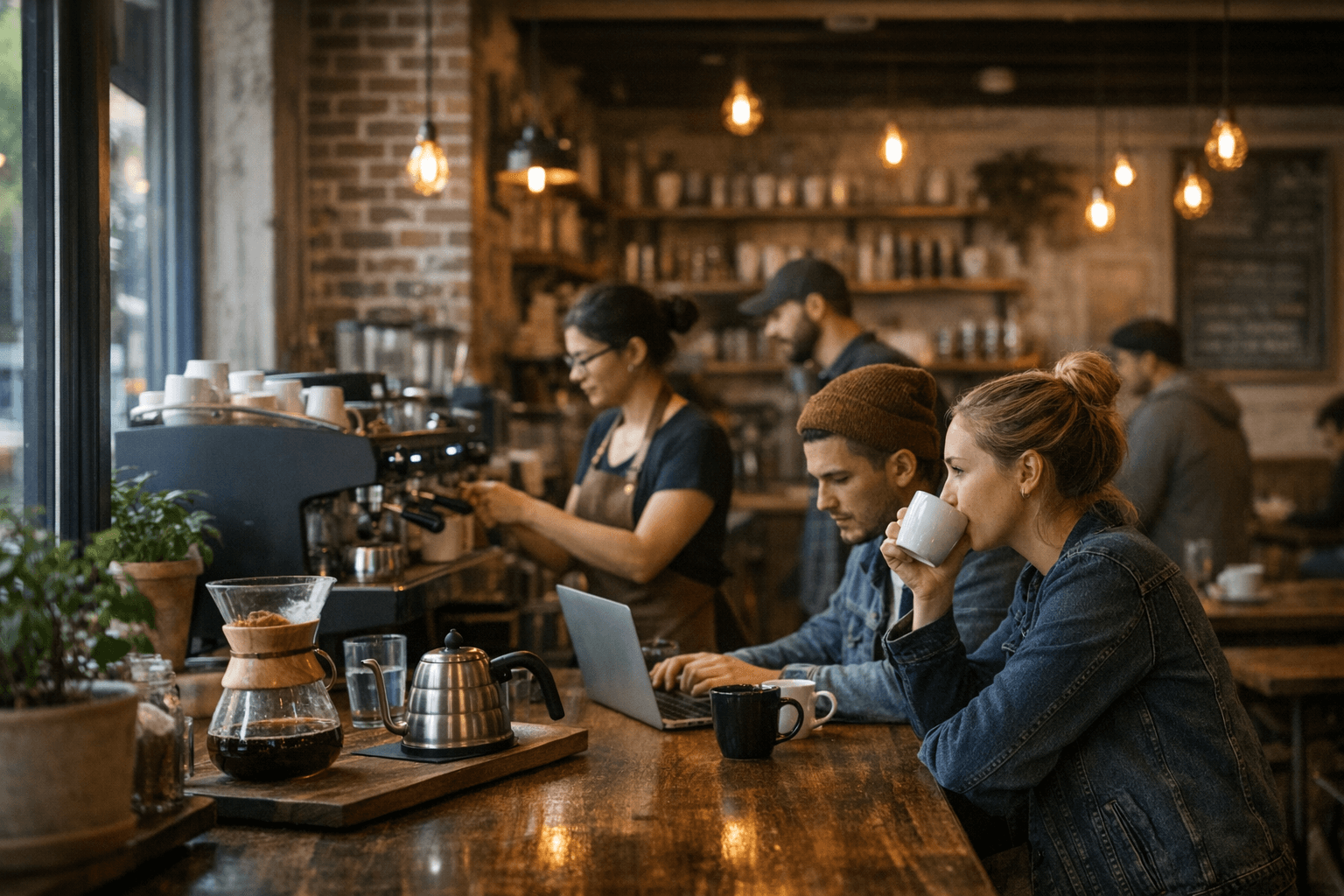
The research drew on two anonymous online surveys, with data collection running from fall 2017 through summer 2020. The authors first conducted a pilot study of 50 author-identified third-wave coffee shops, concentrated primarily in Cincinnati, Ohio; Ann Arbor, Michigan; St. Louis; and Toronto. That pilot produced a checklist of 23 recurring interior elements, including brick walls, marble counters, indoor plants, local art, vintage furniture, and "even the look of the baristas."
For the main survey, the researchers asked over 100 American and Canadian young professionals living in cities to submit an interior photo of their favorite independent coffee shop, explain what appealed to them about its appearance, and catalog its design features using that 23-element list. The overlap in what respondents selected and described was, in the authors' own word, "fascinating."
The conclusion was blunt: "Independent coffee shops in North America have become so similar aesthetically that their location cannot be picked from a lineup. The purportedly unique and local feel of coffee shops has instead been homogenized into a singular, palatable, North American aesthetic."
The study defines third-wave coffee partly by its "perceived unique aesthetics and authenticity," which makes the finding particularly pointed. The researchers noted that these shops had "narrowed their aesthetics like a de facto brand franchise, exactly like the chain stores that their patrons ostensibly reject." The authors traced the pattern to consumer demand rather than operator intent, writing that "the interior aesthetics of local coffee shops are not necessarily reflective of the local culture or geography, but of the expectations and aspirations of their globally aware consumers."
The framing raises a question the researchers put directly in the paper: are independent café operators designing for their local community broadly, or signaling to a specific socioeconomic slice, the so-called creative class?
Daily Coffee News offered an editorial counterweight, noting that its own coverage of hundreds of independent coffee shop openings over the past decade "underscores how diverse independent coffee shops are in practice." That observation does not contradict the study's data so much as complicate its scope; the 23-element convergence the researchers documented may reflect a dominant pattern without accounting for every outlier.
What the study does not yet provide publicly is the full list of all 23 interior elements, quantitative breakdowns of how frequently each appeared, or the names of the authors themselves in the excerpts reported so far. Those details, along with reactions from shop owners and café designers, remain the obvious next layer of this story.
This article was produced by Prism’s automated news system from verified source data, official records, and press releases, then run through automated quality and moderation checks before publishing. The system is built and supervised by the people who set the standards it runs under. Read our full AI policy.
Did this article answer your question?