Study Finds Roasted Arabica Contains Diterpenes That Inhibit Alpha-Glucosidase In Vitro
Researchers found roasted Coffea arabica contains diterpene-derived compounds that inhibit the digestive enzyme α-glucosidase in lab tests - promising but not clinical evidence.
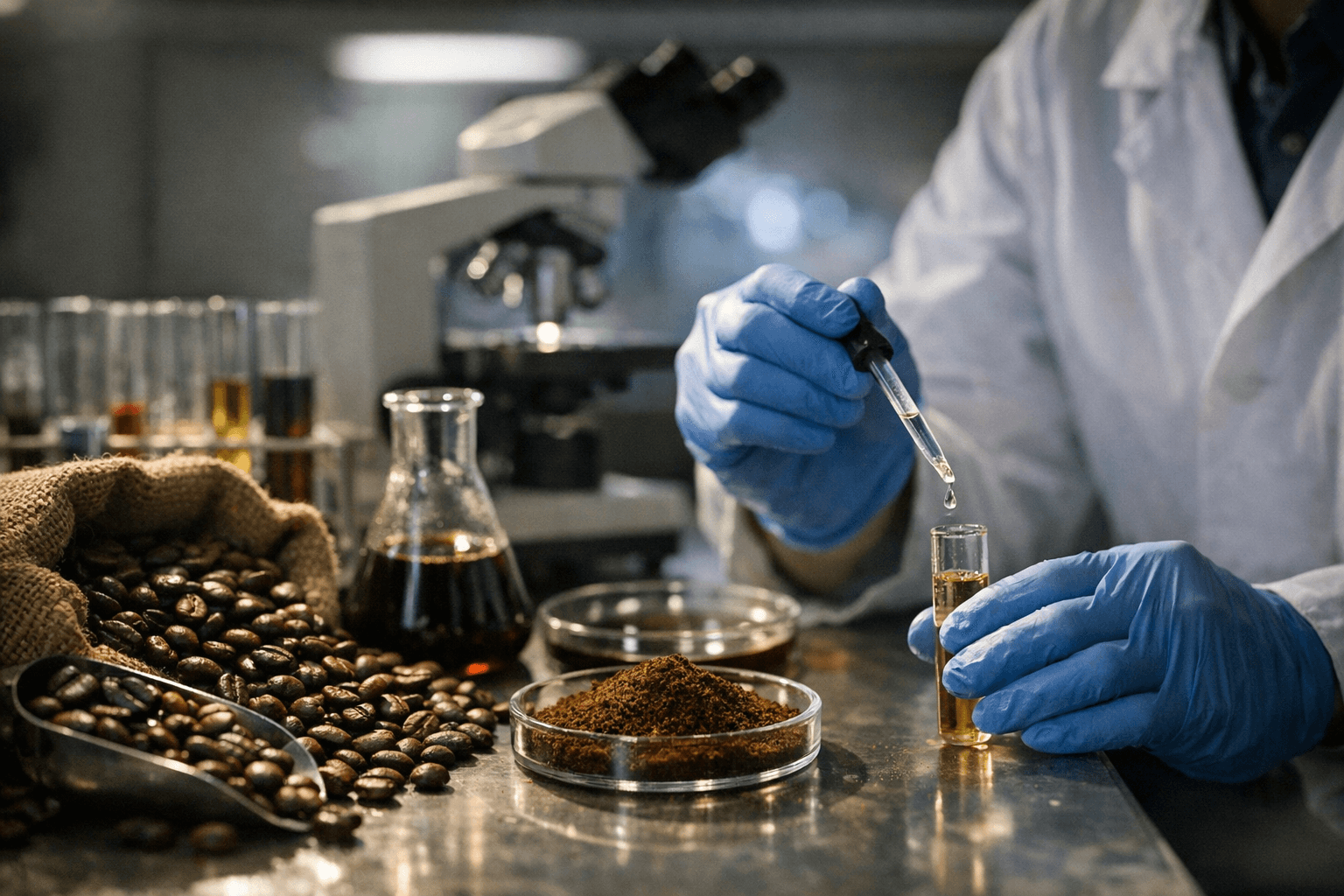
Researchers at the Kunming Institute of Botany (Chinese Academy of Sciences) reported that roasted Coffea arabica contains previously unidentified diterpene-derived compounds that inhibit the digestive enzyme α-glucosidase in vitro. The lab work isolated a diterpene-rich fraction from roasted Arabica, then used fractionation, nuclear magnetic resonance (NMR) and liquid chromatography-tandem mass spectrometry (LC-MS/MS) to define the chemical structures before screening for enzyme activity.
The study workflow began with extraction of roasted coffee material and concentration of diterpene constituents. Scientists fractionated the diterpene-rich extract and applied NMR and LC-MS/MS analysis to characterize new compounds. Activity screening against α-glucosidase identified several isolated molecules with inhibitory effects; some isolated compounds were more potent than the diabetes drug acarbose in that particular biochemical assay.
Those results establish a biochemical mechanism by which roasted Arabica yields compounds capable of slowing carbohydrate digestion in a test tube. The practical caveats are significant. The work demonstrates enzyme inhibition in laboratory assays only. The study does not establish clinical efficacy, does not measure how much of these diterpene-derived compounds survive typical roasting and brewing, and does not recommend coffee as a diabetes treatment. The concentration of the active molecules in a brewed cup remains unknown, and metabolism, absorption and safety in animals or humans were not addressed.
Context matters for coffee communities that track health claims. Observational epidemiology has repeatedly linked coffee consumption to lower risk of type-2 diabetes, but observational data cannot prove cause-and-effect. The new Kunming Institute findings supply a plausible biochemical lead that could partly explain those population-level correlations, but they stop short of translating into dietary guidance or product claims.
For roasters, baristas and homebrewers, the study offers a technical curiosity and a potential starting point for future research rather than an actionable change to roast profiles or brewing routines. Functional-food developers and nutrition researchers will need in-vivo safety and efficacy testing, pharmacokinetic data and reliable measurements of compound levels in brewed beverages before any commercial applications or health recommendations follow.
The takeaway: roasted Arabica has yielded new diterpene-derived molecules that inhibit α-glucosidase in vitro, which is grounds for scientific interest but not for treatment claims. Expect follow-up studies focused on animal models, human pharmacology and the effect of roasting and brewing parameters on compound yield before the cup in your hand can be linked to clinical outcomes.
Know something we missed? Have a correction or additional information?
Submit a Tip