Tariffs, Farm Lease Drama, and Roasting Tech Reshape Coffee Markets in 2026
A Supreme Court ruling invalidating IEEPA tariffs could mean massive refunds for U.S. coffee importers, while Kauai Coffee's lease crisis puts 136 jobs on hold.
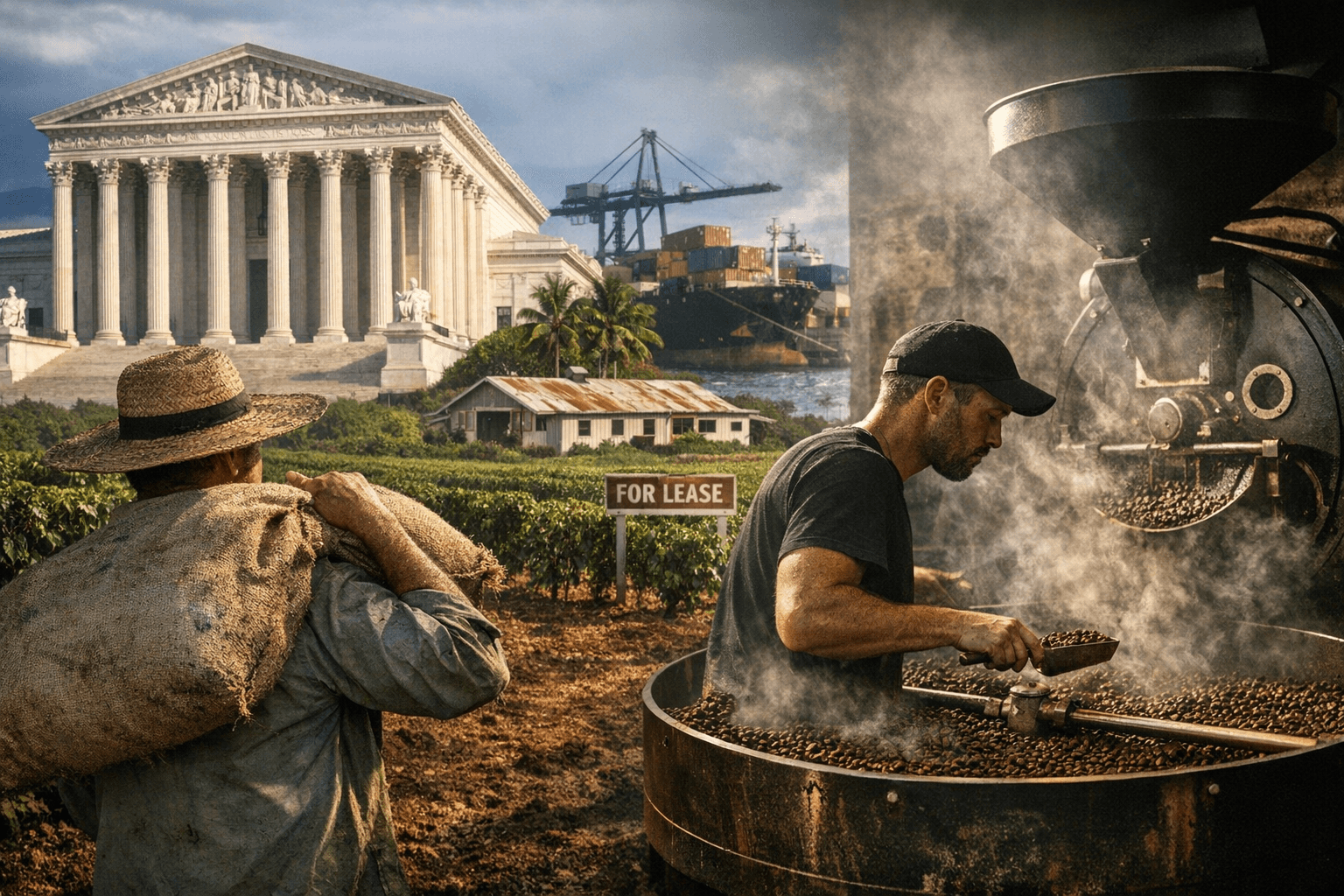
A Supreme Court decision handed down on February 20, 2026 invalidated tariffs imposed under the International Emergency Economic Powers Act (IEEPA), and for U.S. coffee importers the implications are still being absorbed: potentially large refunds and a fundamental recalibration of what it costs to move green coffee into the country. That legal shock landed on a market already navigating its most consequential transition in years, and it arrived alongside a lease crisis at the largest coffee farm on American soil and a wave of roasting and brewing innovation that keeps consumer demand stubbornly strong. The combination makes early 2026 one of the more structurally complex moments the specialty and commodity coffee worlds have faced simultaneously.
From Record Highs to Fragile Balance
The 2024-25 cycle pushed coffee prices into territory that made even veteran traders uncomfortable. Adverse weather across Brazil and Vietnam, the two countries that together dominate global supply, combined with depleted warehouse stocks and surging consumer demand to create a supply squeeze that sent both arabica and robusta futures to their 2025 peaks. Those peaks have since eased, aided in part by improved production prospects in Brazil and other origins, but "eased" is doing a lot of work in that sentence. Prices on ICE and Euronext still reflect constrained inventories and a weather-sensitive outlook; the market has come off its most extreme highs without coming close to returning to historical norms.
A Commodity-Board analysis published March 16, 2026 frames the current moment as a "complex transition from the record-high, supply-squeezed environment of 2024-25 toward a more mixed but still fragile balance." The word "fragile" matters. Real-economy shocks, whether legal, operational, or climatic, land differently on a market that has used up its buffer stocks than they would on a well-supplied one.
The IEEPA Ruling and What It Means for Importers
The U.S. Supreme Court's February 20, 2026 ruling that tariffs imposed under the International Emergency Economic Powers Act were invalid is the kind of legal development that ripples through trade economics for months after the decision itself. For the coffee import community specifically, the ruling opens the door to potentially large refunds on duties already paid under those tariffs and recalibrates trade costs on key import flows into the United States going forward.
The precise scope of those refunds, the tariff lines involved, and the administrative mechanism through which importers would claim them are not yet fully documented in public-facing agency guidance. What is clear from the ruling's framing is that the invalidation applies to tariffs that were imposed using IEEPA authority, a significant legal finding given how broadly that authority had been exercised in recent years. For roasters, importers, and trading houses that have been absorbing elevated landed costs alongside already-elevated futures prices, the prospect of retroactive refunds represents a meaningful financial variable heading into the second quarter of 2026.
Kauai Coffee: Lease Uncertainty and 136 Jobs in Limbo
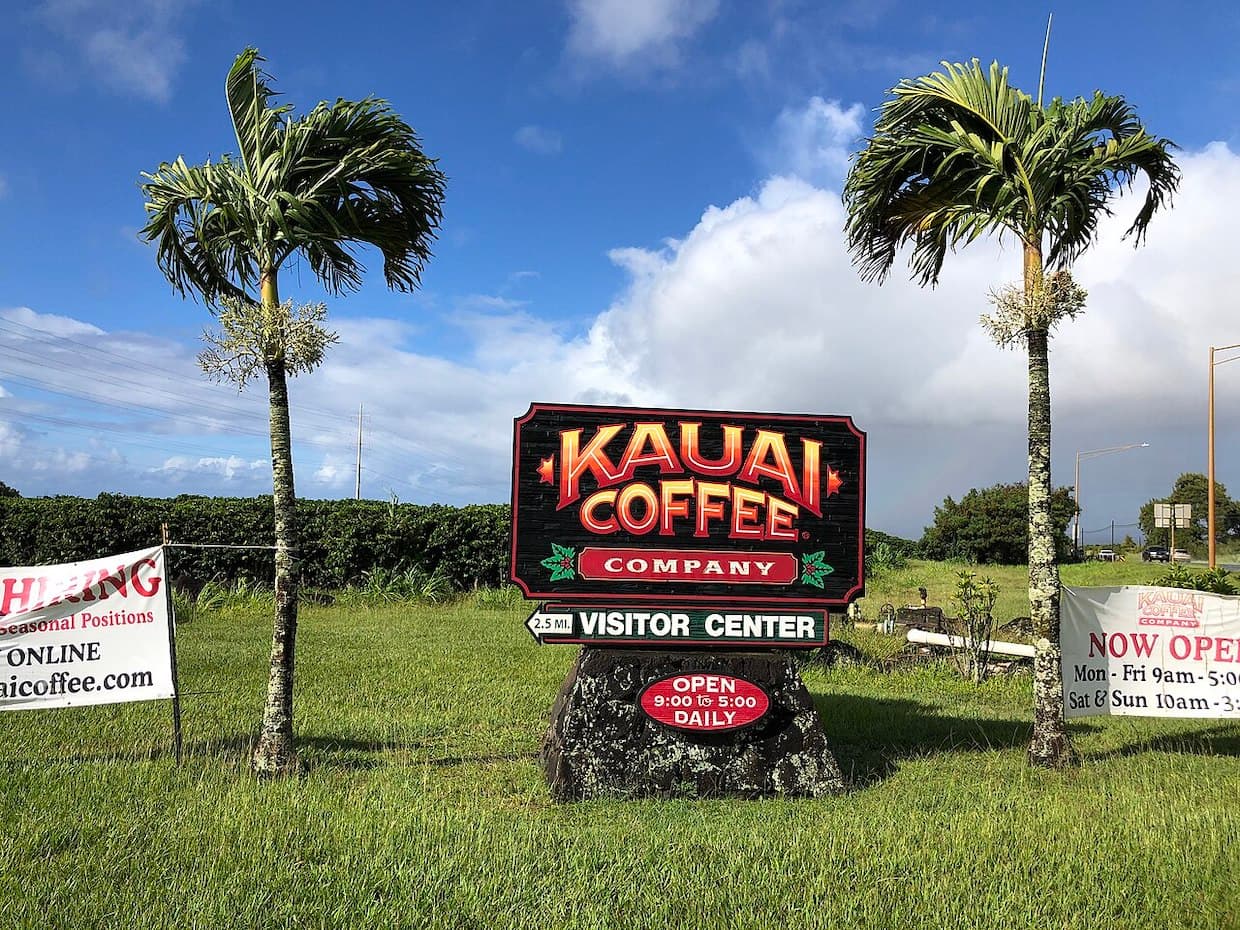
Roughly 5,500 miles from Washington, D.C., the largest coffee farm in the United States is facing its own structural uncertainty. Kauai Coffee, on the island of Kauaʻi in Hawaii, faces unresolved questions about its land lease, and the farm has delayed potential layoffs affecting 136 workers while that situation plays out. No details about the landlord, the lease terms, or the specific legal or administrative dispute at the center of the uncertainty have been confirmed publicly beyond those facts.
The farm's scale matters here. Kauai Coffee is not just the largest U.S. coffee operation in acreage; it represents the most visible proof-of-concept that commercially viable coffee farming is possible within the United States itself. A disruption to its operations, whether through lease termination or through workforce reductions, would carry symbolic weight for the domestic-grown coffee movement and practical weight for the small but growing segment of consumers and roasters who actively seek Hawaiian-origin coffee. The delayed layoffs suggest the situation has not resolved, only paused, which means 136 workers and the farm's entire supply chain are operating under a cloud of contingency planning.
Roasting Tech, Brewing Innovation, and the Demand Floor
On the other side of the ledger, structural demand continues to grow, and technology is doing significant work to sustain and expand it. Advances in roasting and brewing technologies are reinforcing consumer engagement with coffee at a moment when elevated retail prices might otherwise have been expected to suppress demand. The specialty coffee community's long investment in precision, repeatability, and education has created a consumer base willing to follow the product through price volatility rather than trading down or out.
The most striking research initiative named in recent market analysis is São Paulo's expanding urban coffee plantation, which is explicitly focused on building resilience to pests, drought, and climate change. Urban plantation research of this kind represents a meaningful departure from the assumption that climate risk can only be managed by relocating production or switching varieties on existing farms. If São Paulo's program produces replicable findings on drought-tolerant cultivars or integrated pest management suited to dense urban environments, the implications for coffee-growing regions under climate pressure could extend well beyond Brazil's borders.
Vietnam and India: Value Wins in a Tight Market
The origin-level stories from 2025 reinforce a theme that traders and specialty buyers have been discussing for years: volume is not destiny. Vietnam posted what analysts described as a "dramatic export performance" in 2025, achieving record export values on only modest volume growth. The driver was the deepening of processed robusta and higher-value product segments rather than raw green-bean throughput. In a year when supply was constrained everywhere, Vietnam demonstrated that moving up the value chain generates export revenue in ways that chasing volume cannot.
India's trajectory echoes the same logic. Indian coffee exports have surged in value over recent years, propelled by digital reforms within the sector and regulatory advantages that have opened EU market access on favorable terms. Neither Vietnam nor India was a major beneficiary of the 2024-25 price spike in the simplistic sense; both have increasingly positioned themselves to capture value regardless of whether spot prices are at historic highs or pulling back toward equilibrium.
Three Forces, One Market
What makes early 2026 genuinely unusual is the convergence of forces that do not normally move together. A landmark legal ruling with refund implications for the entire U.S. import chain, a lease crisis at the country's largest domestic farm with over a hundred jobs in an unresolved holding pattern, and a technology-and-research wave that is actively reshaping what demand looks like at the consumer level: all three are live simultaneously on a market that has not yet rebuilt the inventory buffers it burned through in 2024-25.
The futures markets have priced in some normalization, and improved Brazilian production prospects offer genuine relief relative to the depths of last year's supply anxiety. But the gap between "off the extreme highs" and "historically normal" remains wide, and the legal, operational, and climate variables now stacked on top of that baseline mean coffee's 2026 story is far from written.
This article was produced by Prism’s automated news system from verified source data, official records, and press releases, then run through automated quality and moderation checks before publishing. The system is built and supervised by the people who set the standards it runs under. Read our full AI policy.
Did this article answer your question?