US Coffee Buyers Demand Reliability, Traceability from Colombian Suppliers
US buyers are moving past cup score alone, making reliability, traceability, and supply confidence the new currency in Colombian coffee.
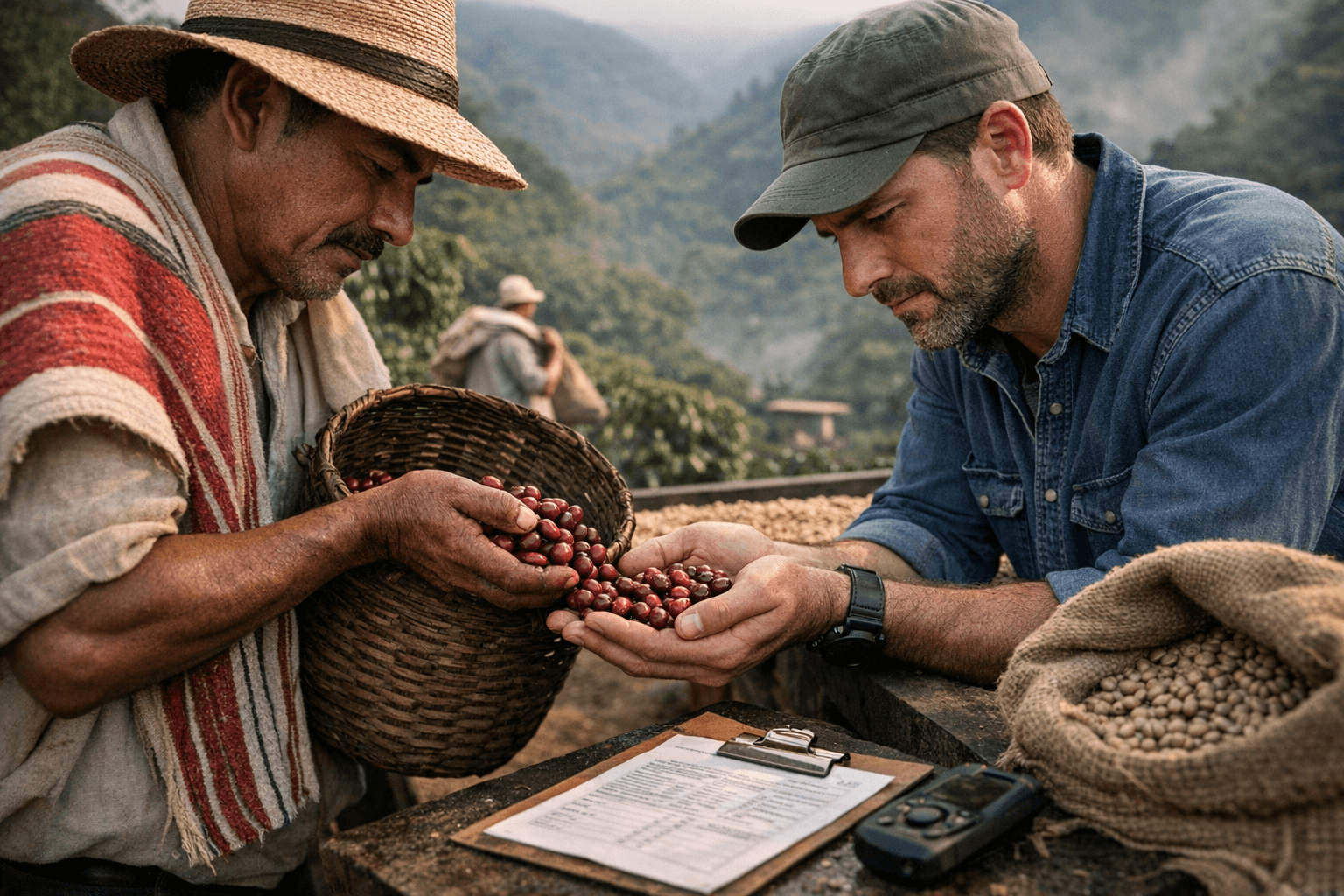
The Colombian coffee pitch to the U.S. has changed. Buyers still care about cup quality, but Germán Bahamón, who leads Colombia’s National Federation of Coffee Growers, says American importers are now placing equal weight on reliability, consistency, traceability, and long-term guarantees. That shift is reshaping the market from a hunt for standout lots into a demand for suppliers that can perform like strategic partners.
What U.S. buyers want now
Cup score is no longer the only language that matters. In the current buying climate, Colombian suppliers are being judged on whether they can deliver the same profile again and again, whether paperwork is clean, and whether containers arrive without preventable headaches. That matters even more when freight is volatile, weather can throw off harvest timing, and compliance demands keep rising.
The practical test is simple: can a producer or exporter hold quality steady, document origin clearly, and honor a contract without surprises? The market is increasingly rewarding the answer to all three.
Why the U.S. market has so much leverage
The United States remains Colombia’s largest export destination, taking 40.2% of Colombia’s 13.1 million 60-kilogram bags exported in 2025. That share gives U.S. buyers enormous influence over how Colombian coffee is processed, positioned, and sold.
The National Coffee Association of the United States says it represents businesses responsible for 90% of U.S. coffee commerce, and more than 99% of America’s coffee must be imported. It also says every $1 in coffee imports generates $43 of value for the U.S. economy. That helps explain why U.S. roasters and importers are paying closer attention to supply reliability and contract execution, not just sensory scores.
The association’s Spring 2026 National Coffee Data Trends report, conducted in January 2026, shows how closely the market is being tracked as buying behavior adjusts to trade pressure and compliance concerns. The message is clear: the buyer side wants predictability, and it is measuring the category with more intensity than ever.
How Colombia is responding on the farm and in the mill
CoffeeTalk reported that Colombia is moving toward buying coffee in cherry form and processing it at centralized facilities. That approach gives operators tighter control over the variables that shape final cup quality and lot uniformity. It can also make traceability easier because the coffee passes through fewer informal handoffs before processing.
The tradeoff is that this model asks for more infrastructure, more coordination, and more accountability. Centralized processing can improve repeatability, but it also puts pressure on logistics, data collection, and quality control at every step. In a market that now values dependable delivery as much as flavor, those operational details are becoming part of the product.
Colombia is also trying to deepen its specialty presence without abandoning scale. The country’s Craft Coffee division is focused on unique processing and more complex flavor profiles, which suggests Colombian coffee is being built to serve two lanes at once: large-volume reliability for commercial buyers and differentiated lots for specialty buyers who still chase originality.
Traceability is becoming a business requirement
The move toward traceability is not just a talking point. At the Specialty Coffee Expo in Houston on April 25, 2025, the Specialty Coffee Association and Colombia’s FNC signed a memorandum of understanding to advance specialty coffee traceability and value. The expo itself, scheduled for April 25 to 27, 2025, was expected to draw more than 17,000 attendees from 85 countries, which shows how central the traceability conversation has become to the global specialty trade.
Colombia has a built-in advantage here. A March 2026 report said the FNC’s Coffee Information System, known as SICA, contains detailed records on around 1.8 million coffee lots and socioeconomic data on nearly 500,000 coffee-growing families, most of them smallholders. For exporters and importers, that kind of data is more than administrative detail. It is the backbone of origin verification, supplier trust, and market access.
The numbers behind the pressure
The stakes are high because Colombia’s coffee business is still enormous. Reporting that cited DANE and FNC commentary put 2025 coffee exports at US$5.78 billion, and the FNC said the sector generated more than 20 trillion pesos for the national economy. Those are the numbers behind the push to protect market share, improve margins, and keep buyers coming back.
Production volatility is part of the backdrop too. The FNC said Colombia’s July 2025 coffee production reached 1.37 million 60-kilogram bags, the highest July total in a decade and 19% above July 2024. When output jumps that sharply after weather delays, the market gets a reminder that consistency is never automatic. Buyers notice that risk, and they increasingly want suppliers who can absorb it.
What this means for producers and importers
The new standard is not just better coffee, it is better coffee with fewer surprises. Producers that want to stay competitive need to think beyond the farm gate and treat traceability, logistics, and documentation as part of cup quality, not separate chores.
- Producers need tighter control over cherry selection, processing, and lot separation.
- Importers need longer-term buying programs that reward consistency instead of one-off spot wins.
- Both sides need cleaner paperwork, stronger data systems, and tighter coordination from origin to port.
- Contract confidence now matters almost as much as flavor, especially when freight, weather, and compliance can all disrupt a shipment.
That is the real reset in Colombian coffee. The buyers with the most influence are no longer asking only, “How does it taste?” They are asking whether the supplier can deliver the same coffee, with the same story, on time, at scale, and without friction. In today’s market, that is the difference between a good lot and a durable relationship.
This article was produced by Prism’s automated news system from verified source data, official records, and press releases, then run through automated quality and moderation checks before publishing. The system is built and supervised by the people who set the standards it runs under. Read our full AI policy.
Did this article answer your question?