USDA Projects Brazilian Specialty Coffee Growth Despite Volatile Market Conditions
Brazilian specialty coffee grew 15% annually in 2025, but a USDA staff assessment glossed over the tariff turbulence that reshaped the sector's export dynamics.

Brazilian specialty coffee posted 15% annual growth in 2025 and now accounts for 5% to 10% of the country's total coffee consumption by green coffee volume, according to a March 6 assessment from the U.S. Department of Agriculture's Foreign Agricultural Service. The assessment, which represents staff-level analysis rather than official U.S. government policy, projects continued expansion driven by "strong international demand, quality improvements and targeted promotion."
That sunny outlook arrives against a backdrop of genuine market stress. The Brazilian specialty sector has been contending with U.S. tariff whiplash, tight supplies, and the shifting demands of large buyers, even as it builds infrastructure and gains global visibility. The USDA assessment notably omits any mention of the Trump administration tariffs that rattled the Brazilian coffee sector and reshaped export dynamics earlier in the trade relationship. The current picture on that front: all green coffees are now exempt from U.S. tariffs.
Domestic consumption data adds another layer of tension to the otherwise optimistic projection. A September 2025 survey commissioned by ABIC found that 24% of Brazilian respondents had reduced their coffee consumption, with 39% opting for cheaper alternatives. Those figures point to a cost-pressured home market even as specialty exports push outward.
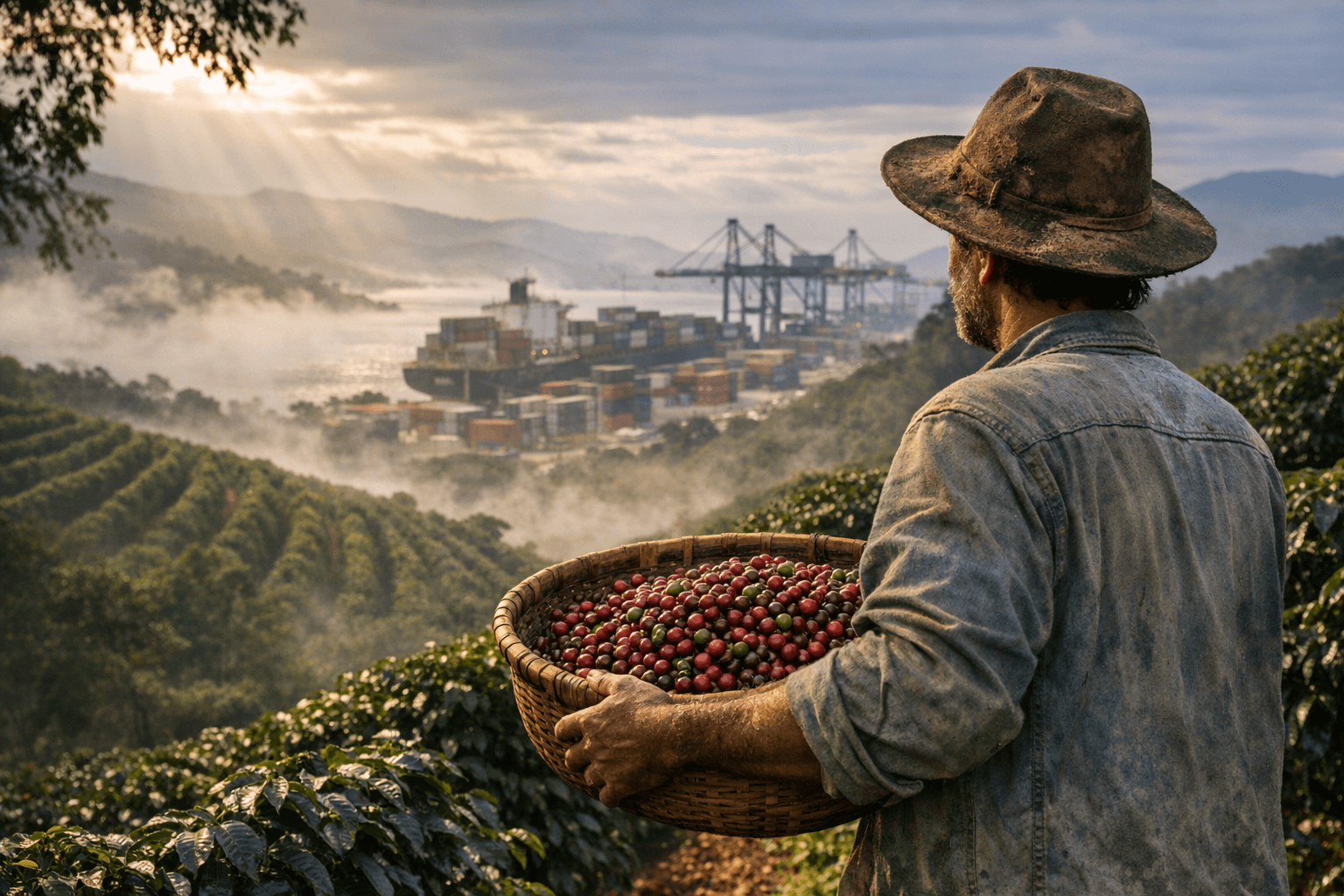
On the promotional side, the "Brazil. The Coffee Nation" campaign, running through August 2027, figures into the USDA assessment as part of the targeted promotion driving the sector's positive trajectory. The report frames the specialty segment explicitly in contrast to traditional and conventional coffee, treating the two as distinct markets with different opportunity profiles.
The ABIC survey results and the USDA's export-oriented optimism aren't necessarily contradictions: domestic consumers trading down doesn't preclude Brazilian producers from capturing international specialty demand. But the gap between those two realities, and the USDA report's silence on the tariff disruptions that complicated U.S.-Brazil trade, leaves meaningful context out of an otherwise upbeat assessment. The full March 6 USDA FAS document, beyond what has been summarized, would clarify whether any of that political and trade turbulence was addressed elsewhere in the report.
This article was produced by Prism’s automated news system from verified source data, official records, and press releases, then run through automated quality and moderation checks before publishing. The system is built and supervised by the people who set the standards it runs under. Read our full AI policy.
Did this article answer your question?