V60 Pour-Over Guide for Consistent Coffee at Home
Learn a reproducible V60 pour-over workflow that gets you predictable, high-quality filter coffee using common home gear. This guide breaks down the required equipment, ratios, pre-rinse and bloom technique, pouring approaches (spiral and pulse), target brew times, and clear troubleshooting steps so you can dial in a dependable daily cup.

1. Required Equipment
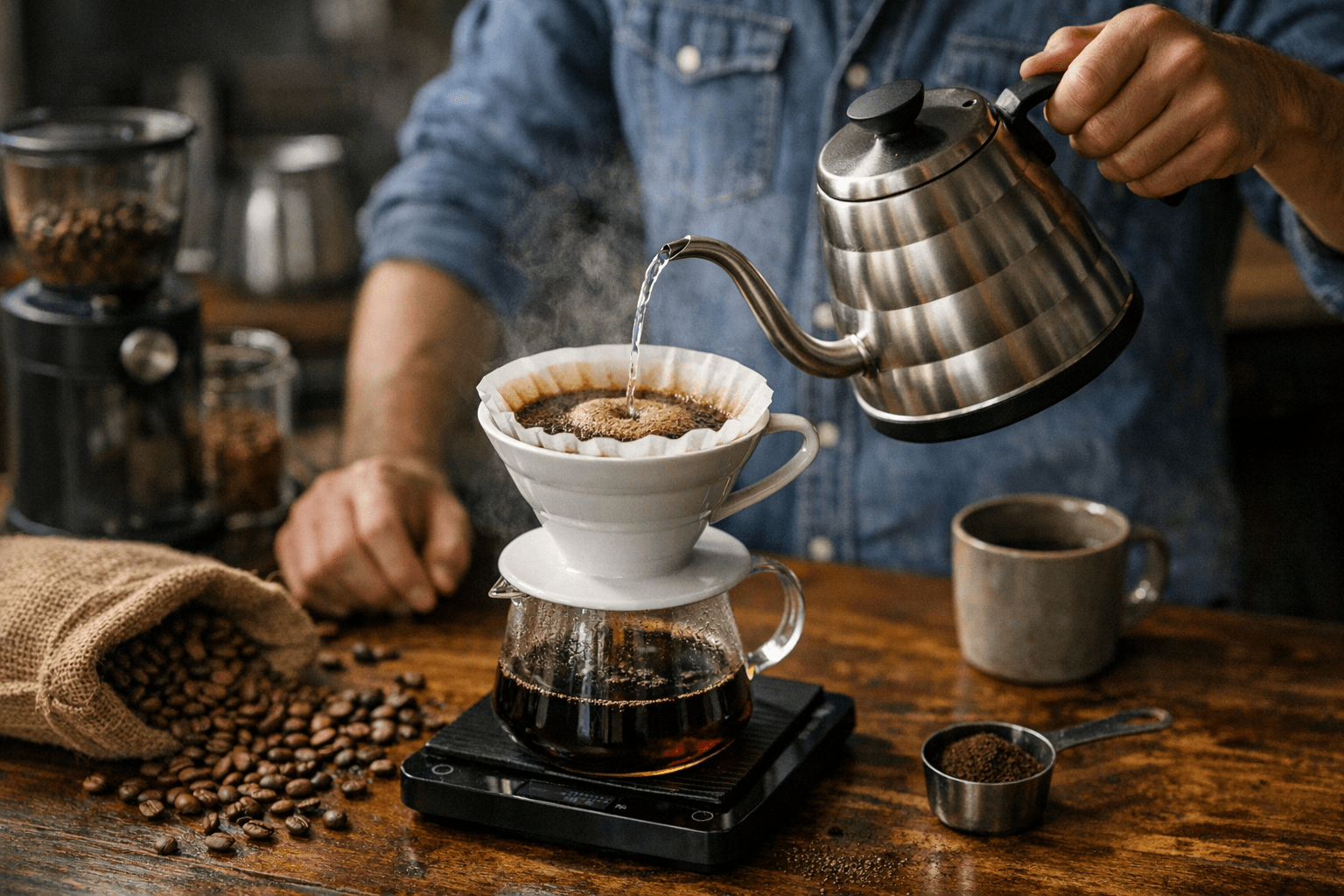
You need a V60 dripper and paper filters as the core brewing platform; filter shape and paper type affect flow and clarity. A gooseneck kettle gives the control necessary for precise pours and consistent water flow; even small variations in pour angle or stream width change extraction. Use a reliable scale to dose coffee and water to the gram for reproducibility, and a burr grinder to produce uniform particle size, blade grinders make results unpredictable. Optional but helpful: a server or mug to brew into, a timer to track bloom and total brew time, and a towel for cleanups.
2. Coffee-to-Water Ratios
Aim for a coffee-to-water ratio in the 1:15 to 1:17 range as a starting point, this balances strength with clarity for most beans. Practically, 15 g of coffee to 225–255 g of water is a common home dose that’s easy to scale; increase coffee or decrease water for a stronger cup, or move toward 1:17 for milder extraction. Keep records of your ratio with each brew so you can compare how different beans respond and reproduce successful recipes.
3. Grind Size and Dose
Use a burr grinder and dial in a medium-fine grind, somewhere around the texture of coarse table salt, slightly finer than typical drip coffee. Grind size controls extraction speed: finer grinds increase surface area and extraction, slower drawdown; coarser grinds speed flow and reduce extraction. Keep your dose consistent and only change one variable at a time (grind, ratio, temperature, or pour technique) so you can identify what affects flavor.
4. Pre-rinse and Warming Technique
Fold the V60 filter and place it in the dripper, then pour hot water through the filter to pre-rinse it and warm the dripper and server. This removes papery filter flavors and stabilizes brew temperature, discard the rinse water before adding coffee. Warming the equipment and using hot water right off the boil (or near 95°C / 203°F) helps maintain consistent extraction from first pour to drawdown.
5. Bloom Timing and Volume
Start with a bloom pour that wets all the grounds, typically about 2× the coffee weight, so for 15 g coffee pour roughly 30 g water. Let the coffee degas for about 30–45 seconds; during that time CO2 escapes and uniform wetting improves subsequent extraction. Shorter blooms can leave CO2 trapped and lead to uneven extraction; overly long blooms waste time and can cool the bed too much, treat the bloom as a controlled preparation stage.
6. Controlled Pouring Technique (Spiral and Pulse)
Two common pour styles are continuous spiral and staged pulse pours: in a spiral pour, maintain a steady, centered stream and move outward in slow concentric circles until you reach the target weight; this yields a smooth, even saturation when you keep flow consistent. In a pulse approach, pour in planned increments (after the bloom and at intervals) to control agitation and water level, this lets you manage extraction in stages and is useful with tricky beans. In both methods avoid pouring directly on the paper near the dripper wall (which can channel) and watch the water level so you neither flood nor dry the coffee bed.
7. Target Brew Times and Drawdown
Aim for a total brew time (from first pour to final drawdown) in the 2:30–3:30 minute window for typical home V60 recipes, adjust depending on grind and ratio. Faster drawdown (under target) usually indicates under-extraction; too slow indicates over-extraction. Use grind adjustments and pour speed to move brew time: finer grind or slower pouring lengthens extraction, coarser or faster pouring shortens it.
8. Troubleshooting: Under-Extraction Signs and Fixes
If your coffee tastes sour, thin, or overly bright, it’s usually under-extracted, flavors haven’t fully developed. Fixes: grind a touch finer to increase surface area, slow your pour or add more total contact time, slightly increase dose or raise water temperature a couple degrees. Also ensure your bloom fully wets the grounds and that water distribution is even; uneven pouring can create under-extracted pockets.
9. Troubleshooting: Over-Extraction Signs and Fixes
If your cup is bitter, astringent, or hollow-feeling, you’re likely over-extracting the puck. Remedies: grind coarser to speed flow and reduce extraction, pour a bit more quickly or reduce total contact time, lower your water temperature slightly, or reduce dose marginally. Small, single-variable adjustments make it easier to hear what works, community sharing of adjustments helps others learn which beans prefer which tweaks.
- Weigh and grind your coffee to a consistent medium-fine setting and place a pre-rinsed filter in the V60.
- Add coffee to the dripper, tare the scale, and start a timer.
- 1st pour (bloom): pour about 2× coffee weight of water, saturate evenly, and wait 30–45 seconds.
- 2nd pours: continue with a spiral or pulse approach, bringing total water to your target weight while keeping the bed level and flow steady.
- Stop pouring before the final drawdown; allow the brew to finish and aim for the 2:30–3:30 total time.
- Taste, take notes, and adjust one variable next brew if needed.
10. Quick Step-by-Step Workflow Example
- Log grind setting, ratio, bloom volume, and total brew time each session.
- Share recipes with community members and swap beans to accelerate learning.
- Make one small change at a time so you can identify cause and effect.
Practical tips to keep results consistent:
Follow these steps and you’ll move from variable to reproducible V60 brews quickly, consistent gear, disciplined measurements, and careful pours are what make great filter coffee repeatable at home.
This article was produced by Prism’s automated news system from verified source data, official records, and press releases, then run through automated quality and moderation checks before publishing. The system is built and supervised by the people who set the standards it runs under. Read our full AI policy.
Did this article answer your question?