Why Coffee Prices Surged Globally in 2024-2025 and What Comes Next
This guide explains the interconnected forces that drove the sharp global rise in coffee prices across 2024–2025 and what that meant for farmers, buyers, cafés, and consumers. You’ll learn the roles of climate shocks, trade-policy disruptions, investor activity, and supply-chain mechanics, and practical steps communities can take to reduce risk and capture value.

1. Overview of the 2024–2025 coffee price surge
The price boom was not caused by a single event but by a convergence of stressors on supply and market structure. Poor harvests in major producing regions combined with trade-policy shocks and heightened investor/speculator activity created steep short-term shortages and acute volatility that reverberated from farms to retail cups. Understanding each link in that chain is essential for communities and businesses to respond effectively.
2. Climate-driven poor harvests: droughts, heat waves and frosts
Extreme weather hit multiple arabica-producing regions across consecutive seasons, including prolonged droughts and heat waves that reduced berry development and frosts that damaged blossoms. Because coffee flowering and fruiting are highly sensitive to timing and temperature, these events compounded across years and lowered yields more than typical seasonal variability. For producers, this meant smaller harvests and uneven quality, and for buyers it produced scattered supplies and fewer predictable lots.
3. Aggregate production losses and the ~10 million-bag shortfall
Across key producers, aggregated losses equated to millions of bags; estimates put the combined shortfall in Brazil and Vietnam near 10 million 60‑kg bags in 2025. That scale of reduction tightened world stocks, compressing the buffer that normally insulates markets from local shocks. When inventories are squeezed at that level, even modest additional disruptions can send prices sharply higher and keep them elevated until production recovers.
4. Trade policy shocks and disrupted Brazilian exports
Policy moves, particularly U.S. tariff actions that affected trade flows, disrupted Brazilian export logistics and market access for major shipments. When a top exporter faces tariffs or sudden regulatory hurdles, buyers scramble to find alternate origins, driving short-term demand spikes for available lots. These shifts magnify regional supply imbalances and increase the cost and complexity of routing coffee from farm to port.
5. Increased investor and speculator activity on commodity exchanges
As fundamentals tightened, more financial players moved into coffee contracts, increasing liquidity but also amplifying price swings. Speculative flows can push futures prices away from immediate physical market realities, creating rapid intra‑year rises or drops that reverberate through forward contracts and purchasing decisions. For supply‑chain actors without hedging strategies, that volatility translates into unpredictable costs and increased financial risk.
6. Extreme intra-year price swings and the 60-kg sack peak
Markets saw dramatic intra-year movements, with the price of a 60‑kg sack spiking to very high levels in mid‑2025 before moderating later in the year. These swings make planning difficult: exporters and roasters face wide margins of error when budgeting, and retailers must decide whether to absorb costs or pass them to customers. Sudden peaks create short windows where cash flows and contract timing determine who benefits and who loses.
7. Mixed consequences for farmers: early sales and missed gains
Although headline prices rose, many smallholders did not enjoy corresponding windfalls because they had already sold early to meet urgent cash needs. Early or distress sales lock producers into lower prices and limit their ability to benefit from later market rallies. This pattern highlights the importance of access to credit, storage, and collective bargaining tools so farmers can time sales more strategically.
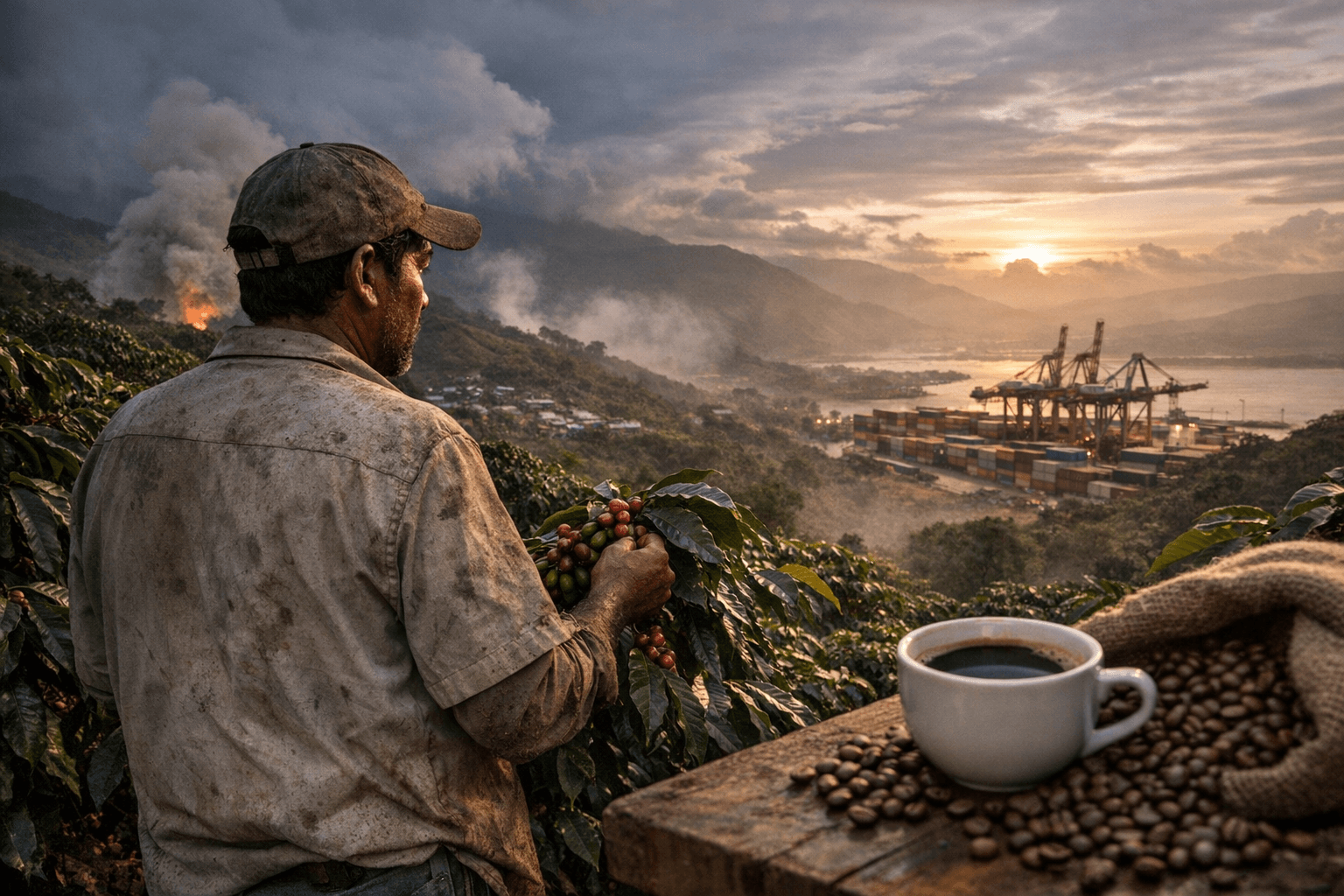
8. Security and theft: rising risks as coffee gained value
Higher coffee prices increased incentives for theft and raised security concerns on farms and in transit. When product values jump, smallholders and cooperatives can face direct losses from theft, as well as higher costs for secure storage and transport. These risks stress local communities and often require investments in communal security, insurance options, or new logistics arrangements.
9. Adaptive responses on farms: regenerative practices, mechanization, diversification
Farmers responded with a range of adaptations aimed at resilience and efficiency. Interest in regenerative practices, soil health, agroforestry and water-conserving methods, grew because these practices can improve yield stability over time and buffer against climate extremes. Mechanization gained traction where labor shortages or costs made it practical, offering efficiency but also requiring capital and training. Diversification into other crops or income streams reduced dependence on a single commodity and smoothed revenue across volatile price cycles. Together these responses represent practical, long-term strategies for building resilience in coffee communities.
10. Supply-chain amplification: from producer wallet to café menu
Supply-side uncertainty and geopolitical or trade-policy shifts amplify volatility as coffee moves through the supply chain. Disruptions at origin ripple through exporters, roasters, and distributors, often leading cafés to face sudden cost increases or shortages of particular origins. For cafés and local roasters, this means stronger emphasis on flexible sourcing, clearer communication with customers about menu changes, and exploring multi-origin blends or subscription models to manage variability.
- For farmers: strengthen access to short-term credit or cooperative storage so you are not forced to sell at the first cash need; consider targeted regenerative measures to improve resilience and explore value-added processing to capture more of the final price.
- For roasters and buyers: use longer-term contracts and risk-management tools (hedges, forward buying) to smooth cost spikes; deepen direct relationships with cooperatives to support traceability and fair timing of sales.
- For cafés and consumers: expect some menu price pressure and consider promoting transparency about origin and seasonality; support roasters that invest in farmer partnerships to ensure more equitable value distribution.
11. Practical steps you can take today
Conclusion The 2024–2025 price shock was a systems event: climate, policy, and finance combined to tighten supply and magnify swings. That complexity also creates opportunities, through smarter contracts, community-level resilience measures, and diversified farm practices, to reduce risk and build a more stable, fairer coffee economy. If you are a grower, buyer, roaster, or café owner, focus on practical, community-driven steps now to turn volatility into longer-term stability.
This article was produced by Prism’s automated news system from verified source data, official records, and press releases, then run through automated quality and moderation checks before publishing. The system is built and supervised by the people who set the standards it runs under. Read our full AI policy.
Did this article answer your question?