Beginner cricket gear checklist helps Missouri players buy essentials
Missouri beginners can save money by buying the core kit first, then matching upgrades to hardball, tape-ball or tennis-ball play. Local clubs and junior pathways make borrowing and sizing checks worth doing first.
Missouri's hard outfields, hot summer weather and mix of tennis-ball, tape-ball and leather-ball cricket make it the wrong first season to buy every piece of cricket gear on the shelf. The smartest purchases are the ones that fit the format you will actually play. Start with the essentials, ask your club what you can borrow, and leave the nice-to-have upgrades for later.
Start with the cricket you are joining
Missouri players do not all step into the same version of the game. Some are coming through youth setups, others are landing in club cricket, and others are finding pickup games where the ball might change from tennis to tape to leather depending on who is available.
If you are joining a hardball setup such as the Missouri Premier Cricket League, the gear conversation changes fast. If you are beginning in youth cricket or a mixed casual group, you may not need to buy the full bag on day one.
Buy the core kit first
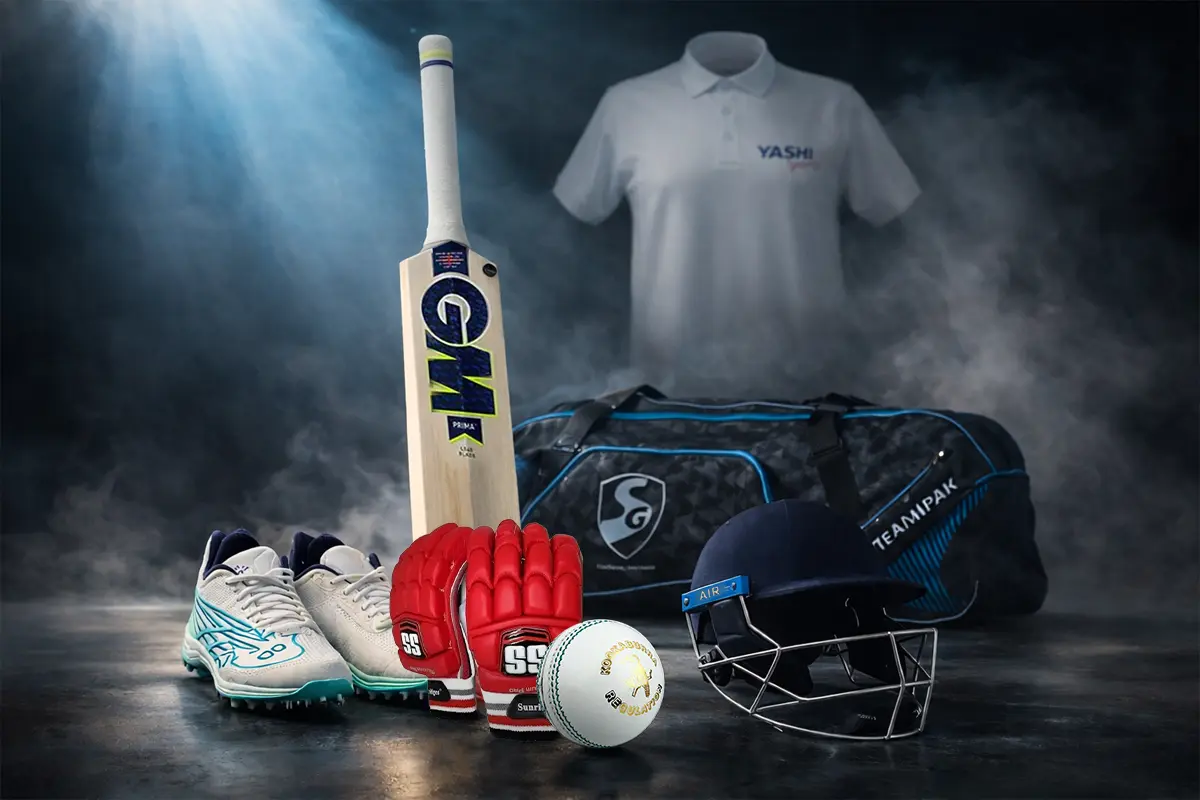
The basics are simple: bat, pads, gloves and helmet. Youth starter sets in U.S. retail commonly bundle smaller bats, batting pads, gloves, helmets and other protective gear, which is helpful if you are trying to avoid mismatched purchases. One youth complete cricket kit is listed at $274.99 from MACE Cricket, and other U.S. youth collections and starter sets fall in the roughly $50 to $300+ range depending on quality and completeness.
- Bat: For younger players, smaller bats are common in starter kits, and some youth collections even include a plastic cricket bat. That can be enough for early sessions, especially if your group is still using softer balls.
- Pads and gloves: These are not extras if you are facing a real ball, even in beginner cricket.
- Helmet: This is the piece that should move to the front of the line as soon as leather-ball cricket enters the picture. Youth cricket guidance is stricter on helmets, with some advice making them mandatory for players under 18, and helmet standards such as BS7928:2013 are widely referenced.
- Shoes: Missouri's hard outfields and summer heat make footwear worth thinking about early. You want something you can train in comfortably and trust on harder ground, not a last-minute bargain that leaves you slipping or overheating.
Borrow first, then spend
Before you commit to a full kit, ask your club what you can borrow for the first few sessions. A borrowed helmet, a set of pads or even a bat can tell you a lot about what size feels right and whether you are about to play tennis-ball cricket on weekends or move straight into hardball league play. That one question can keep you from buying a kit that looks complete but does not fit the cricket you will actually join.
The Missouri Youth Cricket Association is a registered nonprofit in St. Charles with training and tournaments for young cricketers. USA Cricket's junior pathway listings show a 2025 USAC Missouri Hub U15 schedule.
Youth purchases should fit the player, not the packaging
Parents buying for kids need to think about growth, not just price tags. The Missouri Youth Cricket Association's registration information references ages 6-8 and a group of about 40 kids ages 7-13, which is exactly the age range where a bat that feels fine today can become awkward in a few months. In that stage, a starter kit makes more sense than collecting individual pieces at random, because the bundled approach keeps bat size, pads, gloves and helmet in the same conversation.
The American Cricket Academy and Club of St. Louis is listed online as a Missouri cricket organization and has registration open, while the Saint Louis Cricket League has shown expansion activity and Kansas City's MCC-KC Premier League lists 8 teams for its 2026 league page.
Spend on the pieces that keep up with your cricket
Keep the order simple: protection first, upgrades later. If you are still learning the difference between tape-ball and leather-ball cricket in Missouri heat, you do not need to chase every accessory before you have seen one proper training session. Buy the bat, pads, gloves and helmet that fit your first season, then add the rest only after your club, league or junior pathway makes the next step clear.
This article was produced by Prism’s automated news system from verified source data, official records, and press releases, then run through automated quality and moderation checks before publishing. The system is built and supervised by the people who set the standards it runs under. Read our full AI policy.
Did this article answer your question?