How DLS works when Missouri cricket matches are interrupted by rain
A summer storm can wreck a Missouri chase in minutes, and DLS is the cleanest way to reset it. Used in one-day and T20 cricket, it turns overs and wickets into a fair revised target.
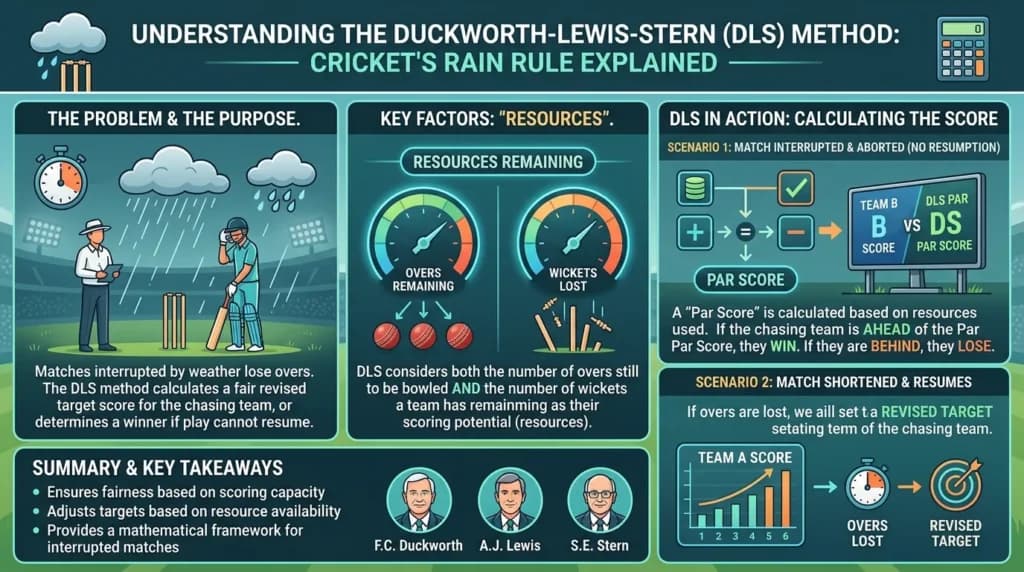
A Missouri cricket match can start under bright sun, then a fast-moving thunderstorm rolls through and the scorebook suddenly has to make sense of lost overs. That is where Duckworth-Lewis-Stern, or DLS, earns its keep. It gives leagues a formal way to recalculate a target when a limited-overs match is interrupted, instead of leaving captains, scorers, and spectators to argue over what the chase should be.
Why DLS matters in Missouri matches
DLS is built for one-innings formats, especially one-day cricket and T20 cricket, where the number of overs is fixed and rain can cut straight into the contest. The International Cricket Council uses it when a match has been suspended and overs are lost from the original allocation. That matters in Missouri because weekend leagues often have tight field windows, shared grounds, and no real appetite for replaying a washed-out finish.
The key idea is simple enough to explain in a clubhouse: a batting side is working with two resources, overs remaining and wickets in hand. When rain eats into the match, DLS recalculates how much scoring opportunity is still available and turns that into a revised target.
How the calculation works in plain English
The easiest way to understand DLS is to think in resources, not in abstract math. In an ODI innings, the batting side starts with 300 balls and ten wickets, then spends those resources ball by ball and wicket by wicket. DLS tracks what is left at the interruption point and uses that to judge what a fair chase should look like.
That is why a side with wickets in hand can be in a better position than a team that has already lost half its lineup, even if both are short on overs. The method does not just look at time lost. It looks at how much scoring power remains when the rain stops the game. ICC playing conditions require the revised target to be computed with the latest version of the ICC Duckworth-Lewis-Stern Calculator, and they call for back-up capability where possible in case the computer fails.
Par score is not the target
This is the part that causes most of the sideline confusion. A par score is the score the chasing side should have reached at the exact moment of interruption. The target is the fixed number the team batting second must now beat after the match is adjusted. Those are related, but they are not the same thing, and mixing them up is how amateur games spiral into long arguments.
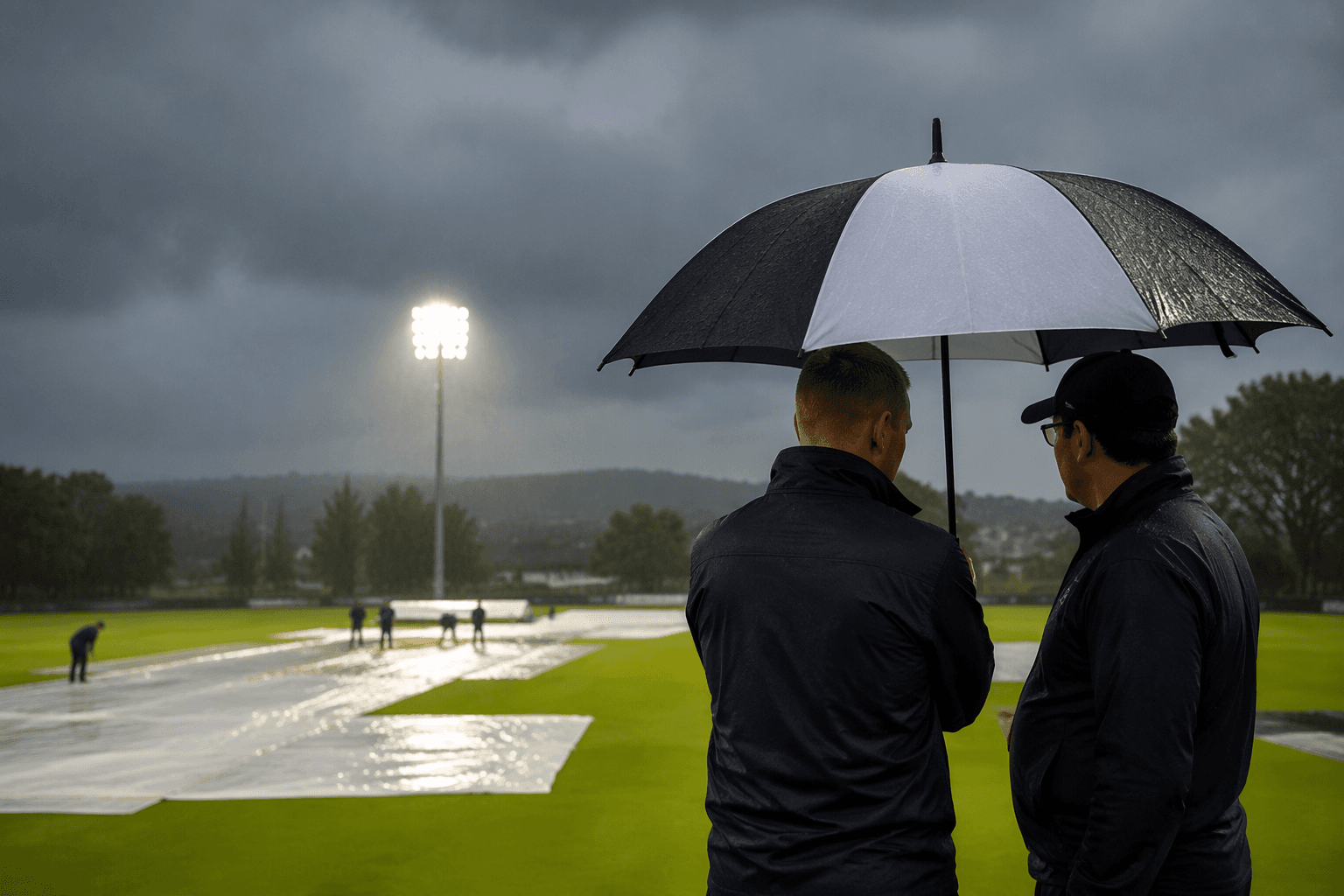
In practical terms, if the rain stops play and the scoreboard jumps to a revised chase, the number on the board is the target, not the par score. The par score is the reference point that tells you whether the chase was ahead or behind when the interruption happened. A Missouri scorer may have to explain why the revised figure is lower than the original total, or why a team that was cruising suddenly needs a different number after a delay.
What captains and scorers should settle before the first ball
If your league wants DLS to prevent drama instead of creating it, the match rules need to spell out the basics in advance. Someone has to be responsible for recording overs, wickets, and stoppage times accurately, because DLS only works when the interruption point is clear. The league also needs to decide whether it is using the ICC DLS calculator itself, or a scoring setup that mirrors it closely.
A practical Missouri checklist looks like this:
- Name the scorer or official who enters the interruption data
- Confirm how stoppage time is tracked
- State which version of DLS the league uses
- Make sure someone can access the latest ICC calculator
- Keep a back-up method ready in case the primary device malfunctions
The method has a real cricket history behind it
Frank Duckworth and Tony Lewis first presented the method in 1995, and it was introduced into county cricket in 1997. The first international use came on 1 January 1997 in Harare, when Zimbabwe batted first, made 200 in 50 overs, and rain during the interval disrupted the chase.
Steven Stern later refined the method, which is why the modern name includes his surname. Frank Duckworth died in 2024 at age 84, and his work still sits at the center of how interrupted limited-overs cricket is settled.
This article was produced by Prism’s automated news system from verified source data, official records, and press releases, then run through automated quality and moderation checks before publishing. The system is built and supervised by the people who set the standards it runs under. Read our full AI policy.
Did this article answer your question?