Missouri cricket fits into USA Cricket’s regional zone pathway
Missouri clubs are inside USA Cricket’s Western Conference map, and that changes how players register, compete, and climb the pathway. The St. Louis Shooting Stars show the system can turn local numbers into a real route forward.

Missouri cricket is not floating on its own anymore: USA Cricket’s zone map gives clubs a place in the Western Conference, and that changes how players, families, and organizers read the season. The Western Conference includes the Mid-West, South Central, North West, and South West zones, and USA Cricket says those regional zones are how it administers local cricket from grassroots through high performance. For Missouri clubs, that means the question is no longer just where to play this weekend, but where a team fits inside a recognized ladder.
What the zone structure actually does
The most practical change is legitimacy. A Missouri club that registers, schedules, or builds age-group teams inside USA Cricket’s zone framework is not just organizing games on its own terms, it is plugging into the governing body’s system for competition and development. USA Cricket says its regional zones support programs and services for both women and men starting at the U13 level, which gives clubs a clearer way to plan beyond the adult weekend league.
That matters in a state where cricket activity is concentrated in places like St. Louis and Kansas City. A zone structure gives those communities a common language for registration, player tracking, and competition categories, instead of forcing every club to invent its own pipeline. It also gives parents something concrete to point to when they ask how a junior player moves from local cricket to something more formal.
How the pathway works from the ground up
USA Cricket’s youth pathway materials say hubs are established in each zone, and the junior pathway handbook is blunt about the purpose: hub competition is the first step in the domestic pathway toward representative cricket. In plain terms, that is the first filter that turns local participation into something selection-based. For Missouri clubs, that means the pathway is not only about getting matches on a calendar, but about making sure players are visible to the next level.

The 2023 youth policy goes a step further by tying the number of hubs to the number of registered players and the size of the zone. That is the part Missouri organizers should pay attention to, because it means participation is not just a vanity metric. More registered players can shape how many hubs exist, how far families travel, and how much room local cricket has to grow inside the national structure.
Why women’s and girls’ cricket is the clearest example
The women’s pathway shows exactly how the zone model works when it is moving well. USA Cricket opened registration for the 2024 women’s domestic pathway, with local trials beginning in late March and intra-regionals running from April 27 to July 1. USA Cricket said the 2024 pathway was in its fourth year, and that the intra-regionals served as the first step on the official ladder for women and girls.
That ladder is not symbolic. USA Cricket said the 2024 competition was designed as a talent-identification platform leading toward national championships for seniors, under-19, and under-15 categories. For Missouri families, that turns the zone system into something tangible: a young player can move from local cricket, to trials, to intra-regional competition, and then into a pathway that has age-group endpoints and a national frame.
St. Louis gives Missouri a real example to point to
St. Louis is the best proof that this is not abstract bureaucracy. USA Cricket said strong player registration in St. Louis was enough to add the St. Louis Shooting Stars to the 2024 women’s Intraregional Competition, and it named a local volunteer team coordinator for the side. That kind of move matters because it shows the zone structure can respond to local depth rather than flattening every market into the same template.
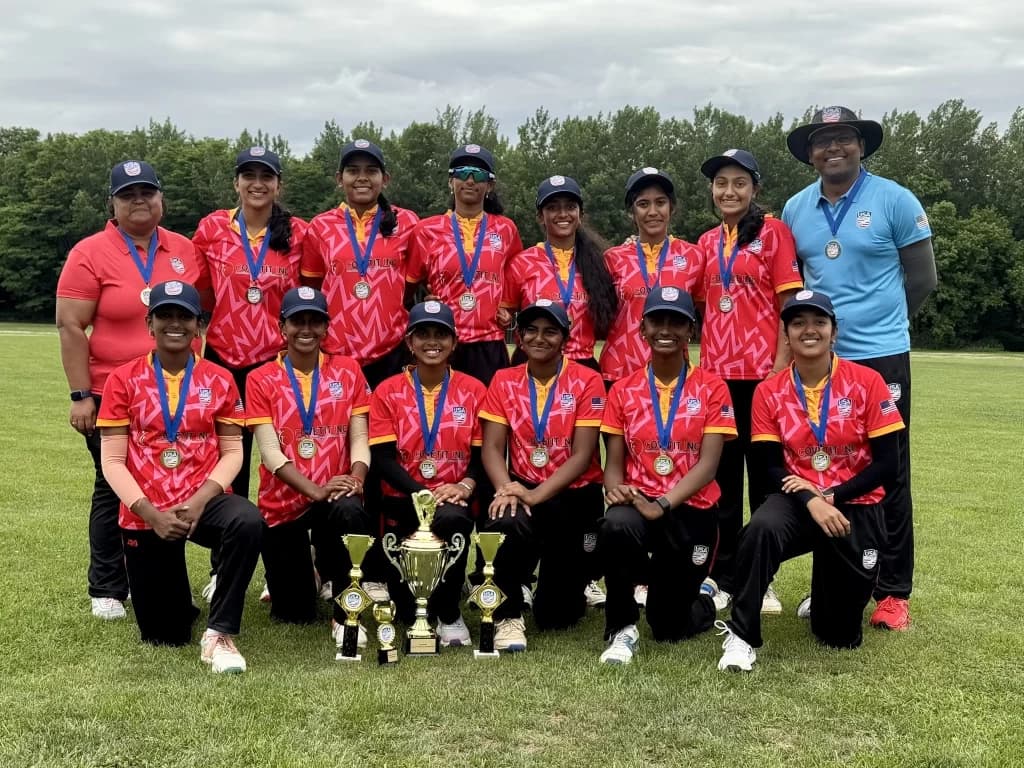
The numbers behind that competition are useful too. USA Cricket said the 2024 women’s intra-regional competition ran six weeks, included 90 matches, and brought together 15 teams across four regions. It also said there were 230 new registrants compared with the prior year. For Missouri cricket, those figures are more than a stat line: they show that local growth can become real fixtures, real squads, and real match volume.
What Missouri clubs should do with this structure
For a Missouri club trying to decide whether the zone system is helpful or just another layer, the answer depends on what the club wants next. If the goal is a social Sunday league with no upward path, the zone map may feel remote. If the goal is to give juniors, women, and serious adult players a route into recognized competition, the map is the route itself.
- Register players in the correct USA Cricket channels so the club is visible inside the pathway.
- Build age-group cricket around the U13-plus framework, not just the adult season.
- Treat hub competition and intra-regional events as the bridge between local cricket and representative cricket.
- Track where St. Louis-style growth is happening, because that is the kind of momentum that can create new teams and more match opportunities.
The smartest way to use it is straightforward:
That is why the zone structure matters for Missouri this season. It does not replace local cricket in St. Louis or Kansas City, and it does not erase the work clubs do on their own grounds. It gives that work a recognized route forward, and the St. Louis Shooting Stars are the clearest sign that when the numbers are there, the pathway can turn a local cricket pocket into part of the national map.
This article was produced by Prism’s automated news system from verified source data, official records, and press releases, then run through automated quality and moderation checks before publishing. The system is built and supervised by the people who set the standards it runs under. Read our full AI policy.
Did this article answer your question?