Missouri Premier Cricket League builds deep 20-over club cricket base in Hazelwood
Hazelwood has become the center of Missouri’s serious 20-over club game, and MPCL’s deep roster now raises a bigger question about how far that format can grow.

Hazelwood is where the serious club game lives
Missouri Premier Cricket League has built something sturdier than a weekend pickup circuit in Hazelwood. Its 2025 Summer Cup is listed as a men’s, leather-ball, club Twenty20 competition, and the team list already shows real depth, with Afghan Stars, Blues, Falcons, Gujarat Superstars, Gully Strikers, Rising Stars, Slayers, St. Louis Qalandars, and STL Dragons all in the mix.
That matters because a league only feels established when it has more than one familiar weekend lineup. MPCL now has a defined home ground, a formal playing structure, and enough named sides to suggest that Missouri’s club game is no longer scattered across isolated gatherings. In practical terms, Hazelwood has become the place where the state’s most organized T20 club cricket can actually be mapped.
A home ground with a clear identity
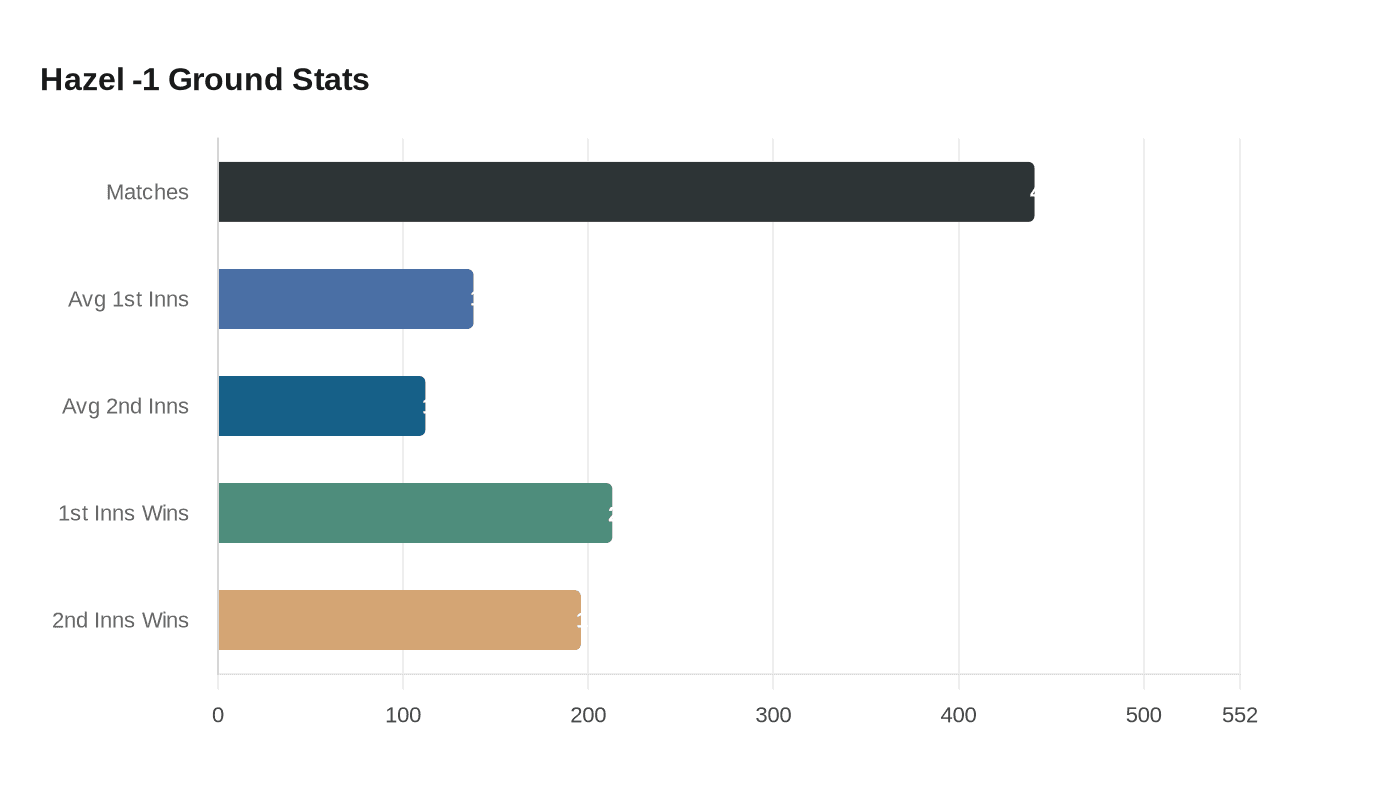
The league’s Hazel -1 ground page puts the center of gravity at 4622 Aubuchon Rd, Hazelwood, MO 63042. It is not just a label on a schedule. The venue has hosted 441 matches, which gives the ground a real statistical history and a meaningful body of evidence for captains, scorers, and anyone reading the pitch before a game.
The numbers are especially useful. Hazel -1 shows an average first-innings score of 138 and an average second-innings score of 112. The first batting team has won 213 times, while the second batting team has won 196 times. That tells a captain two things at once: runs are not impossible at the venue, and the ground has not been locked into one simple winning pattern.
For match planning, that is the kind of data that shapes toss decisions and batting orders. The gap between first-innings and second-innings scoring suggests teams need to be deliberate about setting targets and managing chase pressure, while the near-balanced win split shows that execution still matters more than a single script.
Hazelwood gives the league its practical base
Hazelwood’s role goes beyond one cricket ground. The city describes the Hazelwood Sports Complex as a 19.73-acre facility with two quality cricket fields and a pavilion, and the Parks and Recreation division says the complex is available for reservation. That is a major difference from cricket that survives only through informal access and last-minute field sharing.
A city-backed complex changes how the sport works on the ground. It gives clubs a fixed place to schedule around, gives players a recognizable destination, and makes weekend travel more realistic for teams trying to keep a regular calendar together. For a league like MPCL, that kind of municipal footprint is what turns a format into a system.
Hazelwood also gives cricket a sense of place. Instead of dispersing the league across several scattered venues, the local setup concentrates play in a way that makes league administration, scoring, and spectator access easier to sustain. That centralization is a big reason Hazelwood now looks like Missouri’s real club-cricket hub rather than just another host site.
The junior pathway is already part of the structure
MPCL’s importance is not limited to adult men’s cricket. Hazelwood calendar listings show junior cricket programming run in partnership with the Missouri Premier Cricket League, with two age groups, 6 to 9 and 10 to 13, and experienced players teaching the rules and skills of the game.
That youth lane matters because it connects the adult club scene to the next generation of players. A league with formal adult competition, a city-supported venue, and junior instruction is doing more than filling a summer schedule. It is building continuity, which is exactly what a local cricket community needs if it wants players to move from learning the basics to playing organized leather-ball cricket.
The broader St. Louis cricket story backs that up. A 2015 IndiaPost report said cricket had been played in St. Louis for at least 140 years and noted that the area had at least three adult leagues and two youth leagues. A Missouri Youth Cricket Association post also said cricket has been part of Hazelwood Sports Complex for more than 20 years. MPCL’s Summer Cup sits inside that longer lineage, not outside it.
Why the fixed 20-over format works, and where it may pinch
MPCL’s formal MPCL 20/20 Rules file, dated 2025-03-21, shows a competition that is being run through written rules, not casual agreement. That gives the league consistency, and consistency is a strength. A fixed 20-over format is easier to schedule, easier to administer, and easier for players to fit around work, family, and travel.
It also gives the league a clean competitive identity. If Missouri cricket needs a recognizable club product, Twenty20 is the most straightforward way to deliver one. The format matches the Hazelwood venue data too, because a ground with 441 matches and a stable record of first-innings and second-innings outcomes gives teams a repeatable environment to measure themselves against.
But the same structure can also define the ceiling. A league built almost entirely around leather-ball Twenty20 may become very good at one thing while making it harder to widen the player base into longer formats. Some players want the rhythm and strategy of extended cricket, while others may be drawn in first by shorter games and then stay for broader opportunities. MPCL has clearly chosen the fastest, most accessible club format, but that choice also means the league’s identity is now tightly tied to 20 overs.
That is the central story in Hazelwood right now. MPCL has a deep roster, a fixed home, a city-supported complex, and junior pathways feeding the future. The question is no longer whether serious club cricket exists in Missouri. Hazelwood has answered that. The real question is whether the league’s strong 20-over identity becomes a platform for growth, or a boundary that keeps the game exactly where it is.
This article was produced by Prism’s automated news system from verified source data, official records, and press releases, then run through automated quality and moderation checks before publishing. The system is built and supervised by the people who set the standards it runs under. Read our full AI policy.
Know something we missed? Have a correction or additional information?
Submit a Tip