St. Louis Cricket Club blog built a coaching hub for players
A St. Louis club turned a blog into a coaching shelf, giving Missouri cricket a public syllabus of batting, captaincy, fitness, and practice routines.
The St. Louis Cricket Club homepage linked pages for batting basics, the captain’s job, fielding positions, fitness for cricket, online cricket clips, and shopping resources. The blog acted like a compact coaching library. For a club rooted in Pakistani and Indian communities and Midwest-affiliated since 1965, the knowledge was being built in public for players who needed practical help right away.
A blog that functioned like a syllabus
Instead of hiding coaching behind a formal academy or a paid program, the blog organized the basics into clearly labeled pages that a new player could move through one at a time. Batting, leadership, fielding, conditioning, video study, and gear all sat in the same small ecosystem, which is exactly what a volunteer-run cricket scene needs when practice time is short and players are learning on the fly.
That structure also fits the club’s place in a long-running regional network. The Midwest Cricket Conference was established in 1965, with St. Louis among its cities.
Batting basics built for real club cricket
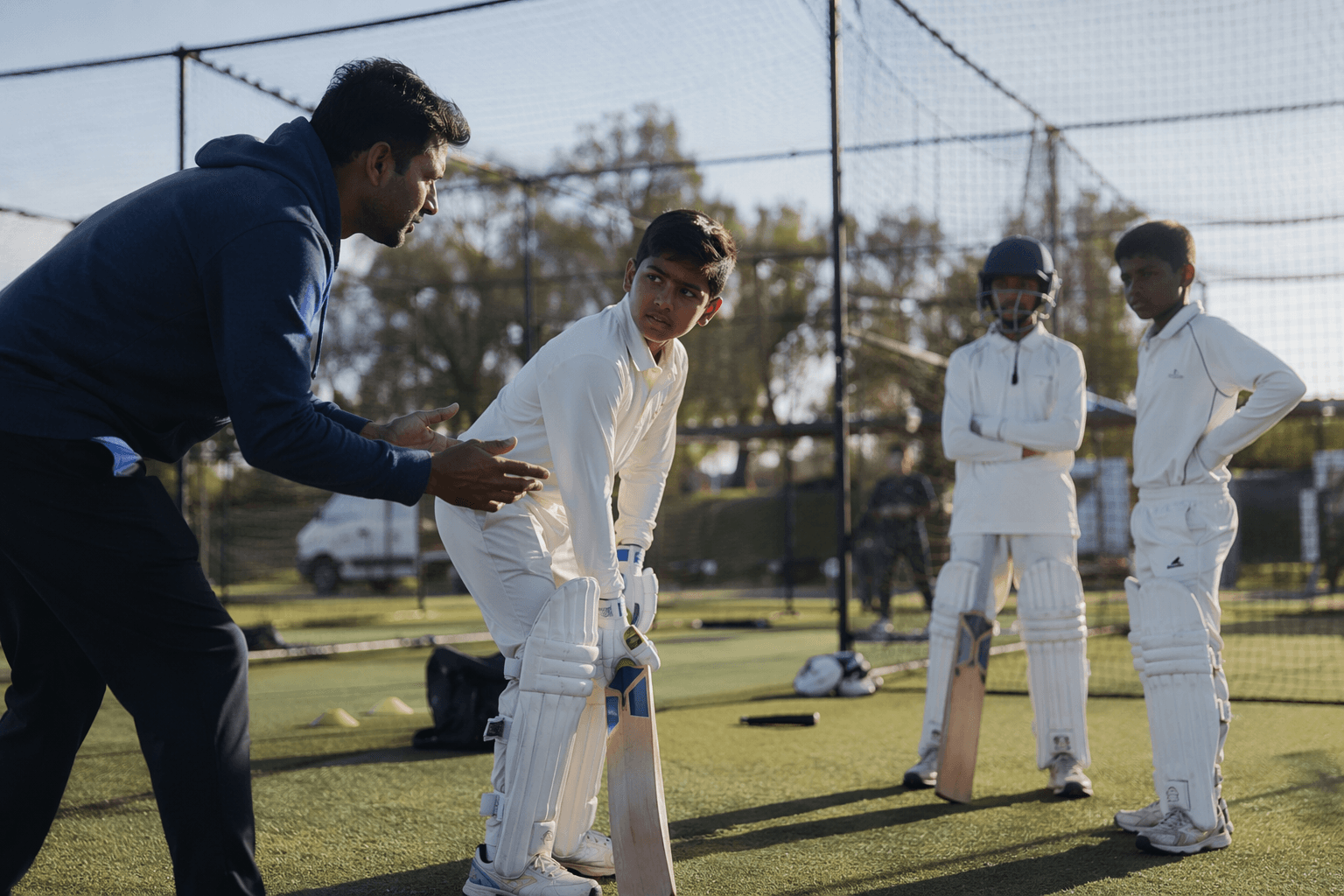
The batting page is the clearest example of how the club taught the game. Its advice starts with concentration, playing straight, and leaving wide balls alone, then moves into the safest shot choices for early singles. That is not flashy coaching language. It is the kind of compact framework that helps a player survive the first few overs, settle in, and avoid throwing away an innings before it has started.
For Missouri cricket, that approach makes immediate sense. Players often practice on mixed-use grounds, deal with uneven pitch quality, and return to the game after long gaps, so a lesson built around patience and simple decisions is more valuable than a long technical lecture. The page gives newcomers a clear priority list: watch carefully, stay disciplined, score when the ball is there, and do not try to force the game too early.
A club can borrow that right now by turning batting instruction into a few repeatable habits:
- Start every session with one cue, such as playing straight.
- Build the habit of leaving wide balls instead of chasing them.
- Make singles the first scoring goal, not boundary-hunting.
- Keep early-innings batting focused on getting settled before expanding the scoring range.
Captaincy as a coaching tool, not just a match-day job
The captain’s page applies the same practical logic to leadership. A captain should choose the most balanced side available, communicate with players on the edge of the XI, and keep the team competitive and enjoyable at the same time. That is a strong reminder that club cricket in Missouri often depends on one person doing several jobs at once: selector, tactician, motivator, and social glue.
The club’s 2008 season notice makes that responsibility concrete. It named Sohail Alvi as captain, Shoaib Kharawala as vice captain, and Mehul Patel as secretary, with a selection committee made up of Masroor Hussain, Tehsin Ahmed, Shoaib Kharawala, and Sohail Alvi. It also set official practice for Friday evening and asked players to confirm availability by Thursday night, which shows a disciplined volunteer routine rather than a loose pickup arrangement. At least two practice games were planned before the official season, a reminder that the club treated preparation as something regular and collective, not occasional and improvised.
Another club, parent, or volunteer coach can copy the structure around the team:
- name the leadership group clearly;
- make selection a transparent process;
- set one regular weekly practice time;
- require a simple availability check before practice;
- schedule practice games before competition starts.
Fielding, fitness, clips, and gear round out the library
The value of the blog is not just that it teaches batting and captaincy. It gave players a full self-study path. A newcomer could learn where to stand, how to train, what good cricket looks like on video, and what equipment to look for without waiting for a formal academy session.
In St. Louis, cricket has often advanced through player-created knowledge-sharing rather than through top-down institutions alone. A fielding map helps a player feel less lost. Fitness guidance makes practice more sustainable. Video clips show the game in motion. Gear links remove one more barrier for a new family or a returning player.
Why the St. Louis model matters across Missouri
The club’s coaching library sits inside a deeper local history. Cricket has been played in St. Louis for at least 140 years, and much of that history has centered on Forest Park and Cricket Drive. More recently, the sport’s growth has been tied to migration and immigrant community ties.
By 2015, St. Louis had at least three adult leagues and two youth leagues, including the Missouri Youth Cricket Association. Then in 2017, the BaratHaven Park field in Dardenne Prairie gave the American Cricket Academy and Club of St. Louis a dedicated home for the first time.
This article was produced by Prism’s automated news system from verified source data, official records, and press releases, then run through automated quality and moderation checks before publishing. The system is built and supervised by the people who set the standards it runs under. Read our full AI policy.
Did this article answer your question?