20 Crochet Patterns to Donate, Comfort Communities in Need
These 20 donation-ready crochet patterns are small, sturdy, and useful, from NICU hats to shelter blankets and chemo beanies.
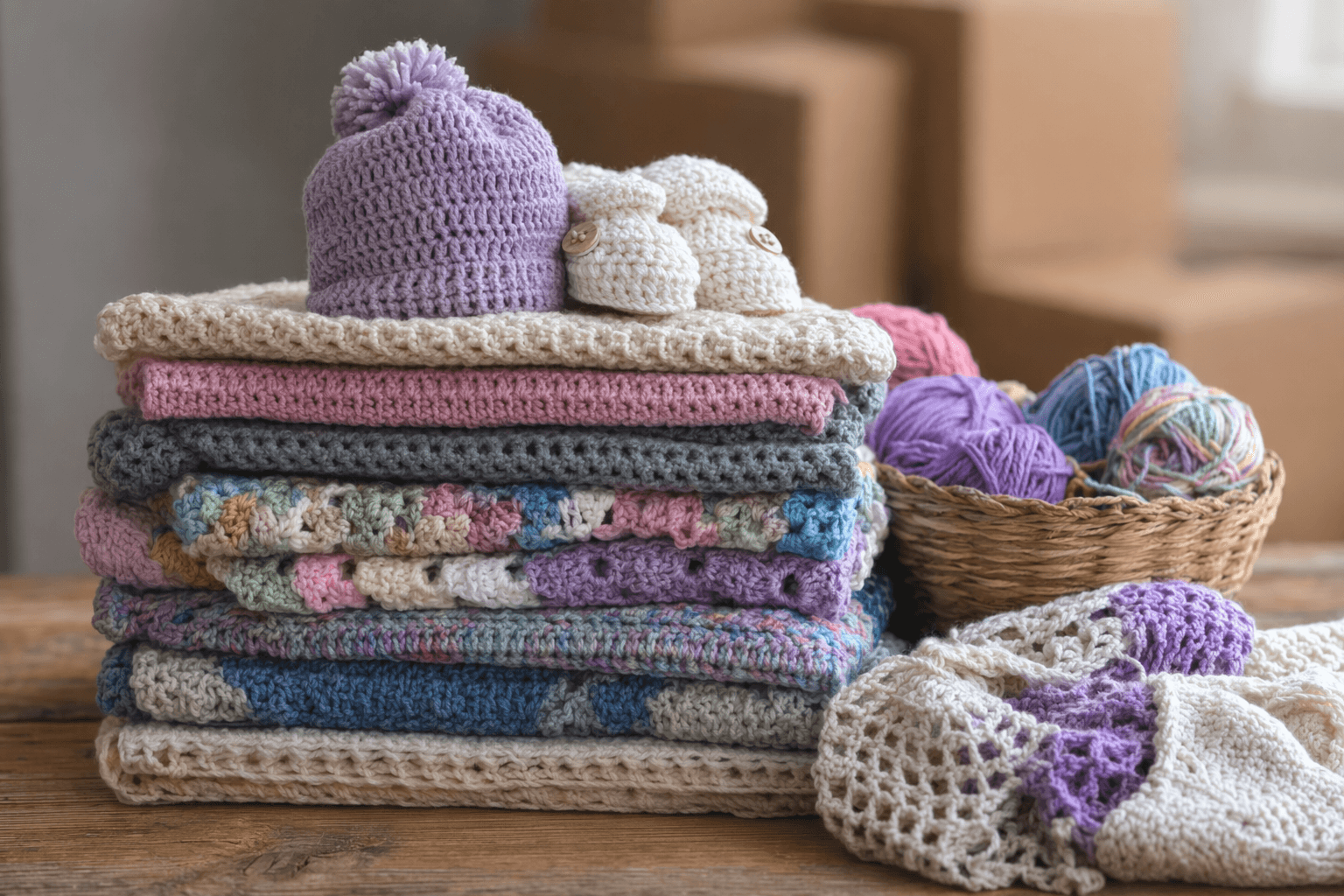
The best donation crochet earns its keep fast: it warms a tiny baby, softens a hospital chair, or gives a shelter kennel a little less hard edge. Most programs want handmade items to be new, washable, smoke-free, and free of pet hair or fragrance, and some NICU and hospital drives also ask for specific yarn, size, color, or packaging rules.
1. Preemie hats
Tiny hats are one of the quickest ways to make a real difference in a NICU, where fit matters and softness matters even more. The U.S. preterm birth rate was 10.41 percent in 2024, so these small projects stay relevant, and they are ideal when you want a finish you can complete without a huge yarn commitment.
2. NICU blankets
A small blanket for a preemie or newborn in intensive care does more than look sweet. It provides warmth and a clean, washable layer of comfort, which is why many hospital donation lists keep coming back to them.
3. Baby mittens
Little mitts help protect newborn skin from scratching and add an extra layer of warmth for babies who need it. They are also a smart stash-buster because they use very little yarn and can be made in pairs from leftovers.
4. Baby booties
Booties are one of the most practical quick makes in the baby-care category because they are small, fast, and easy to bundle with hats or blankets. They work especially well for donation drives that want complete newborn sets without requiring a huge time investment.
5. Newborn hats
A simple newborn hat is a staple for hospital baskets and family support programs because it is useful immediately, easy to size, and fast to repeat. When a pattern is washable and made in a color range approved by the receiving group, it becomes one of the most efficient donations you can make.
6. Children’s blankets for Project Linus
Project Linus says it has delivered more than 10,359,234 handmade blankets since 1995 to children ages 0 through 18 in the United States who are seriously ill, traumatized, or otherwise in need. That scale makes children’s blankets one of the clearest examples of crochet with a direct, established distribution path.
7. Lapghans
A lapghan is the sweet spot between a blanket and a lap cover: large enough to warm a patient or resident, small enough to finish without losing steam. In hospital rooms, wheelchairs, and long-term care settings, that extra layer can add comfort without getting in the way.
8. Chemo beanies
Knots of Love says it was founded in 2007 and has given 698,026 gifts, including premium hand-knit and crocheted beanies for people going through chemo. That makes a chemo beanie a high-impact project, especially when you want something close-fitting, soft, and easy to pack and mail.
9. Soft scarves
Scarves are a classic shelter donation because they are portable, wearable, and simple to match with winter outreach needs. A plain, sturdy scarf does not need to be fancy to be useful, and it is one of the easiest ways to turn leftover yarn into real warmth.
10. Shawls
A shawl can do a lot of jobs at once: cover shoulders in a chilly hospital waiting room, provide warmth during treatment, or give someone staying in unstable housing a layer that feels a little more dignified. The beauty of the pattern is in its usefulness, not its complexity.
11. Cozy slippers
The roundup’s cozy slippers make sense because they solve a very basic problem: cold feet. They are fast, satisfying, and genuinely useful for patients, residents, or shelter clients who need something soft and warm right away.
12. Fingerless mitts
Fingerless mitts keep hands warmer while still leaving fingers free for phones, buttons, zippers, and wheelchair wheels. That makes them especially practical for shelters and transitional housing, where people still need full hand function even in cold weather.
13. Ear warmers
Ear warmers are a low-yarn, high-comfort winter item that can be finished quickly and worn immediately. They are a good choice when you want a donation piece that is simple enough for newer makers but still feels purposeful.
14. Soap sacks
Soap sacks are one of the most utilitarian crochet donations because they are built around hygiene, not just warmth. They make a bar of soap easier to hold and carry, which is exactly the kind of small, useful detail shelters and community care groups can put to work.
15. Washcloths
Washcloths are easy to overlook, but donation programs can always use a stack of clean, absorbent basics. They are a smart option when you want to use up scraps while making something that fits neatly into hospital bags, shelter kits, or baby-care bundles.
16. Pet rescue blankets
Shelter Animals Count reported in 2025 that an estimated 5.8 million cats and dogs entered U.S. shelters and rescues, which explains why pet-rescue donations still matter. A soft blanket gives a nervous animal a cleaner, calmer place to rest and helps a crate or kennel feel less stark.
17. Kennel mats
A thicker kennel mat is useful where a blanket alone is not enough, especially for hard floors, transport crates, or foster setups. If you want to make for animal rescues with a sturdier end use, this is the kind of practical pattern that gets used hard.
18. Cat beds
A crocheted cat bed gives shelter animals a defined, soft place to curl up, which can make stressful environments feel a little less exposed. It is a good example of how handmade softness can serve a very concrete purpose in rescue care.
19. Granny-square blankets
Granny-square blankets are ideal for makers who like to work in pieces, because each square can be finished in short bursts and joined later. That structure makes them easy to build from stash yarn while still producing a full-size donation item that looks cheerful and feels intentional.
20. Strip-and-join throws
Striped throws are one of the best ways to turn smaller amounts of yarn into something practical and polished. They are straightforward to scale up for charity drives, and they close the loop on donation crochet exactly the way the best patterns should: simple to make, useful to receive, and sturdy enough to go straight into someone’s daily life.
This article was produced by Prism’s automated news system from verified source data, official records, and press releases, then run through automated quality and moderation checks before publishing. The system is built and supervised by the people who set the standards it runs under. Read our full AI policy.
Did this article answer your question?