Double-Sided Interlocking Crochet Blanket Pattern Creates Two Distinct Reversible Designs
Interlocking crochet turns one blanket into two distinct sides, and this pattern shows why the extra effort pays off. It uses familiar stitches, but the stitch placement creates a polished reversible fabric.
A reversible blanket that earns its keep
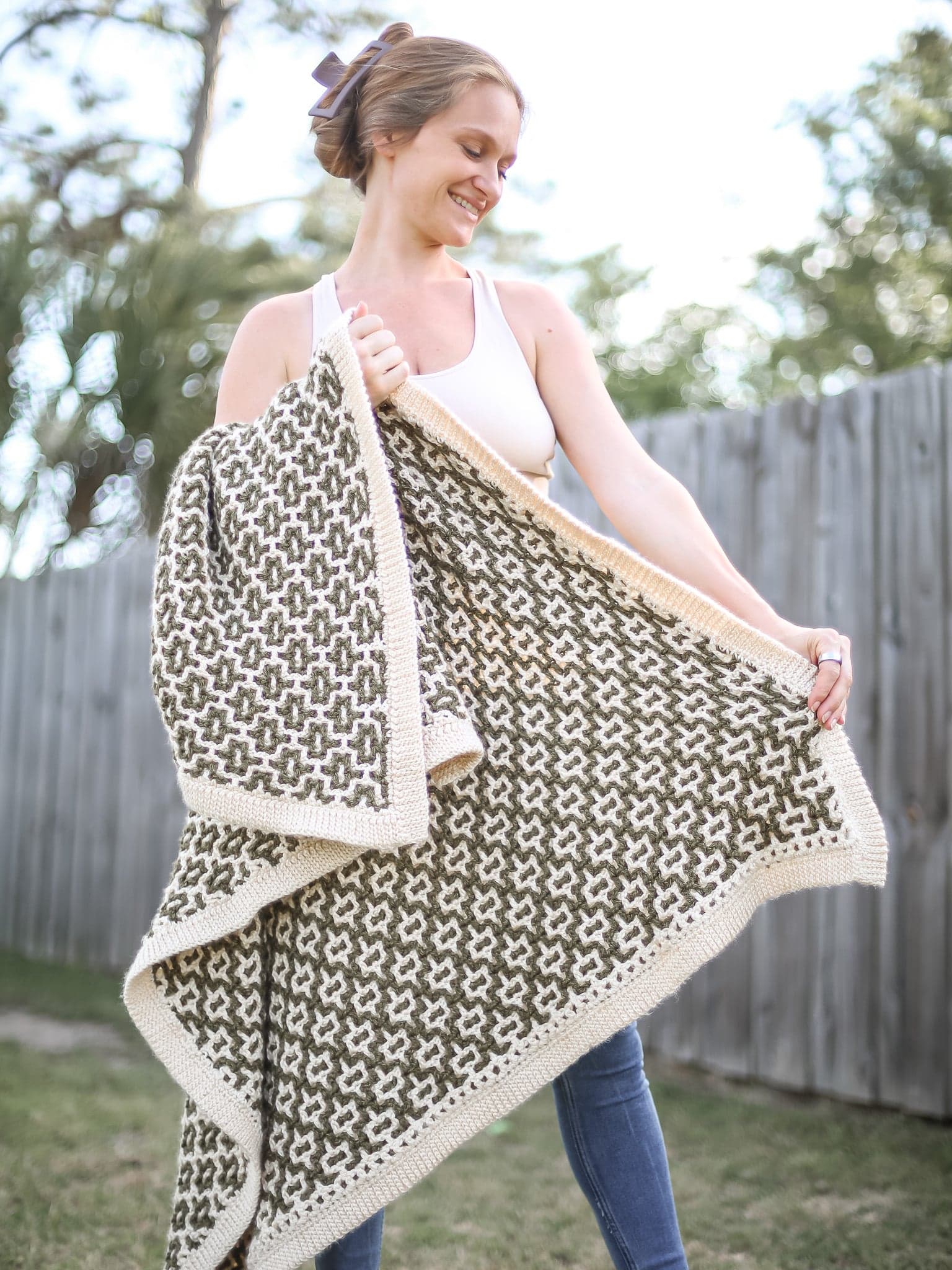
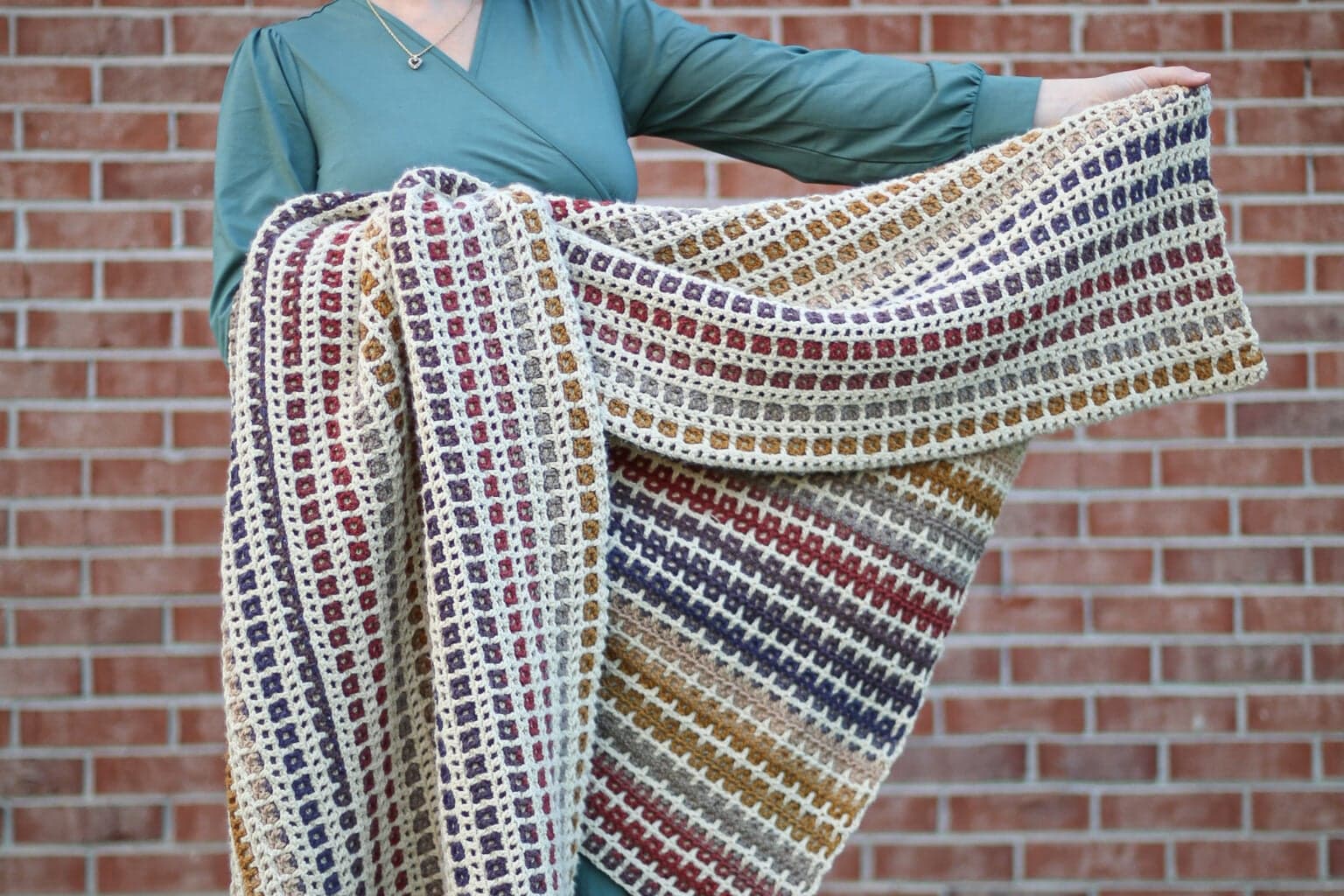
A truly reversible blanket changes the game the moment you pick it up. With the Woven Tiles Heirloom throw, the appeal is not just that it looks finished from both sides, but that each face shows a different pattern, giving one project the presence of two distinct designs in a single fabric. That double-sided result is the kind of payoff that makes interlocking crochet worth learning for the ambitious maker who wants more than a standard one-sided throw.
The pattern sits squarely in advanced territory, but it does not demand an entirely unfamiliar stitch vocabulary. The foundation still rests on familiar building blocks: chains, double crochet, and slip stitches. What makes the project feel different is the way those stitches are arranged and worked together, with two yarn strands moving in front of, behind, and through stitches to build the layered effect. In other words, the challenge is less about learning a brand-new stitch and more about mastering placement, tension, and consistency.
How interlocking crochet creates two surfaces
Interlocking crochet, sometimes called double filet crochet, is the technique that gives this blanket its signature look. Instead of relying on increases or decreases to shape the fabric, the method uses carefully positioned strands and interwoven stitch paths to form the visual pattern. That means the crocheter has to stay alert to where each strand sits at every point in the row, because the appearance of one side depends on the path taken by the other.
The payoff is a fabric that reads cleanly and graphically. The structure tends to produce crisp blocks and defined contrasts, which is exactly why it suits heirloom-style blankets so well. When the two colors are chosen well, the front and back do not merely look like one another flipped over; they become two coordinated designs that feel deliberate and polished.
That construction also explains why stitch placement matters so much. A row that is only slightly off can disturb the pattern on both sides, so this is the kind of project that rewards close attention from the first chain onward. For crocheters who like a make that feels architectural, the method offers a satisfying blend of logic and artistry.
Why the yarn choice matters as much as the stitch
The Woven Tiles Heirloom throw uses worsted-weight yarn in two contrasting colors, and that choice is central to the visual impact. Reversible crochet depends on clear distinction between the strands, and contrasting colors help each side stand out as its own finished design. Without that contrast, the interlocking effect would still work, but the drama of the double-sided fabric would be muted.
Worsted weight also gives the blanket enough body to hold its shape while still being practical for a throw. That balance matters in a pattern like this, because the finished piece is meant to feel substantial without becoming unwieldy. The texture and structure have to do their work visually, and the yarn weight supports that crispness.
For a maker planning a gift blanket or an heirloom piece, that combination of contrast and substance is part of the appeal. It creates a blanket that can hold its own in a living room, drape neatly across a bed, or become the sort of handmade gift that immediately feels more considered than a simple single-sided throw.
Who this pattern is for
This is not the project for someone looking for a quick weekend finish with minimal concentration. It is labeled advanced skill level, and that label is earned by the precision the technique requires. Still, it is not reserved for specialists in some rare corner of fiber art. If you already know how to handle chains, double crochet, and slip stitches, you have the essential foundation needed to start working through the method.
That makes the pattern especially appealing to crocheters who want a challenge that is meaningful rather than punishing. It asks for patience, but it also offers a clear structure and a visible reward. Each section of the blanket teaches you something about controlling strands, reading stitch placement, and trusting the process until the two-sided fabric reveals itself.
It is also a strong fit for anyone who cares about presentation. Some blankets are warm and useful; this one is also visually memorable. The interlocking construction gives it the kind of graphic finish that looks at home in modern spaces while still carrying the handmade weight that makes heirloom crochet so satisfying.
A pattern built for practical beauty
The project was created for a collection in collaboration with Lion Brand, and it is offered through familiar pattern and kit channels, including PDF versions and kits. That makes it accessible to crocheters who prefer to buy the materials and instructions together rather than source everything piece by piece. For a technique-driven blanket, that convenience matters, because it lets the maker focus on the stitch work instead of assembling a complex supply list.
The bigger value, though, is in what the finished blanket delivers. Instead of investing time and yarn into a piece that only looks complete from one direction, you end up with a textile that holds up from either side. That alone changes how the blanket functions in daily use, whether it is tossed over a sofa, layered on a bed, or given as a special gift that is meant to impress from every angle.
Why mastering the technique pays off
Interlocking crochet asks more of you than a straightforward row-by-row blanket, but the return is obvious in the finished fabric. You get structure, contrast, and the rare satisfaction of a truly reversible textile. The pattern’s use of basic stitches inside a more complex framework makes it a smart stretch project: challenging enough to feel educational, familiar enough to remain approachable.
For crocheters who like their work to have visual discipline and a strong finish, that matters. This is the kind of blanket that shows off skill without shouting about it. The stitches do the talking, and they speak in two distinct voices, one on each side of the fabric.
This article was produced by Prism’s automated news system from verified source data, official records, and press releases, then run through automated quality and moderation checks before publishing. The system is built and supervised by the people who set the standards it runs under. Read our full AI policy.
Did this article answer your question?