Rainbow Jellyfish Amigurumi Pattern Brings Sculptural Texture to Crochet
This rainbow jellyfish turns amigurumi into a hanging sculpture, with a flattened bell and riot of tentacles that photograph beautifully.
A jellyfish that refuses to be a blob
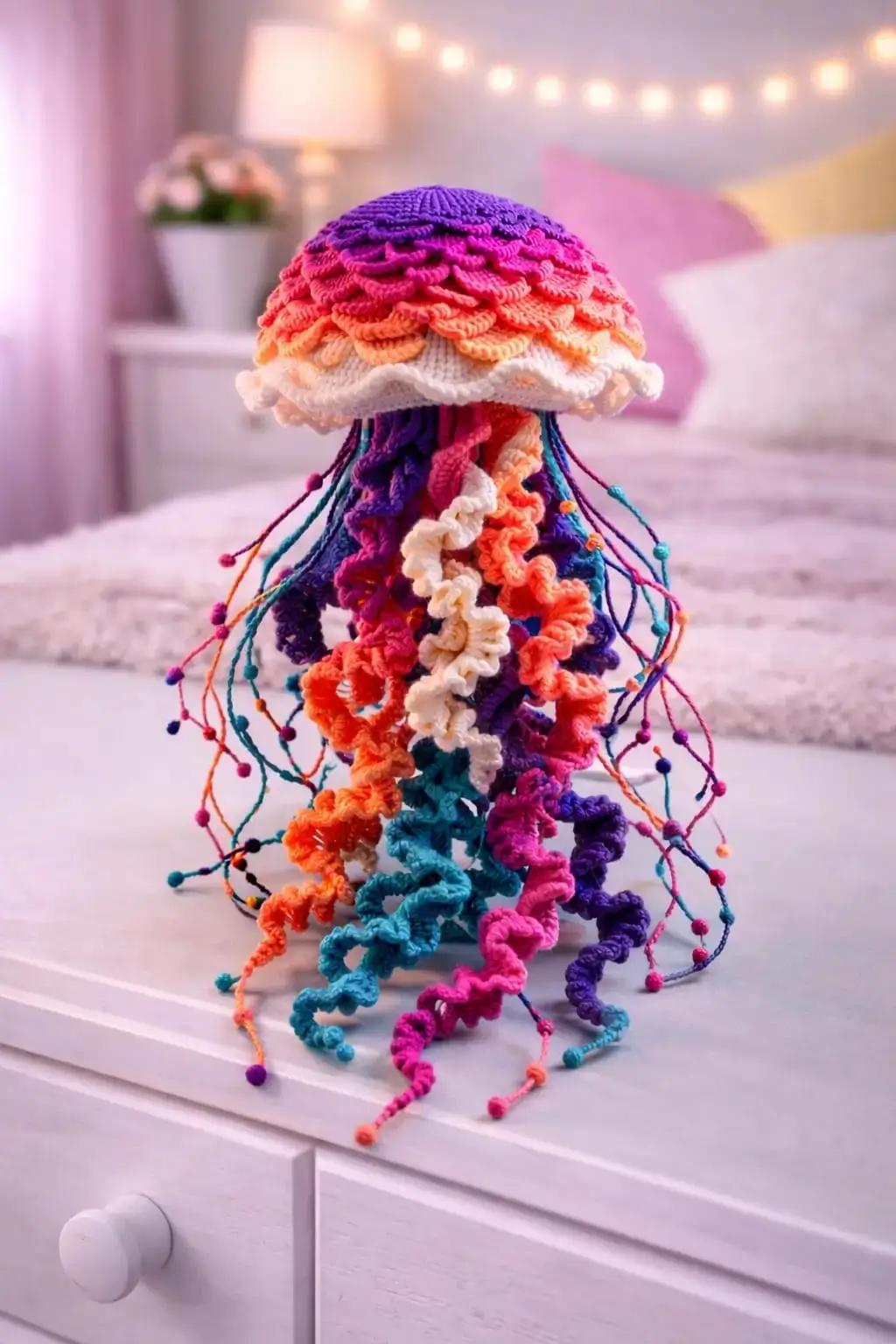
The best thing about Krochify’s Rainbow Jellyfish Amigurumi Pattern is that it understands one simple truth: a jellyfish is not a ball with strings. The build starts with a flattened dome, then pushes the drama into the rim, spirals, beaded strands, and hanging ruffles, so the lower half carries the movement and the personality. That is what gives the piece its shelf appeal and its instant “I need to look closer” effect.
I’ve seen plenty of jellyfish patterns lose the plot by making the cap too round and the tentacles too uniform. This one avoids that trap. It reads more like a small fiber sculpture than a basic toy, which is exactly why it stands out in a crowded amigurumi world.
The construction is the whole trick
Krochify’s own logic is smart and refreshingly specific: the jellyfish bell has to stay flattened and controlled while the tentacles do the expressive work. That matters because the silhouette is what sells the illusion. If the cap slumps into a sphere, the whole piece starts looking like a generic plush; keep the dome stable, and the hanging elements suddenly feel alive.
What makes this pattern especially engaging is the refusal to repeat one tentacle style over and over. Instead, it mixes textures and lengths, so the finished piece has motion even when it is sitting still. The rainbow palette pushes that effect further, turning the tentacles into the visual engine of the design and giving the toy a playful, almost glassy look from across the room.
Materials, size, and skill level
This is written for advanced beginners, which is about right for something that looks this polished. The pattern uses sport or DK cotton-acrylic yarn with a 3.0 mm hook, and the finished piece is listed at about 25.5 cm tall and 9 cm wide. That size keeps it compact enough for a nursery mobile, desk display, or ocean-themed set without losing the visual impact of the strands.
The cotton-acrylic blend is a sensible choice here because the body needs enough structure to hold that flattened bell, while the tentacles still need drape. That balance is the difference between a piece that hangs cleanly and one that collapses into a saggy knot after a week on display. If you like projects that reward neat shaping and tidy finishing, this one gives you enough surface interest to make every round feel worthwhile.
Why the rainbow version photographs so well
The rainbow treatment is not just cute, it is smart design. Jellyfish are already visually strange, with a body that disappears into movement, and the color shift turns that motion into the main event. On a market table, in a nursery, or in a photo, the piece has a strong silhouette first and a bright color story second, which is exactly the combination that makes people stop scrolling.
That also explains why jellyfish patterns keep showing up as gifts, wall hangings, baby mobiles, nursery decor, and quick decorative projects across crochet marketplaces like Ravelry and Etsy. The category works because it delivers something that feels finished even before you add a face or accessories. If you want a present that looks thoughtful and handmade without being fussy, this is the kind of project that earns its keep.
Why the shape makes sense beyond crochet
The pattern works because it mirrors the real animal. Smithsonian Ocean notes that jellyfish tentacles are lined with stinging cells called nematocysts, and the American Museum of Natural History describes true jellyfish as having an umbrella-like bell with long, thin tentacles hanging from it. Once you know that, the logic of a stable dome and loose strands stops being a styling choice and starts looking anatomically right.
There is also something satisfying about making a creature this old. Fossils from Canada’s Burgess Shale identified Burgessomedusa phasmiformis as the oldest preserved adult swimming jellyfish known, at about 505 million years old. National Geographic’s description captures the contradiction that makes jellyfish so compelling: they look delicate, even menacing, and they manage just fine without brains. That mix of fragility and menace is exactly what gives this crochet version its edge.
A standout make for people who want more than a cute toy
Amigurumi began in Japan as the art of crocheting or knitting small stuffed yarn creatures, but this pattern pushes the format into display-piece territory. The dome is controlled, the tentacles are expressive, and the rainbow color play makes the whole thing feel closer to hanging art than nursery clutter. That is why it lands so well for crocheters who want a gift or a décor piece that feels fresh instead of generic.
If you are looking for a project with a strong silhouette, clear construction logic, and real visual payoff, this jellyfish is worth the time. It has the kind of shape that looks impressive from across a room and even better up close, which is exactly what makes a crochet make memorable.
This article was produced by Prism’s automated news system from verified source data, official records, and press releases, then run through automated quality and moderation checks before publishing. The system is built and supervised by the people who set the standards it runs under. Read our full AI policy.
Did this article answer your question?