Krochify Sloth Amigurumi Pattern Uses Proportions to Perfect the Face
This sloth stands out because its face reads instantly. Krochify uses body proportions, a low-set eye mask, and a leaf-hugging pose to make the character feel gift-ready and unmistakable.
The face is the whole trick
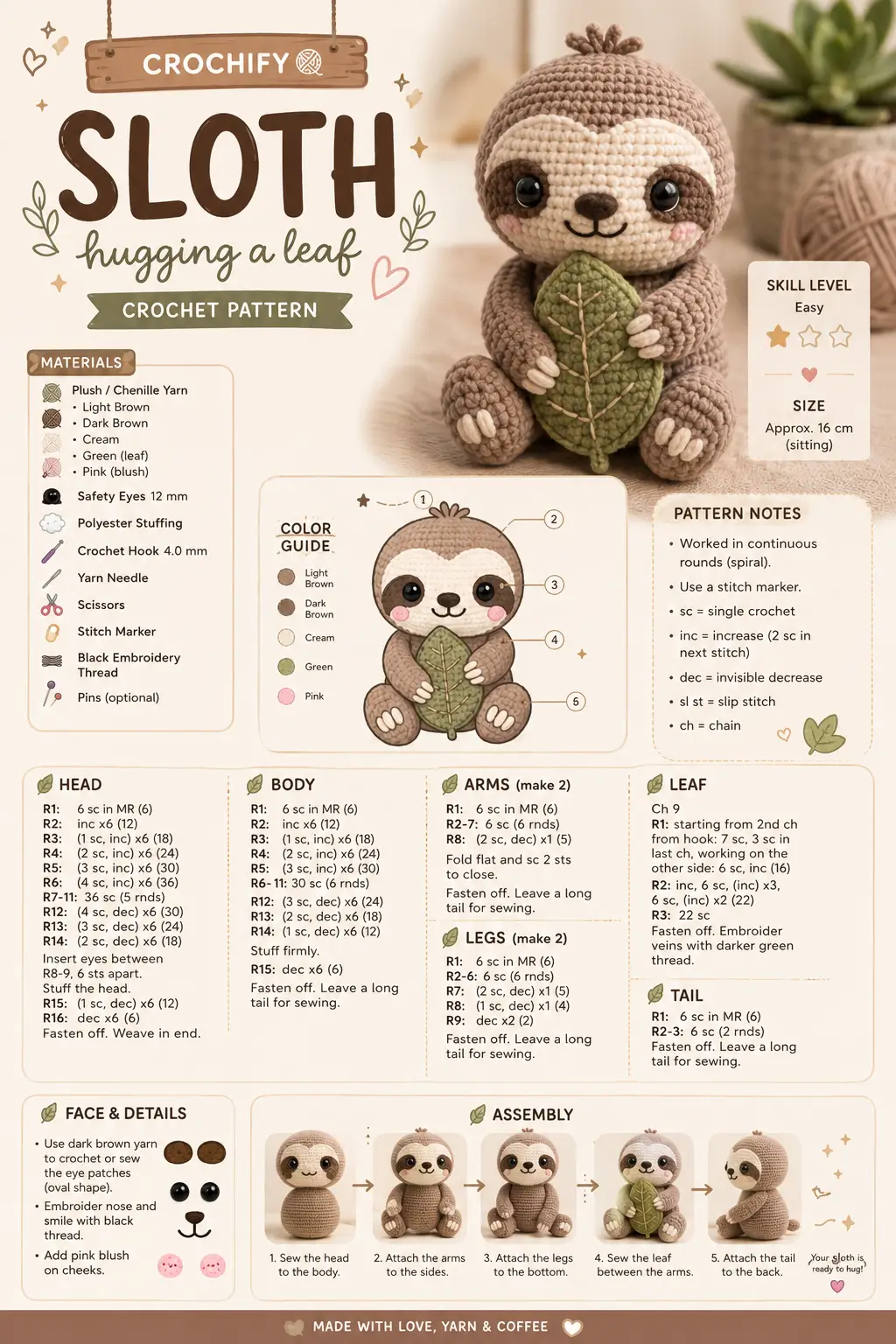
Krochify’s sloth amigurumi works because it gets the face right before anything else competes for attention. The pattern leans on a wide 36-stitch head, a smaller 30-stitch body, narrow arms, and tapered legs so the eye mask sits low and the expression reads immediately instead of drifting into generic plush territory.
That proportioning matters in character crochet. The body-to-head ratio does more than make the toy cute, it keeps the silhouette from collapsing into a soft, interchangeable bear shape. With 12 mm eyes, plush chenille yarn, and a 4.0 mm hook, the design is built to deliver a clean, front-facing read that holds up in photos, on a shelf, or on a desk.
Why the pose sells the pattern
The leaf prop gives the sloth a clear story, but the real personality comes from the posture. The arms angle inward, the feet stay small enough to keep the outline tidy, and the seated construction makes the toy feel settled rather than floppy. That combination gives the sloth a calm, recognizably sloth-like presence without overcomplicating the make.
This is what separates memorable character crochet from patterns that blur together. The leaf is a nice visual hook, but the geometry is doing the heavy lifting: face placement, torso compression, and the compact seated stance all work together to make the character read at a glance. For makers who care about shelf appeal, that kind of clarity is worth more than extra embellishment.
A fast make with real gift value
Krochify frames the project as an easy build that can be finished in a couple of hours to a half day, depending on yarn bulk and working pace. That puts it in a useful sweet spot for gift making, small-batch selling, or a satisfying weekend project that does not turn into a long-term commitment.
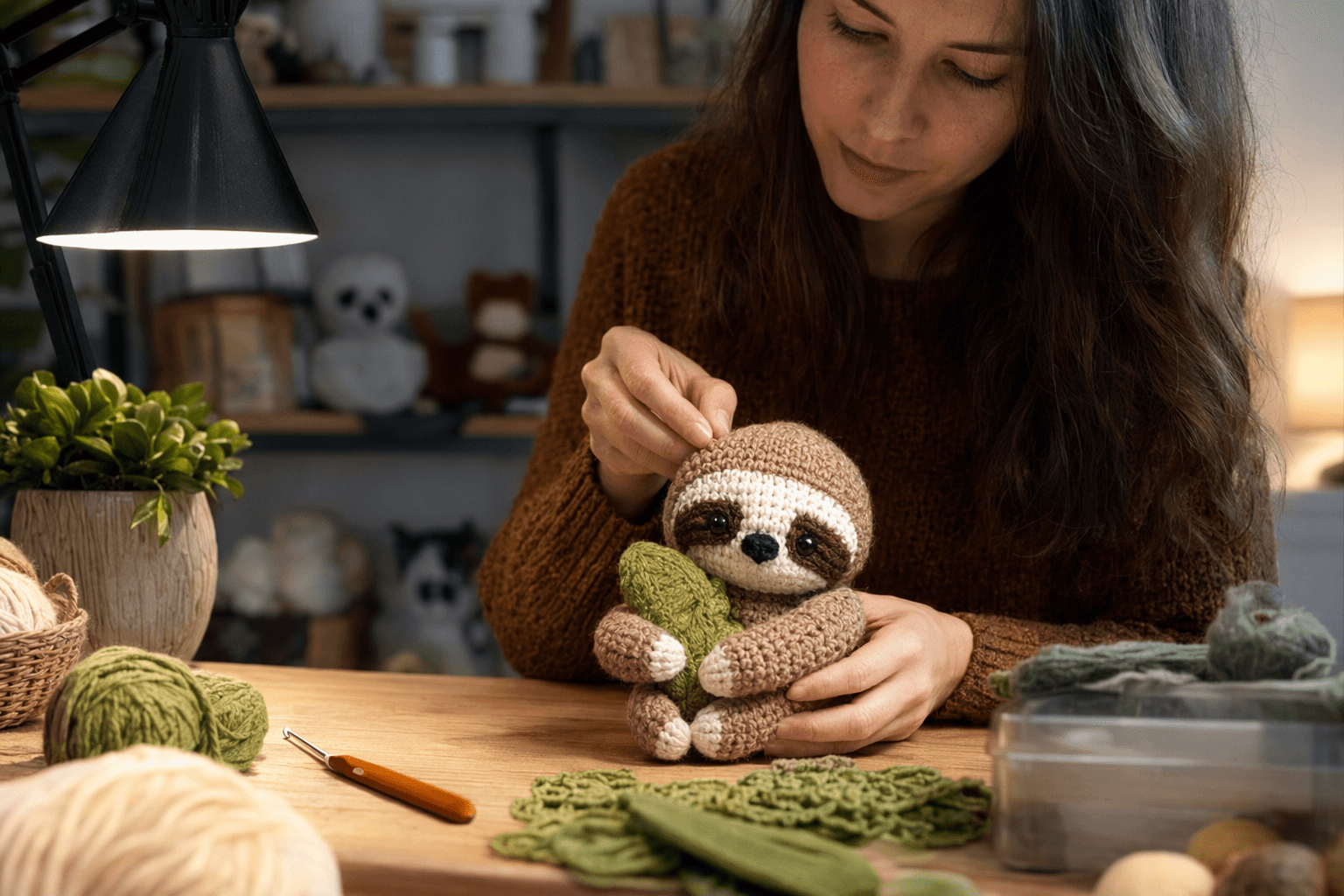
At about 16 cm sitting height, the finished sloth is compact enough for desk decor and nursery displays, but still large enough to show off the shaping around the face. That size also helps the leaf-hugging pose feel deliberate rather than crowded, which is exactly what a character-first pattern needs. In practical terms, it is the kind of amigurumi that feels finished quickly and looks finished well.
Where this fits in crochet history
Amigurumi is a Japanese craft term for small stuffed figures made by knitting or crocheting, and the Oxford English Dictionary dates the usage to 1955 or earlier, with the term becoming common from the 1980s. Crochet itself has an even older lineage, developing in the 19th century and reaching Ireland in the late 1840s as a famine relief measure.
That history matters here because a contemporary character like this sloth still relies on classic textile logic: shaping, proportion, and stitch control. The design may feel modern and social-media ready, but it sits inside a much longer craft tradition where a few well-placed increases and decreases can define the personality of an entire figure.
Why the sloth subject has built-in appeal
The sloth is more than a cute animal choice. The World Wildlife Fund says sloths depend on healthy tropical rainforests, and that deforestation threatens both their shelter and food source. It also notes that sloths usually come down to the forest floor only about once a week to relieve themselves, which makes their already unusual behavior even more memorable.
Their slow movement is linked to an extremely low metabolic rate, and they travel only about 41 yards per day. That kind of real-world context gives a crochet sloth extra emotional weight, because the animal is already associated with fragility, habitat loss, and conservation concerns. A handmade sloth can feel playful, but it also carries a recognizable environmental story.

How it compares with other sloth patterns
The scale and instruction style place Krochify’s pattern on the compact end of the sloth-amigurumi spectrum. On Ravelry, one plush sloth pattern finishes at 23 cm and includes 16 pages, 39 process photos, and two instructional videos. Another standing sloth pattern published in September 2024 comes in at about 32 cm and uses super bulky yarn with either a 4.5 mm hook or a 2.5 mm hook depending on the yarn choice.
Against that backdrop, Krochify’s 16 cm seated sloth feels especially desk-friendly and quick to complete. The smaller footprint does not make it less expressive. In fact, the tighter scale may help the face read even more cleanly, since the whole design is built around keeping the eye mask low, the head broad, and the body compressed enough to support the pose.
What makes it memorable
The strength of this pattern is not simply that it is cute. It is that every major design choice serves legibility: the 36-stitch head, the 30-stitch body, the narrow arms, the tapered legs, the 12 mm eyes, and the leaf-hugging pose all reinforce one another. That is the kind of construction that makes a crocheted character feel intentional the second you see it.
In a crowded field of plush animals, this sloth stands out because it knows exactly what it wants to be. The face reads first, the body supports the expression, and the pose finishes the story. That is the difference between a generic amigurumi and a character people remember.
This article was produced by Prism’s automated news system from verified source data, official records, and press releases, then run through automated quality and moderation checks before publishing. The system is built and supervised by the people who set the standards it runs under. Read our full AI policy.
Did this article answer your question?