Free Bird Keychain Amigurumi Pattern Offers a Fast, Portable Make
This free bird keychain pattern burns through ~10-15g of scrap yarn in under 30 minutes, making it the ideal stash-buster gift project for craft fairs and daily carry.
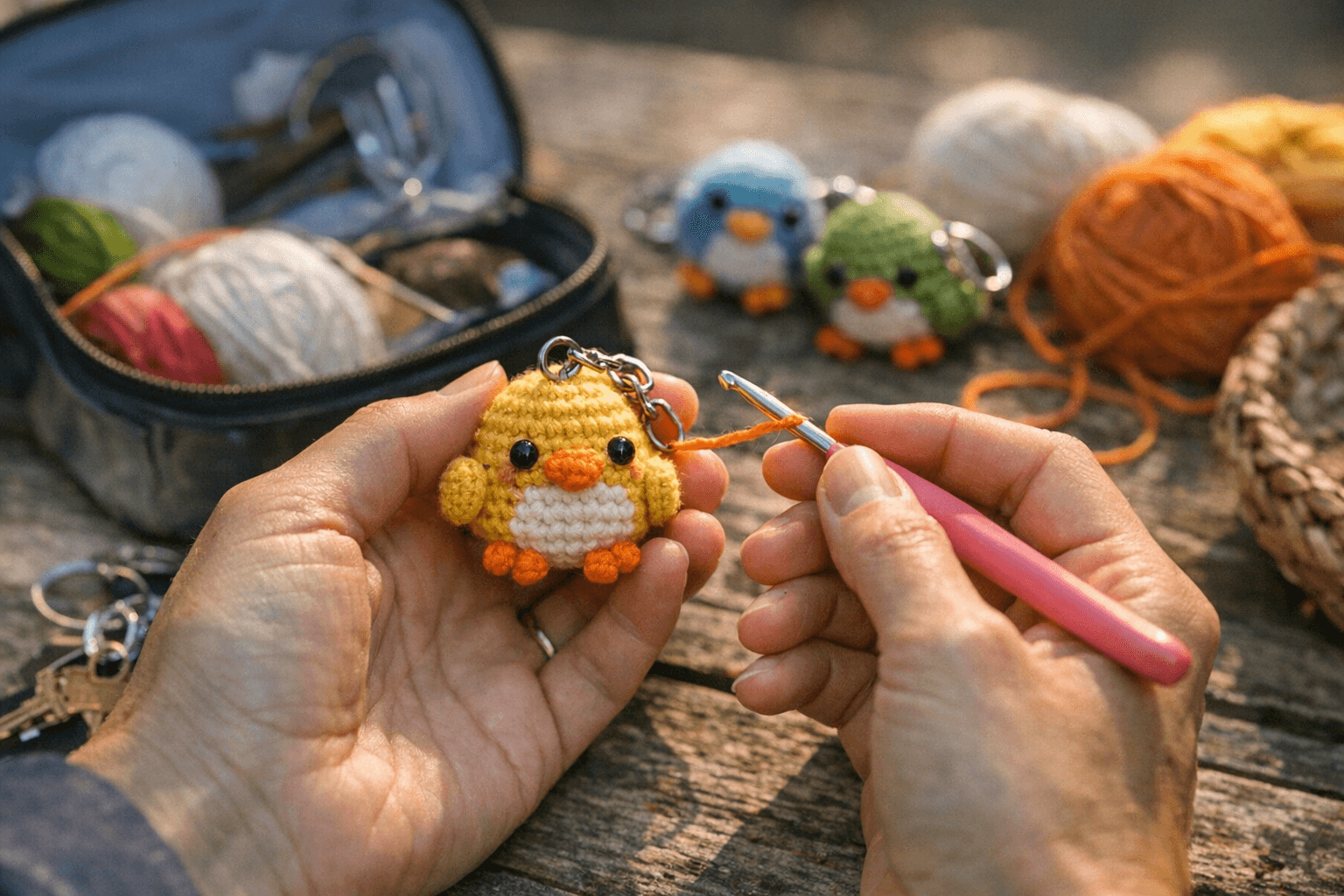
Scrap yarn has a way of multiplying quietly in every crafter's stash, those beautiful half-balls of DK and sport weight left over from bigger projects, too small for anything ambitious but too good to bin. The free Amigurumi Bird Keychain pattern, aggregated and published by Amigurumi.Today, turns roughly 10-15g of that leftover yarn into a finished, functional keychain or zipper-pull in a single sitting. It is a rare pattern that genuinely lives up to its "afternoon make" billing, and it arrives at exactly the right moment: between bigger seasonal projects, when makers need a quick win as much as they need a finished object.
What You Are Actually Making
The bird is compact by design. The body is worked in continuous rounds using basic amigurumi construction, producing a dense, firmly stuffed shape that can withstand the kind of daily abuse a keychain endures. Small wings and a beak are added separately and sewn on, and facial details, including optional embroidered eyes, are applied at the finishing stage. The result sits comfortably at keychain or zipper-pull scale, small enough to dangle from a bag without bulk, large enough to show off the color and stitch detail when a friend notices it. Amigurumi.Today frames the project as a "perfect afternoon make," and the round count backs that up: this is not a pattern that sprawls across an evening.
Materials List
Gathering your supplies takes less time than a cup of tea. Here is what the pattern calls for:
- Sport or DK weight yarn in your chosen body color, plus small amounts for the wings, beak, and any accent details (total approximately 10-15g across colors)
- A crochet hook sized slightly smaller than the yarn label recommends, to achieve a tight, dense fabric that holds its shape and keeps stuffing concealed
- Polyester fiberfill, a small pinch is all that is needed
- A yarn needle for seaming and weaving in ends
- Keyring hardware or a split ring to complete the accessory finish
- Stitch marker (optional but helpful for tracking round starts)
If you want to take the project further into proper hardware territory, a lobster clasp attached to a short length of chain through your keyring gives the finished bird a commercial-quality clip that attaches and detaches from bags, belt loops, or backpacks without the fumbling of a fixed ring.
Why This Pattern Earns a Spot in the Queue Right Now
Keychain and ornament-scale amigurumi sit in a permanent sweet spot for makers: they photograph beautifully, they make meaningful low-cost gifts, and they serve as confidence-builders between larger, more complex projects. Releasing a free small project like this at the end of March also catches crafters who are mapping out their spring craft fair inventory and need items that sell quickly at accessible price points. A single bird uses so little yarn that a crafter working from stash can produce five finished keychains, each in a different colorway, from the scraps already sitting in a project bag. That "make 5 for gifts" challenge is genuinely achievable in a single weekend session, and it is a satisfying way to clear the stash before summer markets open.
Three Ways to Make It Your Own
The pattern is a strong foundation, but the real creative work happens in the customization layer.
Colorwork and color-blocking: The bird body, wings, and beak are worked separately before assembly, which makes it straightforward to treat each element as its own color zone. A robin-inspired version in rust and cream reads very differently from a tropical parrot palette in teal and yellow. Because the yardage is so low, this is one of the few projects where splurging on a tiny amount of hand-dyed or variegated yarn does not feel extravagant.
Safety-eye alternatives: The pattern notes that embroidered eyes are optional, and that flexibility matters for makers who sell their work or gift to households with young children, where small hardware is a safety concern. French knots in black or dark brown thread create a soft, vintage look. A single straight stitch with a tiny cross at the center produces a more graphic, kawaii-adjacent expression that reads well in product photography.
Adding a lobster clasp loop: Rather than threading directly onto a fixed keyring, finish the bird with a short crocheted chain or a small jump ring connected to a lobster clasp. This single hardware upgrade makes the bird genuinely versatile: it clips onto a backpack zipper in seconds, transfers to a luggage tag loop, or hangs from a market display hook without requiring a key to be removed from the ring. A lobster clasp also makes the finished item easier to photograph cleanly against a plain background, which matters if the goal is sharing the finished make.
Scaling the Pattern Up or Down
Amigurumi.Today includes tips for resizing the keychain beyond its default dimensions. Dropping down a hook size or two while using the same sport weight yarn produces a miniature ornament with even finer detail, well-suited to hanging on a bag zipper or a Christmas tree branch. Going the other direction, swapping to a bulkier yarn or a larger hook scales the bird into a small plush, closer to palm-sized, that works as a standalone gift or a softie for an older child. The round structure of amigurumi construction means these adjustments do not require rewriting the pattern from scratch; they follow naturally from the gauge change.
Getting the Finish Right
Neat finishing is where a keychain amigurumi either succeeds or fails. Unlike a large plush that can absorb the occasional loose end or slightly uneven seam, a keychain is handled constantly and inspected up close. The pattern's emphasis on clean finishing is practical rather than perfectionist: tails need to be woven in securely through multiple stitches rather than simply knotted, wings should be attached with enough stitches that they do not shift with daily use, and the stuffing should be firm enough to give the body a stable shape without distorting the fabric. Taking an extra five minutes at this stage is the difference between a bird keychain that looks handmade in the best sense and one that looks unfinished.
Where the Pattern Lives and What the Page Includes
The pattern is freely accessible via Amigurumi.Today's pattern page and is available to makers worldwide without a paywall or account requirement. The listing includes a direct link to the free instructions alongside supporting photos, and in some cases video content, that walk through the construction visually. That combination of written pattern, photographs, and optional video makes it accessible to makers at different experience levels, from someone working through their first amigurumi to a seasoned maker who just wants to verify the assembly sequence for the wings before diving in.
The 10-15g scrap usage figure is what makes this pattern genuinely shareable beyond the usual "cute project" social post. Quantifying the yarn use turns a personal make into a community prompt: how many finished birds can your stash produce? Five is achievable in a weekend. Ten is a realistic craft fair stock target from a single season's leftovers. The bird keychain earns its place not just as a quick project but as a format, one small, fast, portable pattern that a maker can return to every time the stash needs clearing and the gift list needs filling.
This article was produced by Prism’s automated news system from verified source data, official records, and press releases, then run through automated quality and moderation checks before publishing. The system is built and supervised by the people who set the standards it runs under. Read our full AI policy.
Did this article answer your question?