Free Crochet Clutch Pattern Delivers Designer Look Using Raffia Yarn
Raffia yarn transforms a free clutch pattern into a convincing designer piece that any intermediate crocheter can finish in a single season.

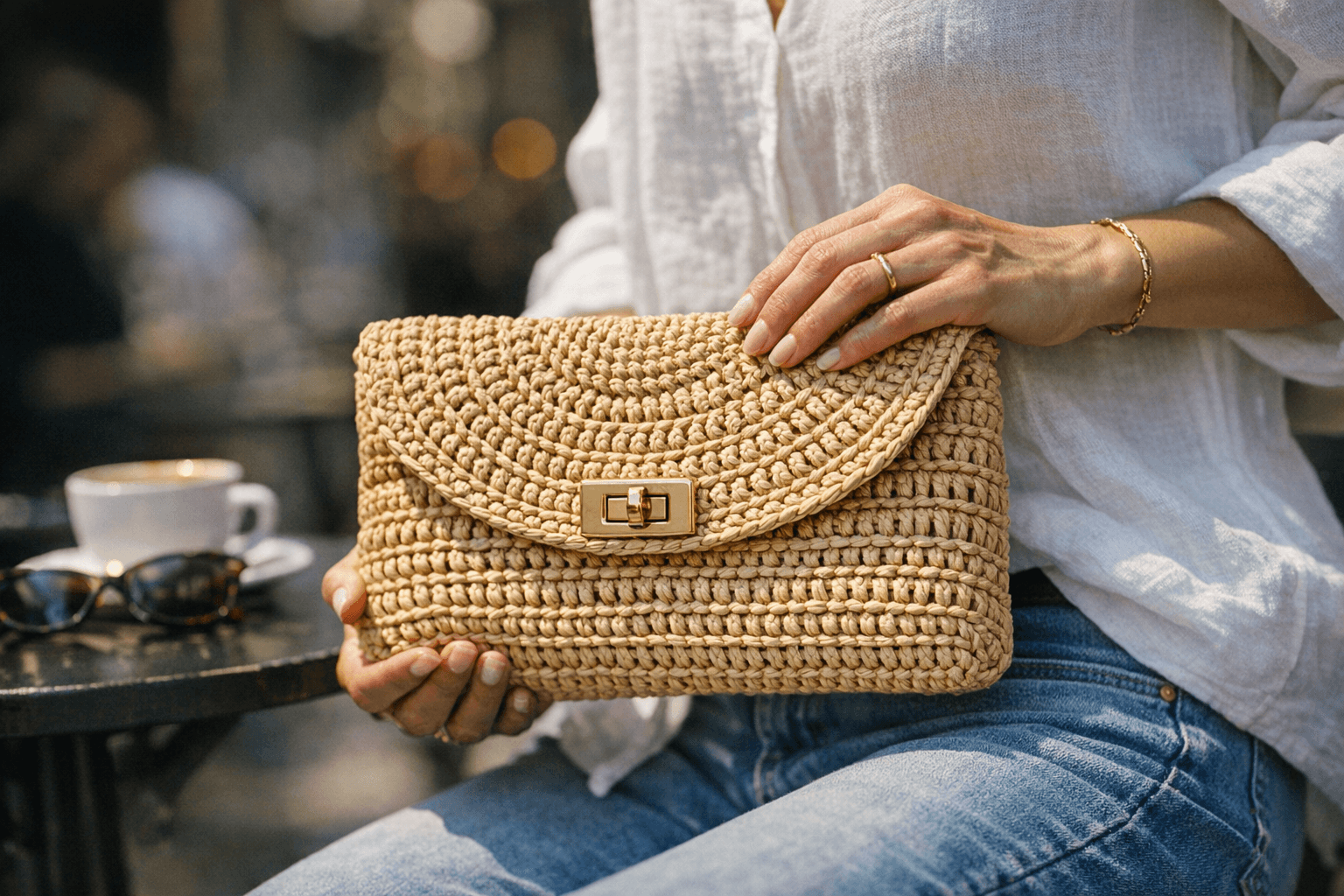
Raffia yarn has a way of making everything look expensive. The natural, slightly papery texture catches light differently than cotton or acrylic, and the resulting fabric has that stiff, structured quality you see in boutique bags retailing for triple digits. DIYsCraftsy tapped directly into that quality with a free crochet clutch pattern released on March 15, 2026, built specifically around raffia and abaca yarn to deliver a compact bag that reads as designer without the designer price tag.
The pattern is pitched at intermediate crocheters, which is the right call. Raffia and abaca behave differently than the yarn most beginners cut their teeth on. The fibers are less forgiving of tension inconsistencies, and the structured silhouette of a clutch means uneven stitches show up in ways they might not on a slouchy tote or a dishcloth. If you have a season or two of finished objects behind you and you understand how to manage gauge, this project sits comfortably in your skill range.
Why Raffia and Abaca Work So Well Here
Raffia is having a sustained moment in the crochet world, and it is not hard to understand why. Derived from the raffia palm, the fiber is naturally stiff and holds shape without any internal structure like interfacing or a bag frame. Abaca, sometimes called Manila hemp, shares similar properties: it is strong, slightly shiny, and resists moisture well enough to survive a summer evening out. Both fibers have the added advantage of being plant-based, which appeals to makers who think carefully about materials.
For a clutch specifically, those properties matter more than they would for a wearable. A clutch needs to hold its rectangular or envelope shape without collapsing. It needs a surface that feels intentional and refined rather than soft and casual. Raffia and abaca deliver both. The slight sheen on abaca in particular is what creates the designer-adjacent finish the DIYsCraftsy pattern is going for. Under warm lighting, the fabric genuinely looks like it came off a shelf at a specialty accessories boutique.
There are a few practical considerations worth knowing before you wind your first skein:
- Raffia can split more easily than spun yarns, so a hook with a smooth, tapered tip tends to work better than one with a pronounced throat
- Abaca is slightly coarser than raffia and may soften with use, so do not be alarmed if the finished clutch feels stiff right off the hook
- Both fibers are best stored away from prolonged direct sunlight, which can fade the natural color over time
- Gauge swatching is genuinely important here because the stiffness of the fiber means a too-loose fabric will look sloppy rather than draping gracefully
The Pattern Itself
The DIYsCraftsy pattern centers on a compact clutch construction, meaning the finished bag is sized to hold the essentials without bulk. That compact sizing is part of what makes the designer illusion work. Larger bags in raffia can look rustic or beachy; a tightly constructed small clutch in the same material reads as intentional and polished.
The tutorial walks through construction in a structured sequence, moving from the base of the bag through the body and finishing with the closure and any embellishments. The free availability of the pattern removes one of the usual friction points for makers who want to experiment with a new fiber. You can try raffia on a project that actually has a finished use without committing to a paid pattern first.
Setting Up for Success
Because this is an intermediate pattern working with a specialty fiber, a little preparation goes a long way. Getting your gauge right before you start the main body is the single most impactful thing you can do. A clutch that comes out too wide loses the structured silhouette. One that comes out too narrow may not close properly if the pattern includes a magnetic snap or zipper closure.
A few setup habits worth building in:
- Wind raffia into a center-pull ball before starting, which reduces the tangles that can happen when working from a skein of this fiber
- Work in good light; the neutral tones of natural raffia make it harder to see individual stitches in dim conditions
- Keep a tapestry needle nearby for weaving ends as you go, since raffia ends are stiffer and harder to hide if left until the finishing stage
- If your hands run dry, a light application of hand lotion before a session can make the fiber easier to work with without affecting your tension
Finishing Details That Sell the Look
The designer quality the pattern aims for lives almost entirely in the finishing. Raffia and abaca clutches made with careful attention to joining seams cleanly and securing ends invisibly look markedly different from the same pattern finished in a hurry. The material itself does a lot of the work, but the construction has to meet it halfway.
Hardware choices amplify the effect considerably. A gold-tone magnetic snap closure or a simple metal clasp frame elevates the completed clutch from craft project to accessory. Lining the interior with a coordinating fabric, even just a simple cotton in a solid color, adds a professional touch that you notice every time you open the bag. These finishing steps are not part of every free pattern's instructions, but they are worth adding even if you need to source guidance separately.
The DIYsCraftsy pattern gives intermediate crocheters a legitimate entry point into accessory making with specialty fibers, and the free price point means the only real investment is the yarn itself. For anyone who has been curious about working with raffia but needed a project with a clear purpose and a polished end result, this clutch is exactly that project.
This article was produced by Prism’s automated news system from verified source data, official records, and press releases, then run through automated quality and moderation checks before publishing. The system is built and supervised by the people who set the standards it runs under. Read our full AI policy.
Did this article answer your question?