Free Crochet Earth Pattern Makes a Classroom-Friendly Globe Toy
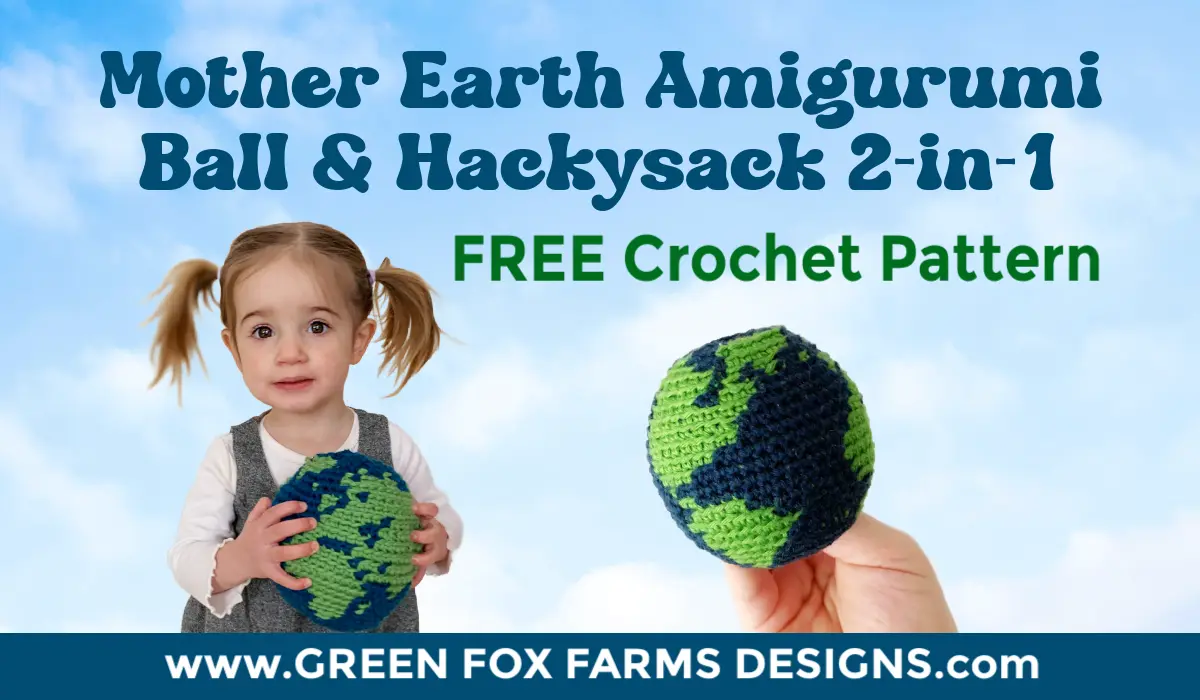
Lisa Fox’s free Mother Earth Globe Ball is part toy, part teaching tool, with two sizes and continent charting that make it an easy save for classrooms and Earth Day.
A globe that earns its place in the project queue
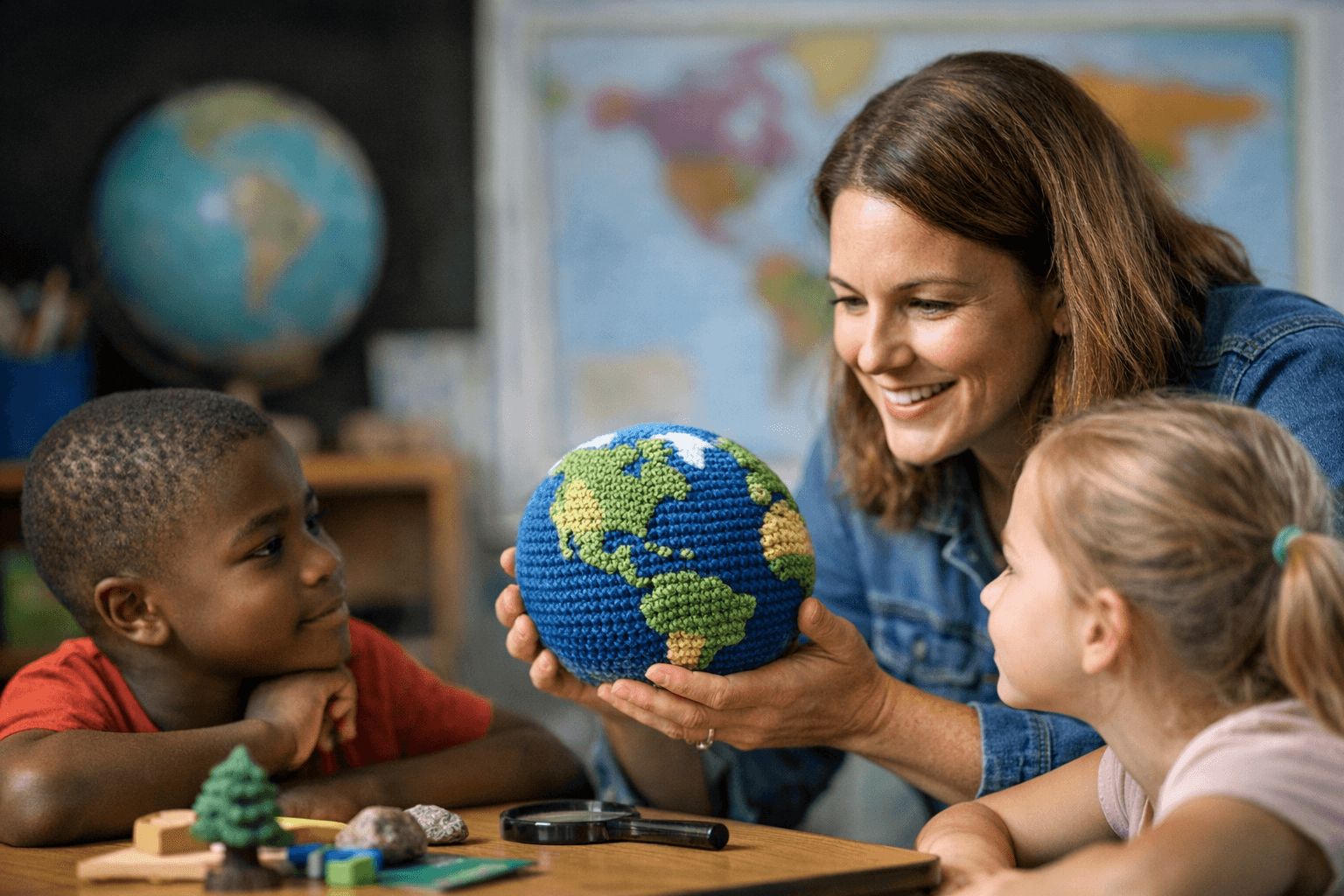
Lisa Fox’s free Mother Earth Globe Ball is the kind of crochet pattern that solves more than one problem at once. It is whimsical, yes, but it is also built for classrooms, gifts, and Earth Day making, which gives it a practical life beyond the usual decorative plush.
The pitch is simple and strong: make a soft globe that can be played with, displayed on a shelf, or pulled into a seasonal lesson about the planet. That versatility is what makes this pattern feel especially worth saving, because it is not just another cute amigurumi. It is a project with a clear use case, whether you are making for a child, a teacher, a homeschool corner, or an office that needs a small Earth-themed desk object.
Two sizes, two very different uses
One of the smartest parts of the pattern is the built-in size choice. The larger version is meant for little ones to play with, while the mini version is better suited to older kids and adults who want something they can kick around or keep as a compact desk piece.
That two-size approach makes the pattern feel adaptable instead of one-note. A big globe ball can live in a playroom or classroom basket, while the smaller version has a more portable, everyday feel that works for a backpack, shelf, or work surface. For crocheters who like projects that can be customized for different ages and settings, that flexibility is a major advantage.
Why this is more than a novelty make
The appeal here is not just that the finished globe is cute. The pattern is designed with classroom-friendly use in mind, which changes how you think about the project from the start. A soft globe can become a hands-on geography prop, a calming object for a learning space, or a seasonal Earth Day gift that actually gets used.
That practical angle matters because it gives the make a second life after the photo is taken. A standard novelty plush may sit on a shelf; this one can move into a lesson, a play session, or a conversation about the planet. That is the kind of crochet project many makers keep in mind when they want their work to be useful as well as cheerful.
The technique is approachable, but not basic
This is described as an advanced beginner project, and that makes sense given the construction. The globe uses colorwork, and the continents are shaped with tapestry crochet details, plus a chart that helps define the land masses. That gives the piece a more intentional finish than a simple striped ball.
The good news is that the pattern keeps the technical side contained. It uses only two colors, which keeps the colorwork manageable, and the chart helps guide the continent placement instead of leaving the shaping to guesswork. For crocheters who want to stretch a little without jumping into a highly complicated design, that combination is appealing.
Yarn choice changes the whole personality of the globe
Lisa Fox also gives useful direction on materials, and this is where the pattern becomes especially practical. Worsted cotton is the best fit if you want the globe to hold its shape and show off the stitch definition in the continents. That matters because the land details are part of what makes the piece read clearly as an Earth project rather than just a round toy.
Thinner yarn can shrink the design into a smaller object, which opens up options for tiny display pieces or even a keychain-style version. Plush yarn, on the other hand, is less ideal if you want the continent details to stand out. That kind of material advice is useful because it helps the project adapt to your goal before you cast on, whether you want structure, portability, or a softer toy feel.
Why the timing clicks with Earth Day
The pattern lands at a moment when Earth-themed making already has a built-in audience. Earth Day falls on April 22, 2026, and Earth Week runs from April 18 to April 22, 2026, with the 2026 theme set as “Our Power, Our Planet.” That gives the globe ball an obvious seasonal lane, especially for makers who like tying their crochet to classroom activities or spring events.
Earth Day itself carries serious history, which helps explain why an Earth-themed craft can feel bigger than a themed novelty. It was first created on April 22, 1970, and Earth Day organizers along with the U.S. Environmental Protection Agency say about 20 million Americans took part in the first event. That early turnout helped establish Earth Day as one of the largest grassroots community service movements in U.S. history.
The movement has also grown far beyond that first year. EARTHDAY.ORG says it works with more than 150,000 partners in over 192 countries, which is a striking reminder that an Earth-themed project can connect to a truly global conversation. With organized actions taking place in dozens of cities in the United States and internationally, from Washington, D.C. to Philadelphia, Miami, Detroit, Raleigh, Mumbai, Nairobi, New Delhi, and Taipei, this little crochet globe fits neatly into a much larger moment.
A good fit for classrooms, homeschool spaces, and handmade gifts
The classroom angle is where this pattern really separates itself from a standard plush release. A globe that can be handled, tossed gently, or used as a visual aid has real value in a learning space, especially when the continents are clearly marked with tapestry crochet. It turns geography into something tactile, which is often what makes a lesson stick.
That educational use is backed up by a broader craft-and-learning context. Oregon State University Extension Service includes fiber arts in its 4-H resources, and a published STEAM-focused study found crochet can support girls’ sense of belonging and confidence in STEM-related learning. Put that together with a globe ball that teaches shape, color, and place, and it becomes easy to see why this pattern has more staying power than a cute seasonal make.
It also makes sense as a handmade gift because it feels personal without being fussy. A teacher gift, an Earth Day surprise, or a child’s play object all fit naturally here. The pattern does what the best crochet projects do: it gives you something soft and satisfying to make, then hands you a finished piece with a clear job to do.
Why this one belongs in the save folder
For crocheters looking ahead to Earth Day, this is the kind of pattern that earns its space in the queue. It has a defined use, a teaching angle, a beginner-friendly structure with enough technique to stay interesting, and material choices that let you steer the final result. The globe ball is playful, but it is also purposeful.
That is what makes Lisa Fox’s free Earth pattern stand out. It is not just an amigurumi globe. It is a classroom prop, a seasonal project, and a small reminder that crochet can do useful work while still being fun to make.
This article was produced by Prism’s automated news system from verified source data, official records, and press releases, then run through automated quality and moderation checks before publishing. The system is built and supervised by the people who set the standards it runs under. Read our full AI policy.
Did this article answer your question?