Learn the Extended Double Crochet for Flexible, Textured Projects
EDC gives you a middle-height stitch for cleaner transitions, better drape, and less openness than treble. Free Crochet Patterns pairs the lesson with written steps, video, and a chart so you can use it fast.
Why the extended double crochet earns a place in your stitch box
The extended double crochet, or EDC, sits in that useful middle lane between standard double crochet and treble. That in-between height is its whole appeal: it gives you more lift than a double crochet without the extra openness that comes with a treble, so fabric can drape with a little more room while still keeping shape. In real projects, that makes it a smart fix when a section feels too tight in double crochet but too airy in treble.
That is why this stitch matters beyond the lesson itself. A stitch like EDC gives you more control over how a fabric behaves, especially when you are building blankets, garments, or textured accessories. It is the kind of practical upgrade that changes a project from merely finished to better balanced, with cleaner transitions between rows and a more intentional look in the finished fabric.
How the stitch is built
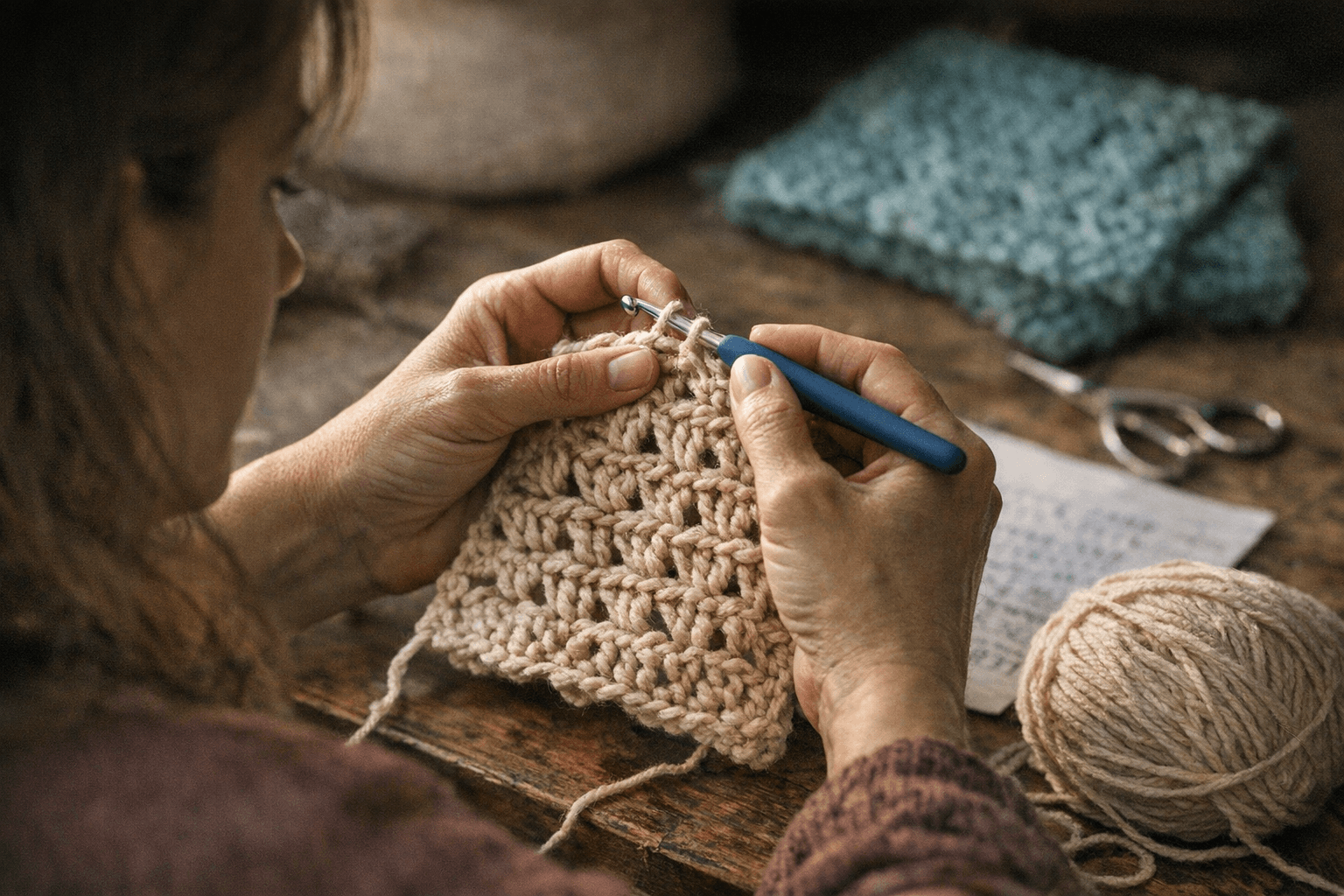
The stitch itself is straightforward, which is part of why it is so useful. The basic motion is familiar if you already know your core stitches: yarn over, insert the hook, pull up a loop, then work off the loops in stages before moving across the row. Once you have that rhythm, the stitch feels like a bridge between the quick height of a double crochet and the taller reach of a treble.
The tutorial’s value is that it does not leave the stitch floating in isolation. It covers the first two rows, then shows how row 2 can be repeated to build a larger piece. That turns the lesson into an actual swatch or sample fabric, which is where stitch learning becomes project learning. You are not just memorizing a motion, you are seeing how the stitch changes a row, then a fabric, then a real finished edge or panel.
Why the tutorial format is easy to use
Free Crochet Patterns presents the EDC lesson with written instructions, a video, and a crochet chart, which makes the tutorial useful from more than one angle. If you like to read the steps first, the written version keeps the process clear. If you learn faster by watching, the video gives you the movement in real time. If you want to verify stitch placement or compare what you made against a diagram, the chart is there for that too.
That mix matters because crochet patterns increasingly rely on charts alongside words, and sometimes in place of them. The Craft Yarn Council notes that chart symbols are used more and more in crochet patterns, which makes a tutorial like this especially practical. It also helps that the site sits inside a library with more than 2,000 free crochet patterns and more than 70 stitch tutorials, so EDC fits into a larger learning path instead of standing alone as a one-off technique.
How EDC fits into pattern reading
The best thing about EDC is that it solves a real drafting problem. Patterns often need repeated steps across rows, and they usually specify a foundation chain length right up front. The EDC tutorial says you can start with any number of chains, which gives you more freedom when you are testing fabric, making a custom swatch, or adapting a stitch sequence for a project that does not need a fixed foundation count.
That flexibility is especially useful if you already know how patterns are written in the standard U.S. crochet system. The Craft Yarn Council describes double crochet as a taller stitch than single crochet and notes that it is formed by a yarn over, wrapping yarn from back to front before the hook enters the stitch. The council also lists treble crochet, abbreviated tr or trc, as a taller stitch still. Put those together, and EDC becomes the middle gear that helps you move between stitch heights with less guesswork.
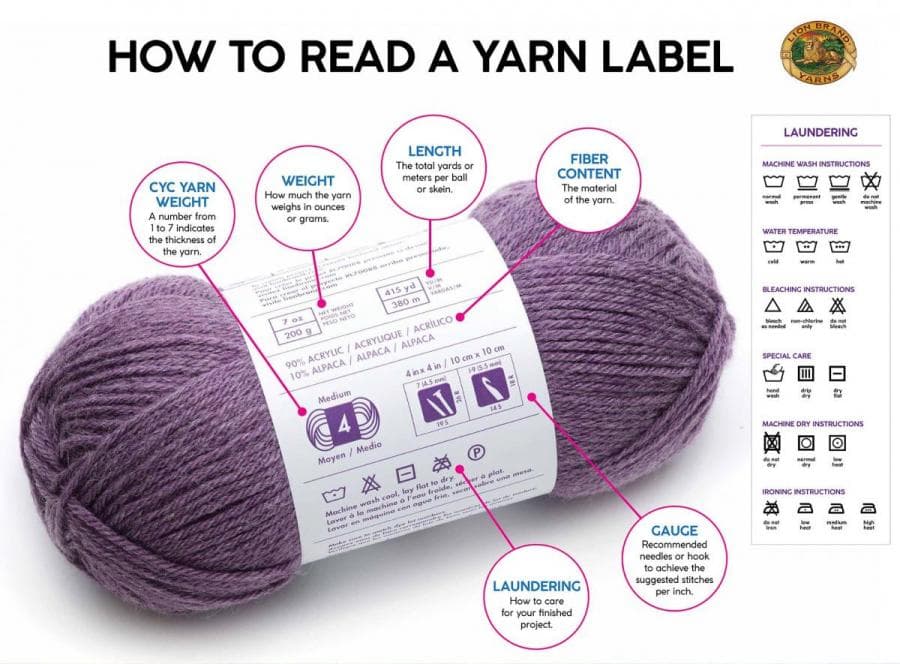
The council’s broader standards were developed by publishers, fiber, needle and hook manufacturers, and yarn members to bring uniformity to labels and patterns. That standardization is part of why a stitch like EDC is so helpful in everyday crocheting. Once you understand where it sits in relation to double crochet and treble, you can read patterns faster, make better choices about texture, and predict how a fabric will hang before you finish the second row.
Where you will feel the difference
EDC is the kind of stitch that pays off in the hand, not just on the page. In a blanket, it can create a fabric with a little more movement than a dense double crochet row. In a garment, that extra height can help the fabric drape more naturally. In textured accessories, it gives you another option when you want definition without the holes and looseness of taller stitches.
That is the real value of learning it now. The stitch is simple enough to pick up in a short session, but flexible enough to use again and again when a pattern needs better height control, cleaner transitions, or a different texture balance. Once EDC is in your toolkit, you gain a middle-height stitch that makes future projects easier to shape and more satisfying to wear, use, and finish.
This article was produced by Prism’s automated news system from verified source data, official records, and press releases, then run through automated quality and moderation checks before publishing. The system is built and supervised by the people who set the standards it runs under. Read our full AI policy.
Did this article answer your question?