Crochet Cat House Pattern Blends Cozy Comfort With Durable Style
A jute-and-wool cat house pattern turns crochet into real pet furniture, with a removable carpet and sturdy ring build that suits everyday use.
Why this cat house feels worth making
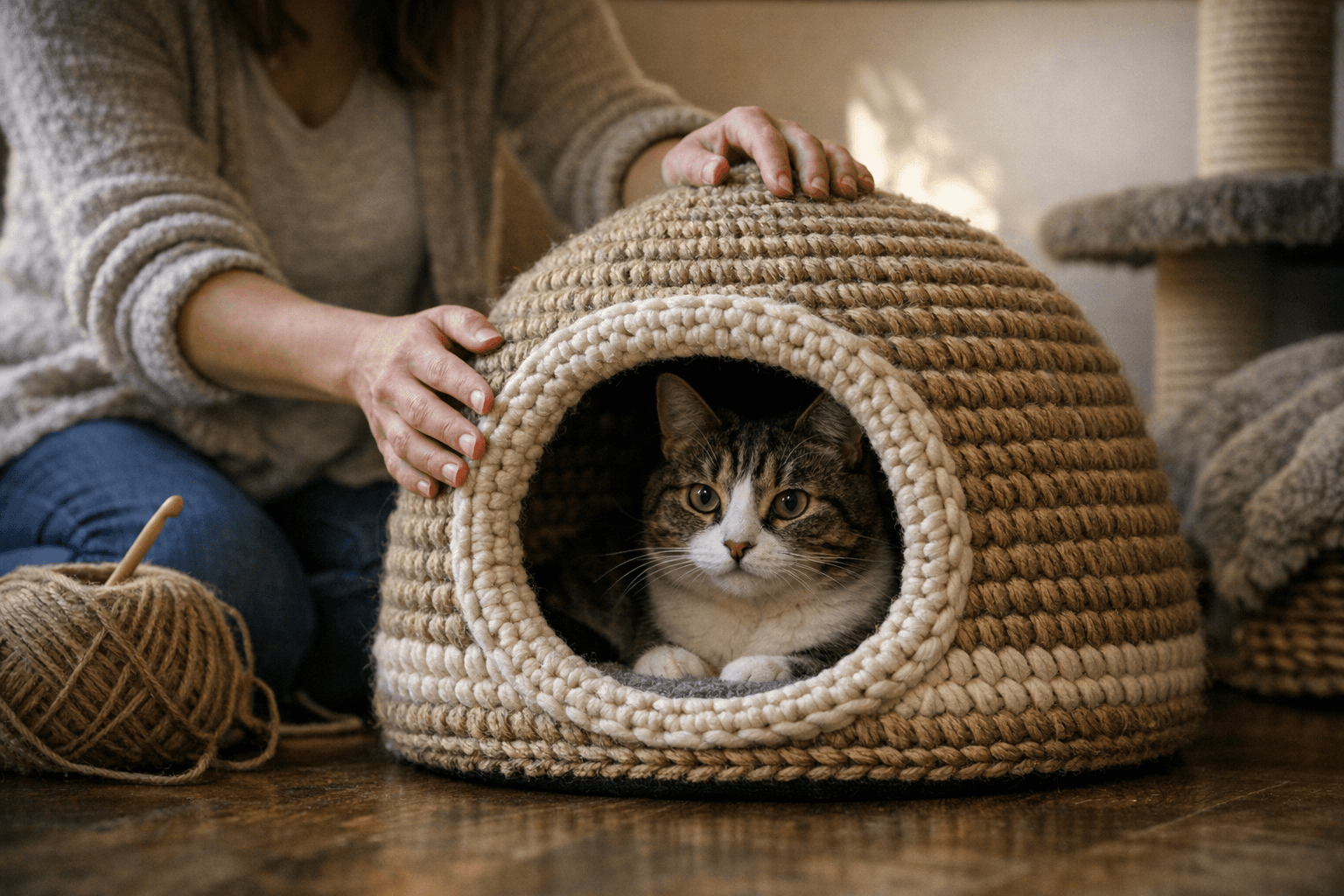
The Cat House Crochet Free Pattern from My Crafts Inspirations is the kind of pet project that earns its keep. It gives a cat a warm hideaway, but it also works as a handmade home accent that feels more intentional than a typical store-bought pet bed. That matters if you want your crochet time to solve a real household problem instead of producing one more cute object that only looks good on a shelf.
The strongest part of the design is how clearly it balances comfort with structure. A dome-shaped shelter gives a cat the private retreat it wants, while the finished piece still reads as durable furniture rather than a flimsy toy. If your cat already gravitates toward boxes, under-table corners, or any other enclosed nook, this pattern turns that habit into something sturdier and better finished.
Built for shape, not just looks
The construction gives away the intent right away. The pattern is built around a metal or wooden ring, uses natural jute rope for the outer shell, and places a soft wool inner carpet inside the dome. That material pairing is doing real work: the rope and ring help the house hold its shape, while the wool interior gives the cat a softer place to settle once it crawls inside.
The supply list is equally telling. It calls for Nova Vita 12 yarn or a similar macramé cord-type yarn, along with multiple hook sizes, which points to a project that behaves more like soft home structure than classic amigurumi. This is not a quick novelty make in lightweight yarn; it is a thicker, more architectural project that rewards steady stitching and a little patience with materials that have some body.
The removable carpet is another practical touch that separates this from decorative crochet. Pet projects live in the real world, which means fur, dirt, and the occasional mess are part of the deal. Being able to take out the carpet makes cleaning much easier, and that convenience is what turns a clever idea into something you can actually keep in rotation.
Sizing matters when the cat is the one using it
The pattern includes finished dimensions for both the body and the version with ears, which is exactly the sort of detail that makes a project more usable. Before you invest time in the jute shell, you can judge whether the shelter will fit your floor space and whether the size matches the cat that will actually curl up inside it. That kind of planning is especially useful if you are working in a smaller apartment or making for a larger cat that needs room to turn around.
Because the house has a defined dome shape, the footprint matters as much as the look. A project like this is best approached as cat furniture first and decor second. If you place it where your cat already likes to nap, the structure has a better chance of becoming part of everyday life instead of disappearing into the background.
Why the design lines up with cat behavior
The appeal of this pattern goes beyond crochet aesthetics. VCA Animal Hospitals says indoor cats benefit from environmental enrichment, and its feline environmental needs guidance stresses that cats should have a private place to retreat to. The examples it gives, including cardboard boxes, cat carriers, perches, and hideaway holes, all point to the same basic idea: cats need safe spaces where they can get away from noise, pressure, and constant movement.
That advice matters more in homes with multiple cats. VCA notes that households should have at least as many safe spaces as cats, and that enough hiding places and climbing areas can help many cats adapt and stay together. It also explains that safe spaces can reduce stress and associated disorders, which makes a crocheted cat house more than a cute indulgence. In a home where cats are competing for territory, a dedicated hideaway can help take some of the tension out of the day.
The broader behavior picture is just as important. Fear, anxiety, and stress can contribute to problems such as house soiling and aggression, so a comfortable retreat is not merely decorative. A sturdy crocheted shelter with a soft interior gives a cat a predictable place to retreat, and predictability is often what anxious animals need most.
A small project with a surprisingly big market behind it
There is a reason pet furniture keeps showing up as a serious category, not just a craft afterthought. The U.S. pet beds market was valued at $3.88 billion in 2024 and is projected to reach $5.85 billion by 2032. The global pet furniture market was estimated at $1.74 billion in 2023 and is expected to reach $2.44 billion by 2030. Those numbers show that pet owners are already spending on comfort products that fit real homes, and crochet can absolutely have a place in that space when the project is practical enough to justify the effort.
That is what makes this cat house pattern stand out. It is not trying to win on novelty alone. It solves for comfort, shape, and ease of cleaning, and it does so with materials that create a finished piece strong enough for daily use. For anyone who wants a crochet project with a clear purpose, this one delivers the rare combination of useful pet furniture and handmade style that actually earns its floor space.
This article was produced by Prism’s automated news system from verified source data, official records, and press releases, then run through automated quality and moderation checks before publishing. The system is built and supervised by the people who set the standards it runs under. Read our full AI policy.
Did this article answer your question?