Free lace christening dress crochet pattern blends heirloom style and practicality
This lace christening dress looks delicate enough for photos, but the onesie lining and shoulder buttons make it a real baby outfit worth keeping.
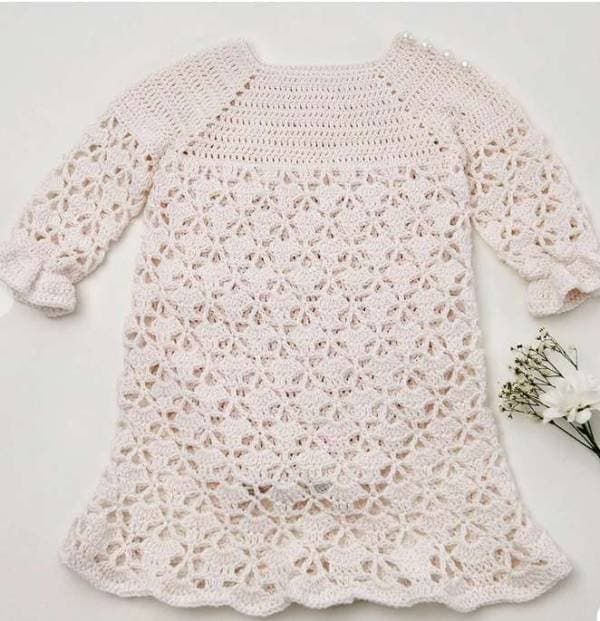
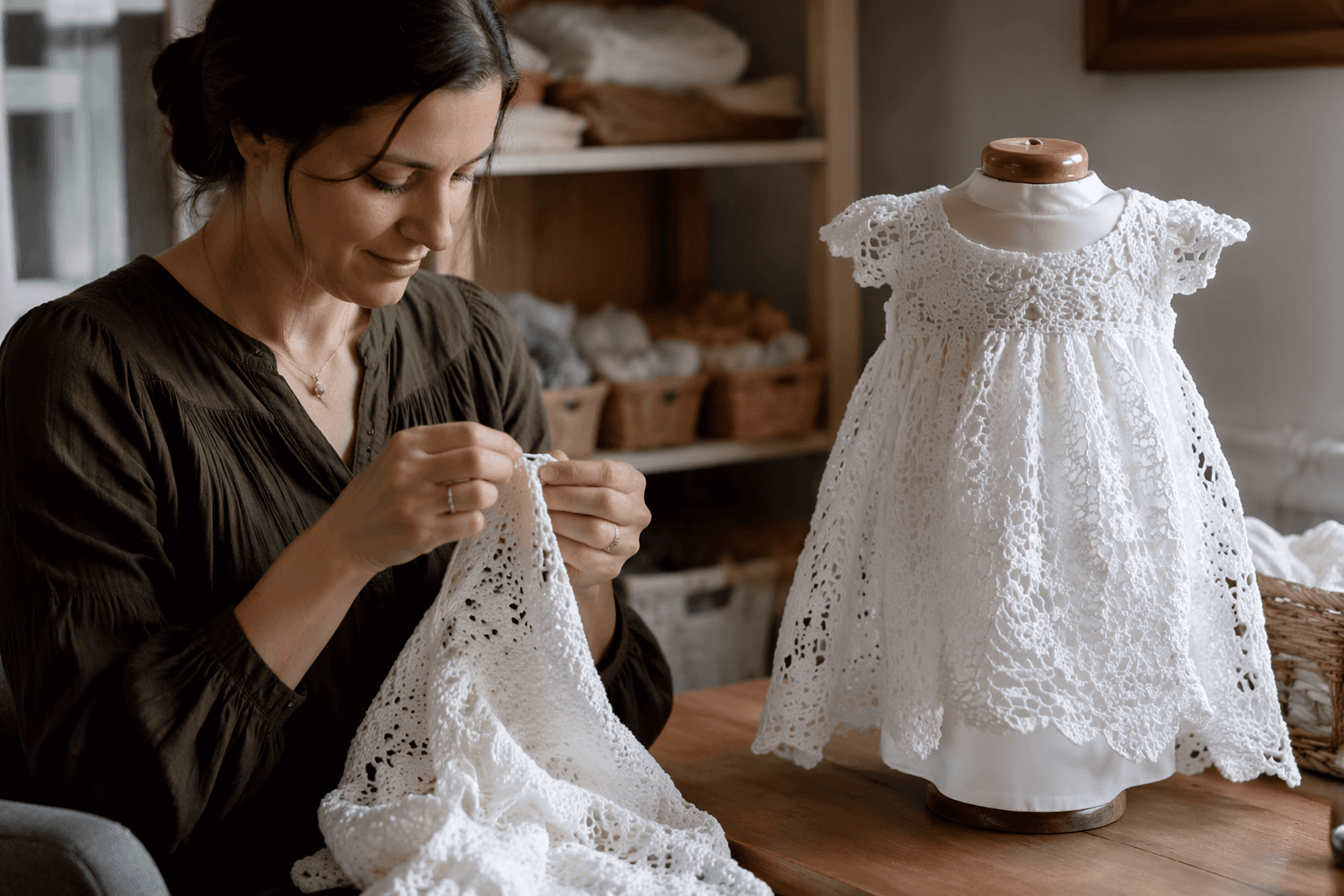
A christening dress only earns heirloom status if it can survive the day it’s worn. This free lace design does exactly that by pairing a vintage-looking shell with a onesie bottom attached inside, so it reads like a ceremony gown but still functions as a baby outfit. The result is the kind of make people save in a cedar chest, photograph carefully, and bring out again when the next family baby arrives.
A lace dress built for real baby life
CraftGossip’s June 28 post puts the pattern in the sweet spot between keepsake and practicality. Mary Maxim describes it as a delicate lace christening gown with a onesie bottom attached inside, which means the prettiest part is not doing all the work on its own. That detail matters more than it sounds like it does, because a lot of ceremonial baby pieces look lovely on a hanger and awkward on an actual infant. This one is designed to dress like a garment, not like a fragile costume.
The shoulder button closure reinforces that idea. It gives the dress a polished finish, but it also makes the piece easier to get on and off, which is exactly what you want when you are dressing a baby in something special. The dress works as a milestone outfit first and as a display piece second, and that is why it lands so well for crocheters who care about use as much as beauty.
How the construction is put together
The pattern is not just lace for lace’s sake. Mary Maxim says the dress is worked from the bodice down to the body in rows and rounds, then the lace skirt is worked directly onto the bodice after the body is complete. That sequence signals a garment with shaping, assembly, and payoff, rather than a flat decorative panel that gets called a dress after the fact.
For garment crocheters, that construction is a useful clue about the kind of project this is. You are building structure first, then adding the airy skirt last, which helps keep the finished piece grounded and wearable. The rows-and-rounds approach also suggests enough variety to keep the work interesting without pushing it into complicated territory for the sake of complexity.
Why the yarn choice matters
The suggested yarn is Premier Afternoon Cotton, a #3 sport-weight mercerized cotton. That choice is doing a lot of the heavy lifting here. Sport weight keeps the fabric light enough for a baby garment, while mercerized cotton gives the lace a cleaner, more defined finish than a fuzzy yarn would.
Premier Yarns describes Afternoon Cotton as 100% Egyptian Giza mercerized cotton with sheen and luster, stronger stitch definition, and better color retention after washing. Retail listings add that mercerized cotton is less likely to shrink or lose its shape and is a smart choice for garments. Put that together and the yarn starts to make the design make sense: this is not a novelty make built for one photo. It is built to hold up, keep its shape, and look crisp after the day is over.
Mary Maxim’s own page says the sample uses 136 yards per 1.75-ounce skein, which also tells you where this pattern sits in the project scale. This is a detailed, small-format garment, not a yarn-hungry blanket or a sprawling lace throw. The yardage lines up with the kind of focused, special-occasion project makers choose when they want every stitch to count.
Why heirloom crochet still has an audience
Traditional baby lace survives because it carries more than decoration. A christening dress has a different emotional job than an everyday romper or a quick toy pattern. It marks a family moment, and if the fabric, fit, and finishing are handled well, it can become the kind of piece that gets stored carefully instead of worn once and forgotten.
Mary Maxim leans into that idea directly, describing the design as a “precious keepsake.” That language fits the pattern’s whole identity. The onesie lining keeps it practical, the lace keeps it ceremonial, and the cotton keeps it durable enough to justify saving. In a crochet world packed with fast novelty makes, that combination still has gravity.
Where this fits in Mary Maxim’s christening patterns
This pattern also sits inside a longer thread in Mary Maxim’s catalog. The company has other christening-gown pattern listings with size ranges including 0–3 months, 6–9 months, and 9–12 months, which shows that baby baptism and christening wear is not a one-off category for them. A related christening dress-and-bonnet pattern is explicitly labeled vintage, and that matters because it places this free lace dress in a tradition that keeps getting revisited rather than reinvented every season.
That broader catalog context helps explain why this release lands the way it does. It is not trying to be trendy or clever. It is offering the familiar church-day silhouette, the kind of dress families remember, in a form that works for modern dressing and modern wear.
What to expect if you make it
If you take this one on, expect a project with a clear sequence and a polished finish. The bodice-first construction, the lace skirt worked on afterward, and the shoulder button closure all point to a garment that rewards careful finishing. The yarn choice, a sport-weight mercerized cotton, supports the look by keeping the lace crisp and the shape tidy.
That is the real appeal here. This dress does not pretend heirloom crochet has to be fussy or impractical to matter. It keeps the lace, keeps the ceremony, and still leaves room for a baby who has to be dressed, held, photographed, and remembered.
This article was produced by Prism’s automated news system from verified source data, official records, and press releases, then run through automated quality and moderation checks before publishing. The system is built and supervised by the people who set the standards it runs under. Read our full AI policy.
Did this article answer your question?