Free Low-Sew Bunny Pattern Offers a Fast, Chunky Easter Amigurumi
53 Stitches dropped a free chunky bunny with a carrot accessory on Easter Eve, with chenille tips and a chain-2 trick to get low-sew makers to the finish line tonight.
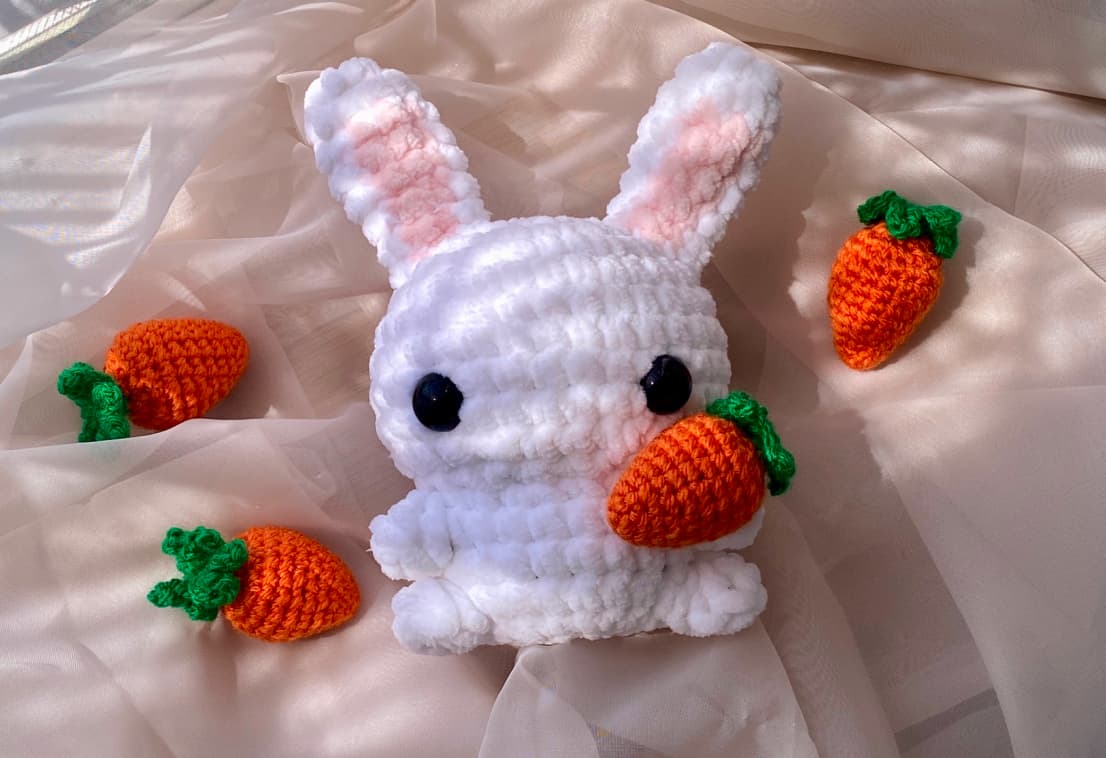
The timing could not be sharper: 53 Stitches published a free low-sew bunny pattern on April 4, hours before Easter Sunday, giving makers one last window to crochet a plush, palm-sized amigurumi before the holiday hits.
The design uses chunky yarn, primarily Premier Parfait Chunky or Hobbii Honey Bunny, worked on a 5.00mm hook through a sequence of head, body, and long ears. Low-sew construction means the parts are either crocheted directly onto the body or joined with minimal finishing, clearing the bottleneck that slows most amigurumi projects: the pile of assembled limbs waiting to be sewn shut one by one.
Makers pulling from their project stash tonight will find chunky or super-chunky yarn in any pastel closes rounds quickly and reduces stuffing needs compared to lighter weights. Anyone reaching for chenille will find specific fiber management tips built into the pattern, a practical addition that prevents a last-minute rip-back when stitch definition goes blurry. The pattern also offers a chain-2 start as an explicit alternative to the magic ring, directly addressing the gaping center-hole problem that plagues bulkier weights at round one and where most low-sew speed claims quietly fall apart in practice.
A tiny carrot worked separately on a 3.00mm hook in Stylecraft Special DK pushes the design from likeable to marketable. That single accessory creates a distinct product photography angle and a natural starting point for a micro-collection: bunny, carrot, and crocheted egg accessories grouped for a craft-fair display or tucked into an Easter-morning basket.
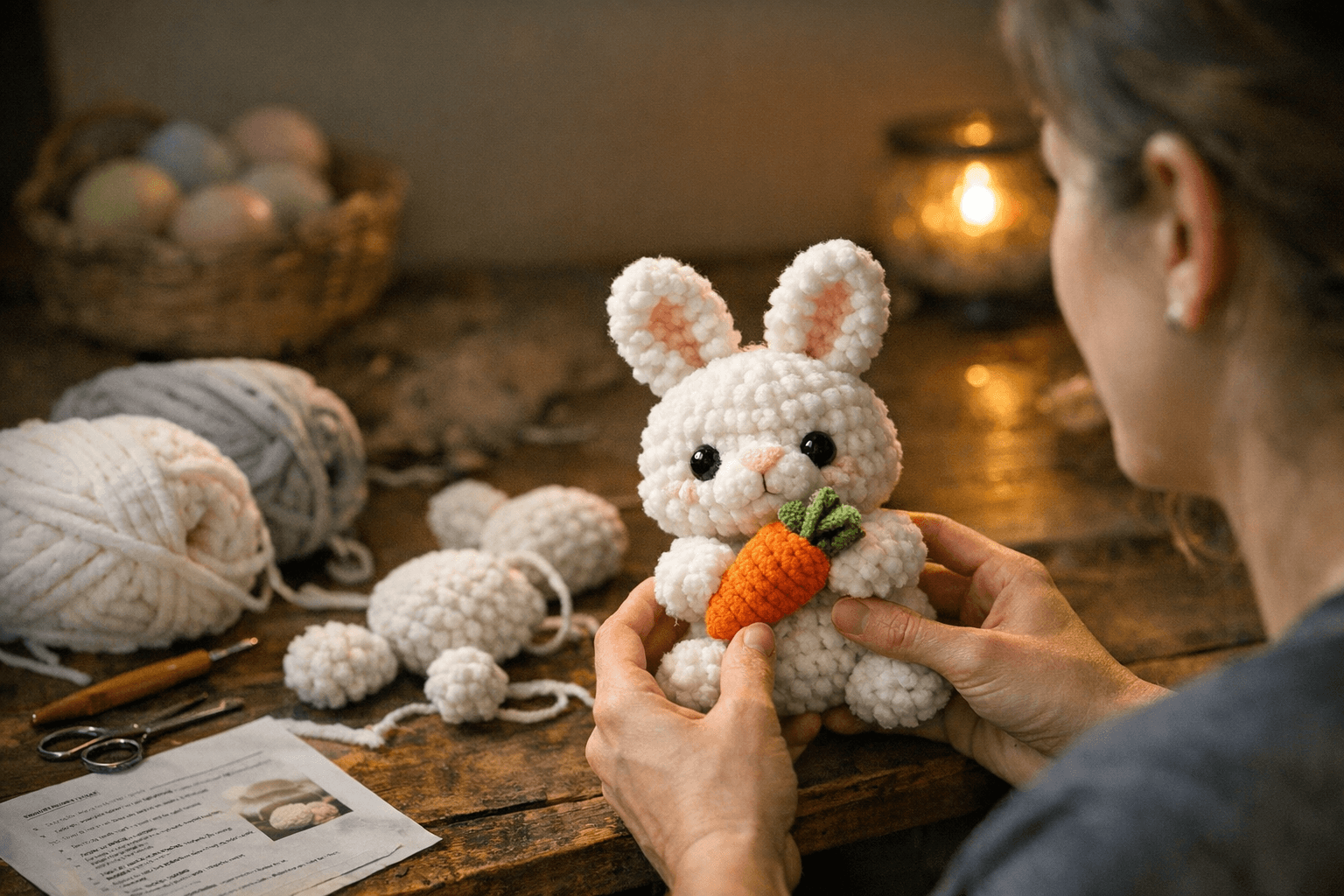
53 Stitches describes the bunny as one of the earliest shapes in its low-sew mini collection, a base design refined for both speed and visual appeal before being expanded into other characters in the lineup. That origin shows in the construction logic: stitch counts are explicit, safety-eye placement is guided, and the sequence moves from head to body to ears without requiring the maker to cross-reference multiple sources mid-project.
The post links out to individual stitch tutorials and beginner resources, making the pattern genuinely self-contained for first-time amigurumi makers rather than just notionally approachable.
With the pattern freely available and chunky yarn in many a project queue, the real investment is a few uninterrupted hours. The carrot, it turns out, is not a finishing touch; it is the part that makes someone stop scrolling long enough to reach for their hook.
This article was produced by Prism’s automated news system from verified source data, official records, and press releases, then run through automated quality and moderation checks before publishing. The system is built and supervised by the people who set the standards it runs under. Read our full AI policy.
Did this article answer your question?