Gen Z embraces crochet for calm, community and creativity
Gen Z is reaching for crochet as a calm, screen-free reset, and a PubMed study found 89.5% felt calmer after hooking.
Crochet’s comeback is landing because it solves a very modern problem: people want something tactile, inexpensive and absorbing enough to pull them away from stress and endless scrolling. The current wave is not just about nostalgia for “grandma hobbies”; it is tied to calm, community and a sense of making something real with your hands.
Why the revival has traction now
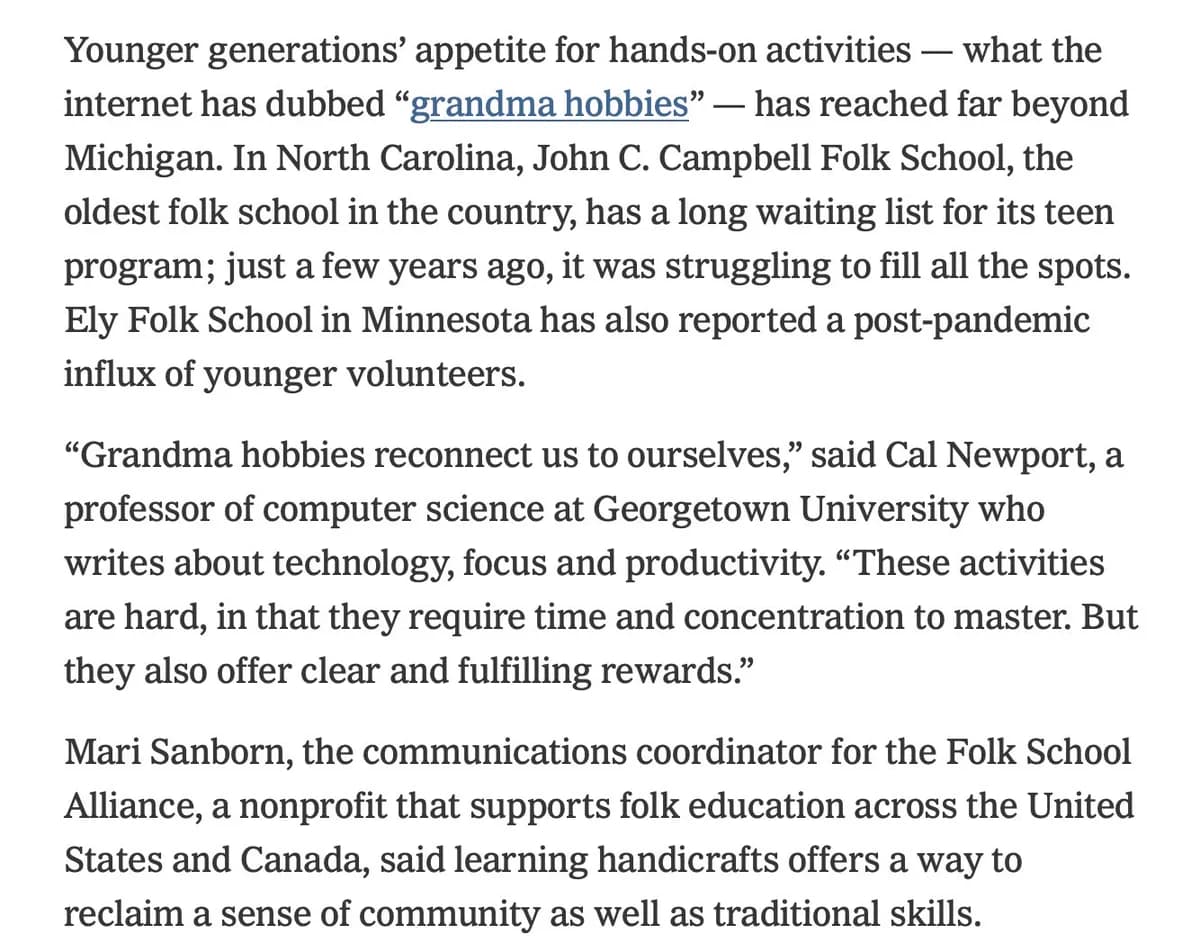
The New York Times has framed the broader return of traditional crafts such as knitting, quilting and crochet as a response to modern stress. In a July 2026 piece described as “The Comforting Resurgence of ‘Grandma Hobbies,’” the paper said younger generations are learning centuries-old skills in search of calm and community, and it pointed to Green Door Folk School, where millennials and Gen Z made up the majority of students.
That detail matters because it shows this is not just older makers rediscovering old habits. Younger adults are showing up for classes, tutorials and social feeds that promise an offline, tactile alternative to doomscrolling. Crochet fits that brief especially well: it is portable, it rewards repetition, and it gives you a visible result fast enough to keep you going after a long day.
What keeps new crocheters coming back
The hobby sticks when it gives beginners early wins. Online beginner content is crowded with granny-square tutorials and small project ideas, which is part of crochet’s appeal for first-time makers who want something manageable rather than a months-long commitment. A square, a coaster, a pouch or a simple motif gives immediate feedback, and that matters when the goal is relaxation rather than perfection.
That practical side also helps explain why crochet has traveled well on social platforms. The format is easy to film, easy to follow and easy to share, which has made it a common entry point for people learning from YouTube tutorials at home. During the Covid lockdown era, that combination of low-cost materials and home-based instruction made craft feel accessible to people who were looking for a hobby they could start without leaving the house.
What the research says about wellbeing
The feel-good reputation is not just anecdotal. In the PubMed-indexed study “Happy Hookers: findings from an international study exploring the effects of crochet on wellbeing,” respondents reported concrete benefits after crocheting: 89.5% said it made them feel calmer, 82% said happier and 74.7% said more useful. The same study reported a significant improvement in wellbeing after crocheting.
Those numbers line up with why the hobby has been resonating with younger makers. Calm is one draw, but usefulness is another. Crochet produces a scarf, a blanket, a plushie or a square you can hold up and say you made it, which is a different kind of payoff than another hour spent staring at a phone.
Academic interest has widened beyond one study. A separate PubMed review, “Healing Stitches: A Scoping Review on the Impact of Needlecraft on Mental Health and Well-Being,” shows that needlecraft is now being examined seriously in mental-health and wellbeing literature. That does not turn every project into therapy, but it does reflect a growing recognition that repetitive handwork can play a real role in how people regulate stress.
How the modern crochet boom differs from older craft revivals
This moment is built on a longer conversation. The New York Times was already writing about knitting’s health benefits in January 2016, which shows that the link between handcraft and wellbeing did not appear overnight. What has changed is the scale and the audience: Gen Z and millennials are now part of the center of gravity, not just the edge of it.
The current interest also has a sharper identity component. For some makers, crochet signals skill, patience and individuality in a digital culture that often rewards speed and sameness. For others, it is a way to join a community that values swapping patterns, celebrating finished objects and making room for imperfect first tries.
What this means for crochet’s staying power
The big question is whether this is a true practice shift or only aesthetic nostalgia. The answer seems to depend on whether new makers get past the first project and into a rhythm that feels useful in everyday life. Green Door Folk School’s student mix suggests that plenty of younger people are doing more than admiring the look of crochet online; they are signing up, showing up and learning the basics.
That is where crochet’s staying power comes from. It offers the low-cost materials, the quick-win projects and the screen-free focus that make a hobby repeatable, not just photogenic. If the current surge is being driven by stress relief, community and a desire to make something with staying power, the hook is already doing more than decorating a trend cycle.
This article was produced by Prism’s automated news system from verified source data, official records, and press releases, then run through automated quality and moderation checks before publishing. The system is built and supervised by the people who set the standards it runs under. Read our full AI policy.
Did this article answer your question?