Honeycomb crochet coasters turn leftover yarn into textured home decor
Leftover yarn gets a fast upgrade here: honeycomb coasters bring texture, color, and a polished set without the commitment of a larger project.
Why this small project punches above its weight
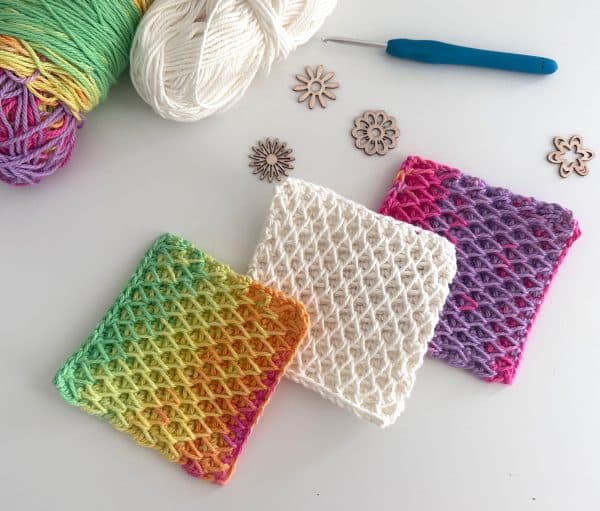
Honeycomb crochet coasters are the kind of make that earns its keep twice. They use up scraps, finish fast, and still look deliberate enough to sit on a coffee table without apologizing for themselves. My Crochet Space frames its coaster patterns as quick, fun makes for leftover yarn or handmade gifts, and this one leans hard into the part that sells the whole idea: texture.
The appeal is practical, not just pretty. A coaster set made in the honeycomb, or smock, stitch gives you a home piece that feels finished, slightly substantial, and easy to hand to someone as a hostess gift. It is a small project with high repeat utility, which is exactly why it works so well for stash yarn.
The stitch is the hook
The key detail is right in the fabric. My Crochet Space identifies the stitch as the smock stitch, also called the honeycomb crochet stitch, and the texture is the draw. It gives the coaster that raised, organized look that reads cleanly even when the piece itself is tiny.
That matters because honeycomb and smock stitches can look more complicated than they are. Crafting Happiness describes honeycomb stitch as a four-row repeat, and the finished fabric is thick and textured. My Crochet Space labels the coaster pattern intermediate, but the pattern becomes much more approachable once the row order clicks and the stitches are easy to read.
The important practical note is that this version is not Tunisian crochet. It uses a regular crochet hook, not a specialized Tunisian tool, even though the surface can remind people of Tunisian smock stitch at first glance.
What makes it different from Tunisian honeycomb
This is where a lot of crocheters get tripped up, because the names overlap and the textures can look related. AllFreeCrochet says Tunisian crochet smock stitch, also called honeycomb stitch #2, creates a thick texture, while Tunisian honeycomb stitch is made by alternating Tunisian simple stitch and Tunisian purl stitch. That is a different structure from a regular crochet honeycomb-style coaster.
Tunisian crochet itself is usually worked with a long hook and a forward pass plus a return pass, which is why the fabric can resemble knitting or weaving. The honeycomb coaster post makes a useful distinction by keeping the construction in standard crochet territory. That means you get the look without having to switch tools or relearn a different stitch system.
The naming can be messy, but the takeaway is simple: if you want the textured look in a quick coaster format, you do not need to chase a Tunisian setup to get there.
Why the color choices matter as much as the stitch
The texture is only half the story. My Crochet Space points out that bright summer colors work beautifully, which makes sense because the stitch catches light and shadow in a way that shows off saturated shades. It is the sort of pattern that can look fresh in coral, yellow, turquoise, or any other cheerful stash yarn you have been saving for something better than a random swatch.
Solid colors tend to make the texture read most clearly. The Crochet Crowd notes that Tunisian honeycomb looks like a honeycomb nest and is more obvious in solid-colored yarn, and that observation carries over well here even though this coaster is worked differently. If you want the stitch definition to carry the whole piece, a solid is the safest choice.

Variegated yarn has its own appeal. It softens the geometry and gives the coaster a more playful, handmade feel, which is a good move if you are using leftovers from several skeins and want the color shifts to do some of the work for you.
- Bright solids for the cleanest texture
- Variegated yarn for a less formal, more playful look
- Coordinated sets for a table that feels intentional instead of mismatched
- Seasonal shades when you want the coasters to feel like part of the room, not just a utility item
A few ways to think about color:
What makes this pattern especially smart is that it lets you experiment without a big commitment. You are not locking yourself into a blanket, sweater, or garment panel just to see whether a color combo works. A coaster is small enough to test a yarn choice and still end up with something useful.
Set-making is where the project becomes giftable
One coaster is a sample. Four or six coasters start to feel like a real set. That is where the project turns from a stitch exercise into a table upgrade, and it is why this format lands so well for gifts.
The Craft Yarn Council’s coaster project uses a target size of 4 inches, or 10 cm, for each coaster, while other coaster patterns commonly sit around 5 to 6 inches in diameter depending on the yarn and design. That size range is ideal for a fast repeat project because it is large enough to show the stitch, but small enough that you can make a matching stack without dedicating a whole weekend to it.
A set also solves the presentation problem. One coaster can feel like a leftover; a matched set feels intentional. If you are building a gift, the honeycomb texture gives the pieces a polished look even when the yarn came from the bottom of the stash bin.
A small pattern with old roots and modern use
There is also something satisfying about putting a contemporary use on a craft with a long paper trail. Crochet’s substantive history is generally traced to 19th-century Europe, and an early published crochet pattern is often cited from a Dutch magazine in 1823. The Victoria and Albert Museum also holds 19th-century crochet patterns and textiles in its collections, which is a useful reminder that these stitch traditions have been documented for a long time.
That history helps explain the naming overlap. Crochet has always carried regional terms, recycled textures, and patterns that evolve as they move from one maker or publication to another. Honeycomb and smock are part of that same tradition, which is why one stitch family can show up under several names while still being recognizable in the fabric itself.
For a modern crocheter, though, the old lineage matters less than the payoff. This is a pattern that teaches a textured stitch, uses leftover yarn well, and ends with something you will actually set a glass on.
Honeycomb coasters are not trying to be a big statement project, and that is exactly why they work. They turn scraps into a coordinated set fast, they show off texture without needing much yardage, and they give you a clean, giftable result that looks far more polished than the time it takes to make.
This article was produced by Prism’s automated news system from verified source data, official records, and press releases, then run through automated quality and moderation checks before publishing. The system is built and supervised by the people who set the standards it runs under. Read our full AI policy.
Did this article answer your question?