Pattern Princess turns variegated yarn into painted throw blanket texture
Pattern Princess’s Painted Pathways Throw Blanket turns variegated yarn into soft, painted-looking texture. The repeat is easy to memorize, but the color movement gives it a true heirloom feel.
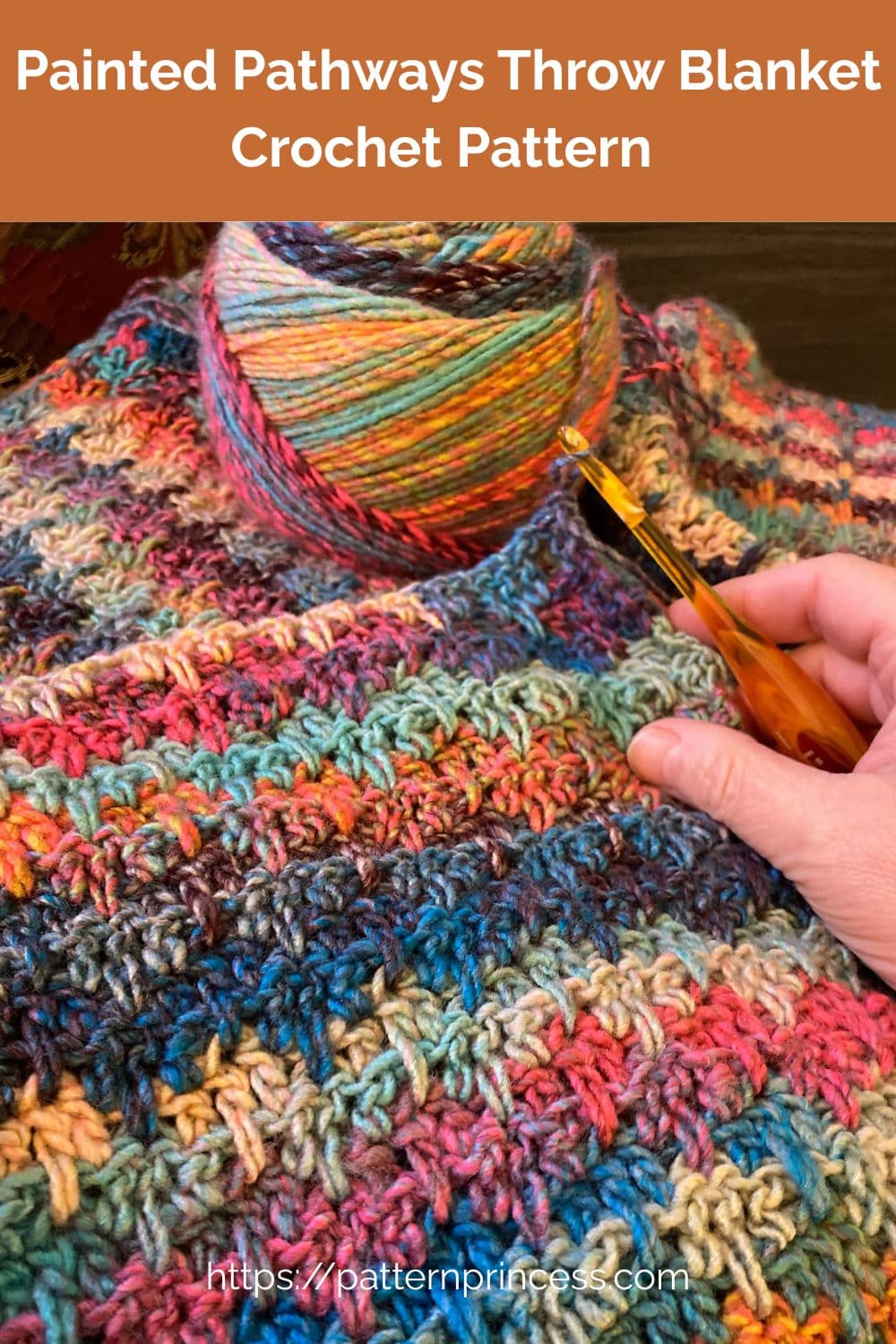
The Painted Pathways Throw Blanket is the kind of crochet pattern that makes variegated yarn look like you planned every color change on purpose. Pattern Princess built it around the Spike Stitch Trio, and the result is a blanket with flowing columns of color, softened pooling, and enough surface texture to read like a hand-painted textile instead of a simple stripe job.
What gives painted pathways its visual punch
The whole appeal here is placement, not novelty for novelty’s sake. The stitch turns ordinary rows into watercolor-like trails, sunset washes, and winding path effects, depending on the yarn you choose and how the colors travel through the fabric. That matters because this is the rare throw pattern that makes a busy skein look intentional rather than chaotic.
Pattern Princess says the design breaks up variegated yarn pooling into soft transitions instead of harsh stripes, which is exactly why the blanket feels so polished. If you have a few cakes or skeins you liked in the store but were never quite sure how to use, this is the sort of pattern that rewards that stash. It gives the yarn a stage, then gets out of the way.
How the Spike Stitch Trio actually works
The backbone of the blanket is the Spike Stitch Trio, an original stitch pattern developed by Pattern Princess. The stitch recipe is straightforward: double crochet, extended double crochet spike stitch into the stitch below, another double crochet, then a ch-1 skip. That rhythm creates a dense, modern fabric with a gentle drop-stitch effect and no gaps, so the finished blanket looks textured without becoming holey or fussy.
The stitch was first introduced in a tutorial published on May 30, 2026, and that timing helps explain why the blanket feels so fresh. It is the kind of repeat that settles into your hands quickly, which is a big part of the appeal for an evening project. You are not memorizing a complicated lace chart or wrestling with a dozen stitch heights; you are building one clean motion over and over until the fabric starts to ripple with color.
That ease is also what makes the pattern feel more luxurious than it really is. The look is sophisticated, but the mechanics are repetitive enough to be soothing, which is a rare and useful combination in a throw blanket.
Yarn choice is doing a lot of the design work
The sample blanket was made with Red Heart Roll With It Mélange in Show Time, a #4 medium-weight yarn with 389 yards per cake. That choice tells you a lot about how the pattern wants to behave: it is designed to let color travel, blur, and stack into those painted-looking bands. Long-color-change yarns will give you the softest watercolor effect, while solid, tonal, hand-dyed, or self-striping yarns will all push the texture in slightly different directions.
That flexibility is one of the smartest things about the pattern. A lot of textured blanket designs only look good with one very specific yarn personality, but this one invites experimentation without making you guess blindly. If you want the color to do the drama, choose a variegated or long-transition yarn. If you want the stitch texture to take the lead, go more tonal and let the vertical structure speak.
The gauge and setup are practical too: the pattern lists 12 stitches and 8 rows = 4 inches in the Spike Stitch Trio pattern, and the fabric is worked over a multiple of 4 + 1 foundation chains. That is the sort of information that makes the design feel usable rather than aspirational. You know how the math works before you cast on, which is half the battle with a blanket this size.
How much commitment this pattern asks for
Pattern Princess offers the blanket in eight suggested sizes: Baby, Crib, Lapghan, Throw, Large Throw, Twin, Queen, and King. That puts it in the category of adaptable design system, not one isolated project. You can start small if you want the look with less yarn and less time, then scale up if you decide the texture deserves a full-bed finish.
That said, it is still a blanket, so the yarn commitment is real. The design does not require unusually advanced skills, but larger sizes will always ask for more yardage and more patience. The payoff is that every section looks a little different, so the finished piece feels handmade in the best way, with a color story that belongs to that exact project instead of a mass-produced repeat.
- If you want a blanket that looks far more elaborate than the stitch count suggests, this is a strong bet.
- If you want a relaxed repeat you can memorize without constantly checking a chart, the structure supports that.
- If you are chasing a true heirloom look from variegated yarn, the painted texture delivers.
- If you want instant gratification with almost no yardage, a throw blanket probably is not the right scale.
For a crocheter deciding whether to jump in, the answer comes down to what you want from the finished object:
Pattern Princess, run by Vicky and Casey, a mother-daughter team, has clearly leaned into the sweet spot between modern texture and approachable construction. Painted Pathways fits that approach well: it is decorative enough to feel special, simple enough to keep your hands moving, and flexible enough to work across a wide range of yarn moods.
In the end, that is why the blanket lands so well. It does not need complicated shaping or an aggressive yarn budget to look expensive. It just needs the right color in the right stitch, and the fabric starts doing the painting for you.
This article was produced by Prism’s automated news system from verified source data, official records, and press releases, then run through automated quality and moderation checks before publishing. The system is built and supervised by the people who set the standards it runs under. Read our full AI policy.
Did this article answer your question?