Vibrant Vintage Crochet-A-Long adds Pipefish motif, 36 hexies and lace border
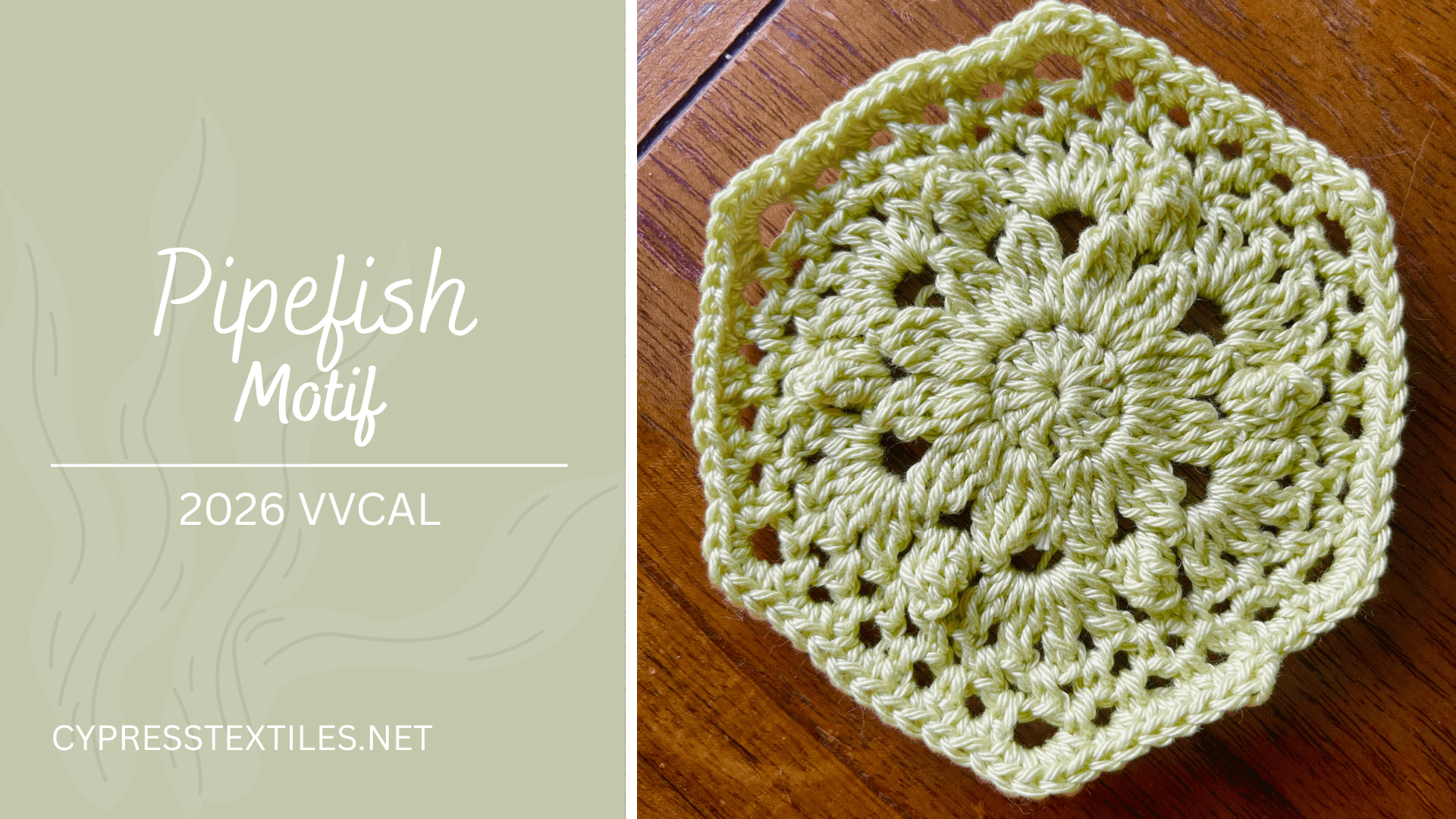
The Pipefish Motif is the easiest way into the 2026 VVCAL, with 36 hexies, three joining methods, and a lace border that turns small wins into a full blanket.
A low-pressure way into the 2026 blanket
The Pipefish Motif gives the 2026 Vibrant Vintage Crochet-A-Long a clear, friendly on-ramp. It is part of a slow-paced 20-week make, so if you are not already halfway through, you are not behind, you are right on time for a project that is built to be joined in progress rather than treated like a race.
That is the best thing about this release: it is not a mystery project that demands blind trust. It is a modular blanket plan with 36 hexies to mix and match, three joining methods, and a wide lace border, which means every session gives you something finished-looking even before the whole textile comes together.
Why this motif works for join-now crocheters
The Pipefish Motif lands inside a CAL that runs from April 3 through August 14, with new posts appearing on Fridays. That schedule matters because it gives you structure without the pressure cooker feeling that turns some blanket projects into unfinished pile-ups on the craft room chair.
If you want to jump in now, the format is doing a lot of the heavy lifting for you. The pattern is available in written, charted, and video form, with step-by-step photos as backup, so you can work the motif in the format that matches how you actually learn at the hook. That makes the release especially approachable if you like to check a chart while keeping the video open, or if you just want the calm reassurance of photo-by-photo reinforcement on the first pass.
This is also the kind of setup that rewards small bursts of progress. A single hexie is a manageable win, but the full package still points toward a substantial blanket-style finish, which is exactly the sweet spot for anyone who wants a project with momentum but not chaos.
Where it fits in the broader VVCAL
The 2026 VVCAL is not a one-off pattern drop. Cypress|textiles has framed it as an ongoing community make, and the Pipefish Motif post doubles as a project hub, a community update, and a pattern release all at once. That is why the post feels more like an invitation to settle in than a launch announcement.
The designer is also building out the series in a way that makes the archive useful, not just decorative. A PDF version is coming soon, and a value bundle covering the 2022, 2024, and 2026 VVCALs is also on the way, which tells you this is an established ecosystem with multiple entry points instead of a single isolated season.
There is continuity here too. Cypress|textiles has previously offered the 2016 VVCAL as 33 unique square motifs with a joining method and wide-lace border, while the 2022 and 2024 VVCAL eBooks each contain 38 patterns. The 2026 run keeps that modular blanket logic alive, but the hexie format and joining options make it feel especially friendly for crocheters who like to build in pieces.
The pipefish angle is more than a cute theme
The sea-life background gives this motif real personality. Pipefish belong to the Syngnathidae family, the same group as seahorses, seadragons, and pipehorses, and that family is known for odd, fascinating biology: male pregnancy, cryptic morphology and behavior, low fecundity, lengthy parental care, and suction feeding.
Pipefish also have brooding structures that vary from simple egg attachment to fully enclosed brood pouches, and research has shown that brood-pouch structure can affect embryo survival and oxygenation. That is the kind of detail that makes the motif feel earned instead of random, because the shape on your hook is tied to an animal with a genuinely unusual life history.
The habitat story matters too. Pipefish are commonly linked to shallow coastal waters, especially seagrass meadows and estuaries, and some species face habitat-loss and habitat-degradation pressures from coastal development and shoreline disturbance. In other words, this is a decorative motif with an ecological anchor, not just a straight-bodied seahorse cousin drawn for charm.
A pattern release built for different learning styles
The practical appeal of this post is hard to miss. You get US and UK terms, a chart, a video, and step-by-step photos, which covers the full range from chart-first stitchers to people who need to see the sequence before they trust it. That kind of redundancy is not fluff, it is what keeps a complex modular project moving when your attention is split between rows, joins, and border planning.
The three joining methods are another smart touch. Modular blankets often stall at the finish line because the assembly feels bigger than the stitching, but giving crocheters options lowers the friction and lets them choose the method that fits their speed, tolerance for seaming, and appetite for neatness.
The wide lace border closes the loop nicely. It gives the finished piece a vintage feel without burying the motifs under an overworked edge, and it suits a mix-and-match layout where the hexies can stay the star.
Why this is the right kind of crochet-along checkpoint
What makes this release useful is not just that it is pretty. It is that it offers a clear task, a visible payoff, and enough support to let you start without having to solve the whole blanket in your head first.
If you want a CAL that feels organized, social, and flexible, this is the part to grab. The Pipefish Motif gives the 2026 VVCAL a strong midstream checkpoint, and the structure around it makes the project feel open, current, and easy to enter while the Friday rhythm is still rolling.
This article was produced by Prism’s automated news system from verified source data, official records, and press releases, then run through automated quality and moderation checks before publishing. The system is built and supervised by the people who set the standards it runs under. Read our full AI policy.
Did this article answer your question?