Vintage star-motif crochet stole brings 1950s lace elegance back
This star-motif stole belongs at weddings, evening events, and heirloom gift tables, with a cleaned-up PDF that makes vintage lace feel doable.
A stole with a real job to do
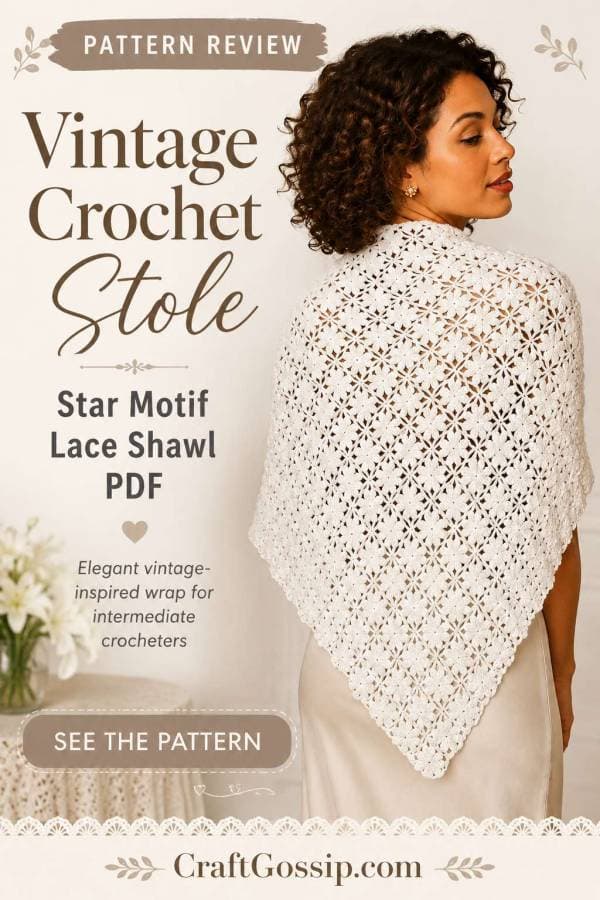
This is not the kind of crochet you toss over your shoulders on the way to the grocery store. The appeal here is the exact opposite: a delicate star-motif stole that knows how to show up for a wedding, an anniversary dinner, or any evening where a handmade layer should look polished rather than casual. The shape is a triangular lace wrap, built from joined motifs, and that construction gives it the kind of graceful drape that reads formal the second it hits the shoulders.
What makes it worth paying attention to is how specific the style is. Each star motif is about 1.5 inches, small enough to keep the fabric light and detailed without turning the stole into a bulky shawl. The result is one of those pieces that can elevate a simple dress, soften a formal outfit, or sit in an heirloom wardrobe waiting for the right occasion.
Why this stole lands in the right dressy lane
The strongest argument for this pattern is that it understands where crochet earns its keep. A star-motif stole like this is ideal for weddings, evening events, and gift-giving moments when you want the handmade work to feel refined instead of crafty. It also makes sense as a bridal cover-up, especially over a strapless dress or a lower neckline, where a lace layer adds coverage without killing the shape of the outfit.
That is not a new idea. Vintage bridal fashion made room for coordinating stoles and lace boleros, especially as strapless silhouettes became more common in the 1950s. This stole fits right into that language of elegant coverage: useful, flattering, and just dressy enough to feel intentional.
The motif work is the whole point
The pattern’s structure does a lot of the heavy lifting. Instead of one broad expanse of fabric, it uses repeated joined motifs to create a triangular lace wrap, and that repetition is what gives the stole its visual texture. You get the lace effect from the motif rhythm itself, which is exactly what makes midcentury crochet so recognizable when it is done well.
That small motif scale matters too. At about 1.5 inches each, the stars keep the fabric airy and controlled, so the stole can drape neatly across the shoulders instead of collapsing into a heavy net. If you have ever worked a vintage lace piece that looked beautiful in the photo but felt awkward in the hand, you know how much difference that balance makes.
The cleaned-up PDF is the real modern upgrade
Vintage crochet can be wonderful and infuriating in equal measure. Old instructions often assume you can read around missing clarity, dated formatting, or cramped layout, and that is where a lot of good projects lose people before the first motif is finished. Here, the pattern has been rewritten and cleaned up into a printable PDF, which keeps the old styling intact while making the instructions much easier to work through.
That matters more than it sounds like it should. A formal lace piece only feels elegant if the process does not become a mess of guesswork, and a modernized layout removes a lot of the intimidation that usually comes with vintage crochet. You still get the period look, but without the feeling that you need to decipher a museum label to start.
Who this is for, and where it fits in your stash
This is best suited to confident crocheters or advanced makers, and that is not just because of the lace. Joining motifs cleanly, keeping the triangular shaping even, and understanding how the finished piece should fall are all part of the job. If the joins are sloppy or one side grows faster than the other, the stole will stop looking graceful and start looking lopsided fast.
It is also the kind of project that rewards patience rather than speed. The appeal is in the finished object, not the rush to get there, so this works best when you want a piece that feels worth blocking, wearing, and eventually passing along. In practical terms, that makes it a strong choice for makers who enjoy heirloom crochet and want their work to have a clear purpose beyond the yarn bin.
Why the vintage context still feels fresh
There is real history behind this shape, and that history helps explain why it still reads as formal today. Free Vintage Crochet says it has over 2,000 hand-restored patterns available online, and its shawl patterns are framed for both indoor and outdoor evening wear. That is a strong clue that lace wraps were never fringe objects in crochet culture. They were part of the wardrobe language.
The midcentury record backs that up. A 1953 stole and shrug collection includes names like Cotillion Shawl, Riviera Shawl, Illusion Shawl, Opera Shawl, and Ballerina Shawl, which tells you how established this category was. Star motifs and named shawls were not niche experiments; they were mainstream design territory, and this stole is drawing from that well with confidence.
That is why the pattern lands now. It is elegant without being fussy, recognizable without being costume-y, and modern enough to be useful because the instructions have been cleaned up for actual humans. If you want a crochet piece that belongs at a wedding, earns its spot at an evening event, and looks like something worth keeping, this is exactly the kind of stole that still knows how to make an entrance.
This article was produced by Prism’s automated news system from verified source data, official records, and press releases, then run through automated quality and moderation checks before publishing. The system is built and supervised by the people who set the standards it runs under. Read our full AI policy.
Did this article answer your question?