Yarnful Creations guides crocheters through a tapestry sweater vest
A tapestry sweater vest turns colorwork into a wearable test of fit, drape, and finish. Yarn choice and gauge do as much work as the motif itself.
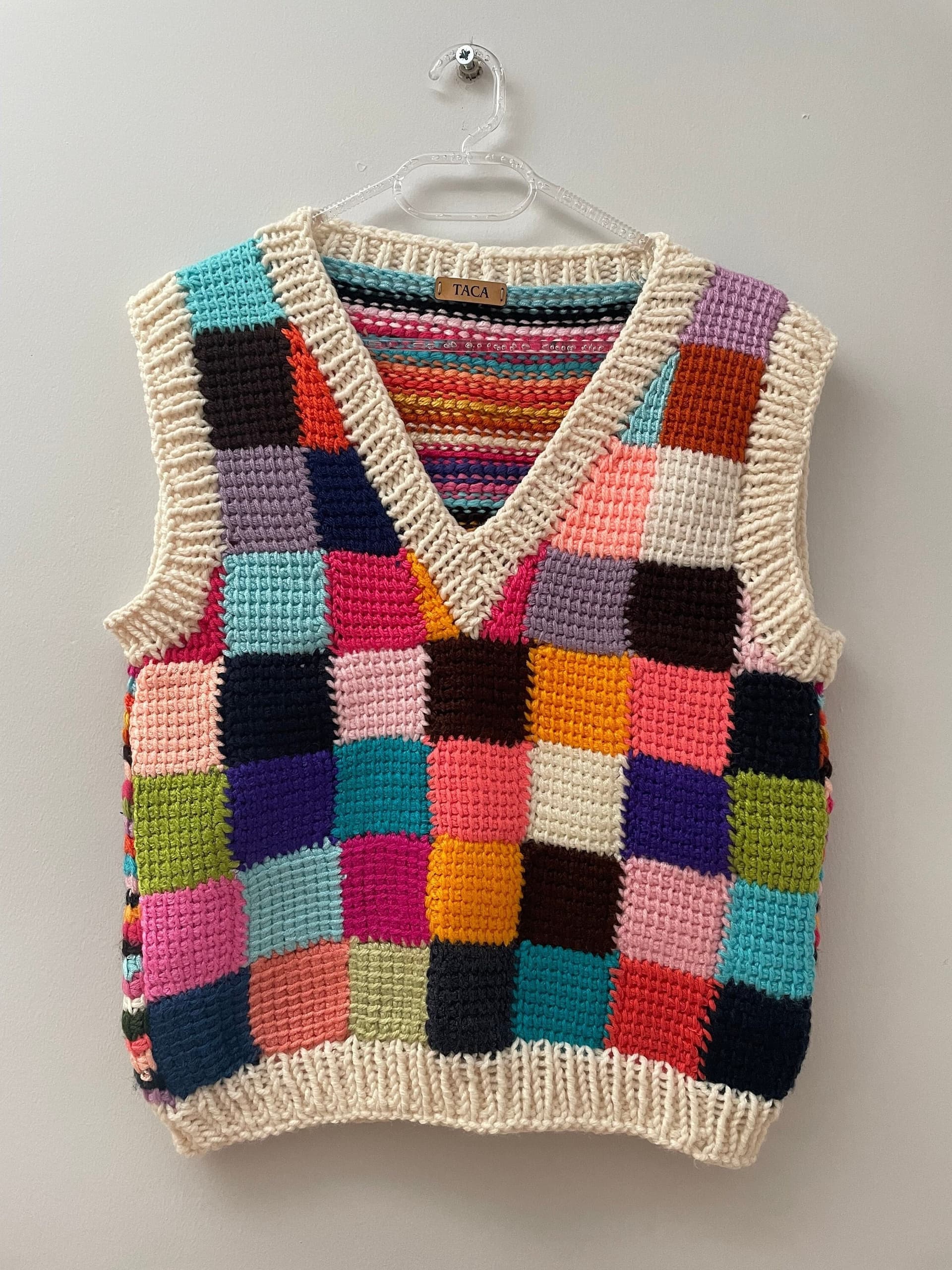
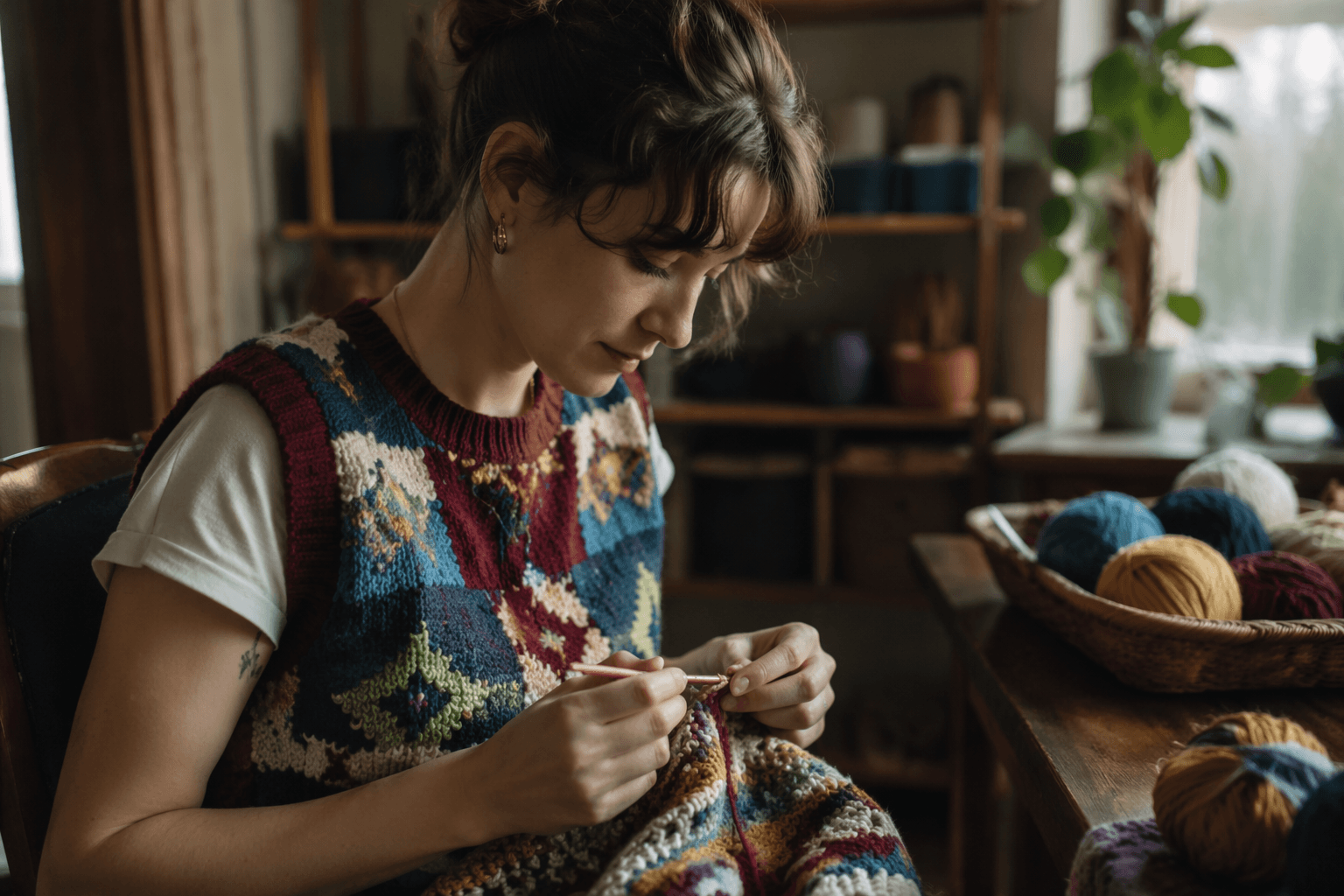
A tapestry sweater vest asks a crocheter to do two things at once: make the colors sing and keep the garment wearable. That is what makes Yarnful Creations’ approach so useful. It treats the vest as more than a pretty project, and places yarn, stitch structure, fit, and finishing on equal footing so the final piece layers cleanly instead of turning boxy or bulky.
Why tapestry crochet works so well in a vest
Tapestry crochet is a colorwork method that works multiple colors in the same row while hiding the unused yarn inside the stitches. That gives the fabric graphic impact without forcing you into intarsia-style joins, and it is part of why the technique feels so suited to a sweater vest. The best versions balance bold pattern with structure, so the vest feels intentional rather than overloaded.
Interweave describes tapestry crochet as a reversible colorwork technique that is usually worked in continuous rounds, though it can also be worked flat if you plan the edge treatment, such as fringe. It also notes that modified single crochet or back-loop-only stitches can reduce ridging and create a smoother fabric. For a vest, that smoother surface matters: it helps the fabric drape better over shirts and keeps the colorwork from looking stiff.
Start with the yarn, not the motif
The first real decision is fiber and weight, because in tapestry crochet yarn controls more than color. It affects drape, warmth, durability, and the visual finish of the garment. A yarn that is too thick can make the vest feel dense and heavy, while one that is too springy can exaggerate uneven edges and make the color changes pop in a way that looks messy instead of crisp.
That is why the Yarnful Creations guide puts yarn selection at the center of the process. In a wearable piece like a vest, the fiber needs to support the design rather than compete with it. The right yarn helps the vest layer neatly over a button-down or tee, keeps the shape readable, and makes the stitch pattern look deliberate from front to back.
Tools and stitch choices shape the fabric
Once the yarn is set, the hook and stitch strategy become just as important. Tapestry crochet depends on clean color changes, but the underlying stitch has to carry that visual load without creating bumps or visible ridges. That is where stitch selection becomes a design decision, not just a technical one.
Modified single crochet can help create a flatter surface, and back-loop-only stitches can also soften the appearance of the fabric. Those choices matter in a sweater vest because the garment is meant to sit close enough to the body to layer, but not so tightly that it clings. A smooth, even fabric supports the pattern and gives the finished vest a more polished silhouette.
Fit is built long before finishing
A sweater vest succeeds or fails on fit, and the Craft Yarn Council is clear that exact gauge is essential for proper size and shape. Swatching in the yarn, hook, and stitch pattern you plan to use is not optional here. In tapestry crochet, where colorwork can subtly change the density of the fabric, a swatch tells you how much the vest will widen, shorten, or stiffen once the motif is worked across the whole piece.
Schematics matter just as much. The Craft Yarn Council notes that schematics show measurements, provide a reference point for fit, and help makers modify size. For a vest, that means you can check armhole depth, body width, and overall length before you commit to the full garment. A thoughtful schematic is what keeps a handmade vest from landing in that awkward middle zone where it is neither fitted nor intentionally oversized.
Construction choices keep the vest balanced
Tapestry crochet can be worked in continuous rounds, but a vest is often built flat, especially when shaping armholes and shoulder seams. Flat construction gives you more control over the front and back panels, which is helpful when the motif needs to stay centered and symmetrical. If you want the piece to lie cleanly against other layers, planning the edge treatment from the beginning is essential.
That planning is where tapestry crochet differs from simple color blocking. You are not only arranging colors, you are deciding how the garment will open, where the edges will sit, and how the weight of the fabric will fall. A vest that looks graphic on the hook can still feel uneven on the body if the shaping is rushed, so the construction has to support the design from the first row to the last seam.
Finishing turns handmade into polished
Blocking is one of the most practical steps in the whole process, and the Craft Yarn Council spells out why: it evens stitches, flattens seams, and gives garments a more professional appearance. That is especially important for tapestry work, where small irregularities in tension can show up as waves or puckering if you skip the finish work. A vest can look dramatically more refined once the fabric is coaxed into shape.
Seaming and edging also deserve patience. Clean armhole edges and a tidy neckline can make the difference between a vest that reads as handmade in the best way and one that looks unfinished. In tapestry crochet, where the design itself is already visually active, the finishing needs to be quiet, precise, and supportive.
Care matters because the vest is meant to be worn
The last step is care, and this is where universal care symbols earn their place. The Craft Yarn Council notes that these symbols reduce language on labels and help recipients understand how to wash and dry handmade items. For a vest that may combine multiple fibers or colors, clear care guidance protects the shape and keeps the fabric from warping after the first wash.
That is especially important for gifts and garments intended for regular wear. A tapestry sweater vest is not just a display piece; it is a layer meant to move through real life. Clear care instructions preserve the fit that all the gauge work and blocking achieved in the first place.
A garment with a longer craft memory
Tapestry crochet may feel current, but its roots reach back into the 19th century, when crochet developed from chain-stitch embroidery. Britannica notes that it was introduced into Ireland in the late 1840s as a famine relief measure, and Interweave traces strong tapestry crochet traditions in Sweden and Denmark by the 19th century. That history gives modern colorwork a deeper lineage, one that stretches beyond trend cycles and into regional craft memory.
Seen that way, a tapestry sweater vest is not just a convenient next step after scarves and squares. It is a compact place to practice garment logic, color planning, and finishing discipline at once. Lion Brand’s dedicated collections of free vest patterns and vest kits, including crochet vest options, show how steady the interest in the category remains, but the real appeal is simpler: a vest lets you test serious crochet skills on a project you will actually want to wear.
This article was produced by Prism’s automated news system from verified source data, official records, and press releases, then run through automated quality and moderation checks before publishing. The system is built and supervised by the people who set the standards it runs under. Read our full AI policy.
Know something we missed? Have a correction or additional information?
Submit a Tip