Consistency Wins, Surprises Emerge: Eight CrossFit Quart
Broad capacity beat specialist peaks at the 2026 CrossFit Quarterfinals — four brutal workouts just set the race for 2,000 Semifinals spots.
Nobody wins Quarterfinals by going nuclear on one event. The 2026 edition, which ran from March 26 through March 30 with a five-day submission window and affiliate-validated scores due by April 1, made that clearer than ever. Colten Mertens entered as the men's worldwide Open leader for the second consecutive year. Lucy Campbell ranked first among women after what observers called her best-ever start to a season. Both faced the same four-event gauntlet as everyone else in the field — and what that gauntlet revealed has direct implications for how coaches and athletes should train between now and Semifinals.
Consistency Across All Four Events Was the Separator
Athletes with multiple top-25 finishes across all four workouts climbed the leaderboard far more reliably than those who dominated one test and stumbled on others. With the top 2,000 men and 2,000 women advancing to Semifinals, single-modal specialists had nowhere to hide. The format rewarded depth, not peaks. If you are reviewing your Quarterfinals performance and one workout is dragging your cumulative standing down, that gap is your highest-priority training target this week.
Workout 1: The Symmetrical Chipper Punished Aggressive Openers
The first event was a mirror-format chipper under a 12-minute cap: 10 50-foot shuttle runs, 20 overhead squats, 30 lateral burpees over the bar, one minute of mandatory rest, then the sequence reversed back through 30 burpees, 20 overhead squats, and 10 shuttle runs. The mirror structure was a trap. Athletes who burned through the first half at sprint pace arrived at the overhead squats in the back half compromised, and compressed positions under fatigue invited no-reps from judges. The crease of the hips must pass below the tops of the knees on every overhead squat rep; no amount of bar speed covers a shallow bottom position when a judge is watching.
Workout 2: "Anyhow" Forced a Real Strategic Decision
Eighty dumbbell hang squat cleans and 40 bar muscle-ups, completed in any order, with a 15-minute cap sounds simple until you realize that the word "anyhow" is a genuine strategic lever. Open on bar muscle-ups while you are fresh and you arrive at the cleans with a deteriorating grip. Front-load the cleans and you risk burning your pull capacity before the muscle-ups begin. The hang squat clean standard was strictly enforced: athletes needed to squat below parallel, receive the dumbbells in a racked position with elbows in front of the hands, and reach full extension of the hips and knees before lowering. Any early descent before lockout drew a no-rep, and under accumulated fatigue those standards are precisely where form breaks down first.
Workout 3: The Escalating Deadlift Ladder Hid Its Difficulty in Plain Sight
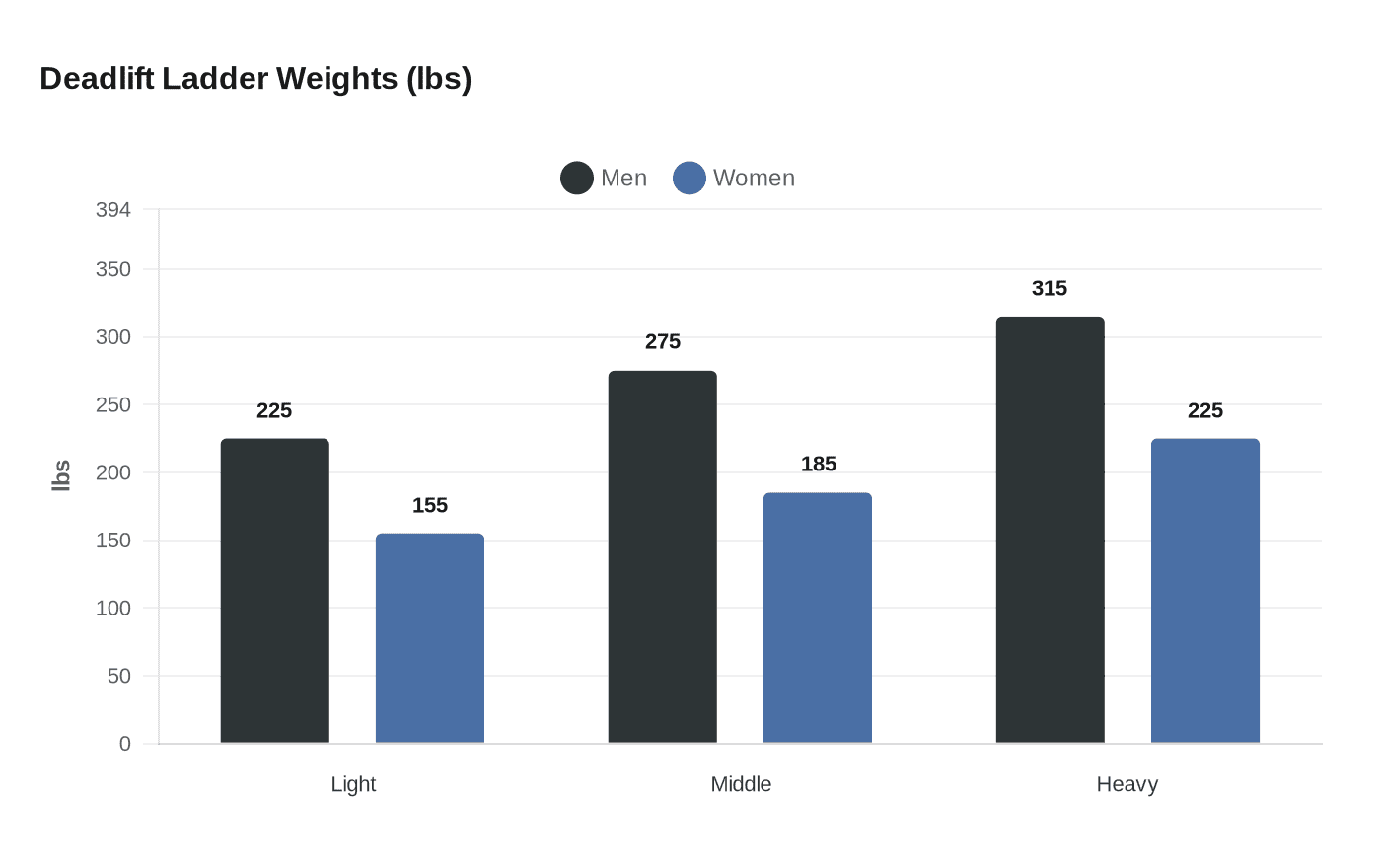
The third event asked athletes to work through three rounds of 50 double-unders and 10 deadlifts at the lightest weight, then two rounds at the middle weight, then one final round at the heaviest, all inside a 12-minute cap. For age-group men those loads ran 225, 275, and 315 pounds; for age-group women, 155, 185, and 225 pounds. The structure looked manageable early. It was not. Athletes who raced through rounds one through three on the light bar arrived at round four already in oxygen debt, and the heavier deadlifts exposed every bit of that deficit immediately. The workout was decided in rounds four through six, not the first three. Double-under no-reps added a timing penalty: judges counted only completed passes of the rope beneath the feet twice, not attempts, and spinning the rope backward reset the count. Athletes who split their sets conservatively in early rounds and maintained consistent splits into the ladder's heavier loads finished significantly better than those whose pace fell apart at the heavy bar.
Workout 4: Strict Handstand Push-Ups as the Closing Filter
Two 1,000-meter rows, 30 clean and jerks, and then 30 strict handstand push-ups. That final movement was intentional brutality. Strict handstand push-ups are a different demand than kipping, rewarding accumulated overhead pressing capacity rather than hip drive and timing. After two rowing efforts and a barbell cycling set, athletes who arrived at the wall with limited strict pressing reserve found themselves stalled on what should have been the shortest portion of the workout. For coaches, the splits on Workout 4 are the clearest signal in the entire Quarterfinals dataset about where to direct overhead pressing volume before Semifinals.
No-Reps and Judging Nuances Shaped Leaderboard Positions
The shuttle run standards in Workout 1 were among the most common sources of judge intervention across the weekend. The standard requires both feet to fully cross the turnaround line and one hand to touch the ground past the line on every rep. Turning around with one foot on the line rather than past it is a no-rep, and the penalty is a return trip to redo the turnaround. At competitive speeds, two or three missed turnarounds cost meaningful seconds in a 12-minute cap. The deadlift in Workout 3 added a second judging flashpoint: hips and knees must reach full extension, and the head and shoulders must remain behind the bar at lockout. Under fatigue, athletes who habitually finish deadlifts with the bar swinging forward of the hips found judges waiting for a correction that cost them reps and time.
The Hidden Leaderboard Format Removed Reactive Strategy
One structural feature of the 2026 Quarterfinals that set it apart from the Open: scores submitted during the competition window were invisible to the field until after the submission deadline closed. An athlete who competed on Friday had no visibility into how anyone else was doing until Monday. Affiliate managers retained access for validation purposes, but the broader competitive field ran blind. This removed the reactive score-chasing that often shapes Open results in real time, and it meant early competitors had no pace reference from peers at the same performance level. For Semifinals preparation, the takeaway is practical: internal pacing discipline and preset game plans matter more when external leaderboard data is unavailable. Athletes who relied on reading others' scores to calibrate their efforts were competing without their usual reference point.
What Quarterfinals Signals for Semifinals
The final validated leaderboard lands by April 10, and that is when the real qualification picture becomes clear. Until then, unofficial standings point toward who held serve from their Open seedings and who climbed unexpectedly. For program directors building the next training block, the four Quarterfinals events define a clear movement profile worth re-testing: overhead squat under cardiovascular fatigue, bar muscle-up capacity paired with dumbbell cycling, paced deadlift ladder work with a jump rope, and strict overhead pressing following sustained aerobic output. Mertens and Campbell are the names to watch on the finalized leaderboard, but the Semifinals story will be shaped just as much by who quietly moved up from mid-field. Age-group cutlines vary by division, so athletes in those brackets need to check their specific numbers against the April 10 release. The 2,000-spot cutline for the individual field is fixed; everything else is now a training and recovery problem to solve before April Semifinals begin.
Know something we missed? Have a correction or additional information?
Submit a Tip