CrossFit Barbell Coaching Guide: Technique, Programming, and Injury Prevention
Shoulder, lumbar, and knee injuries top the CrossFit injury charts; a 12-week barbell program built around five foundational lifts can change that equation inside any box.

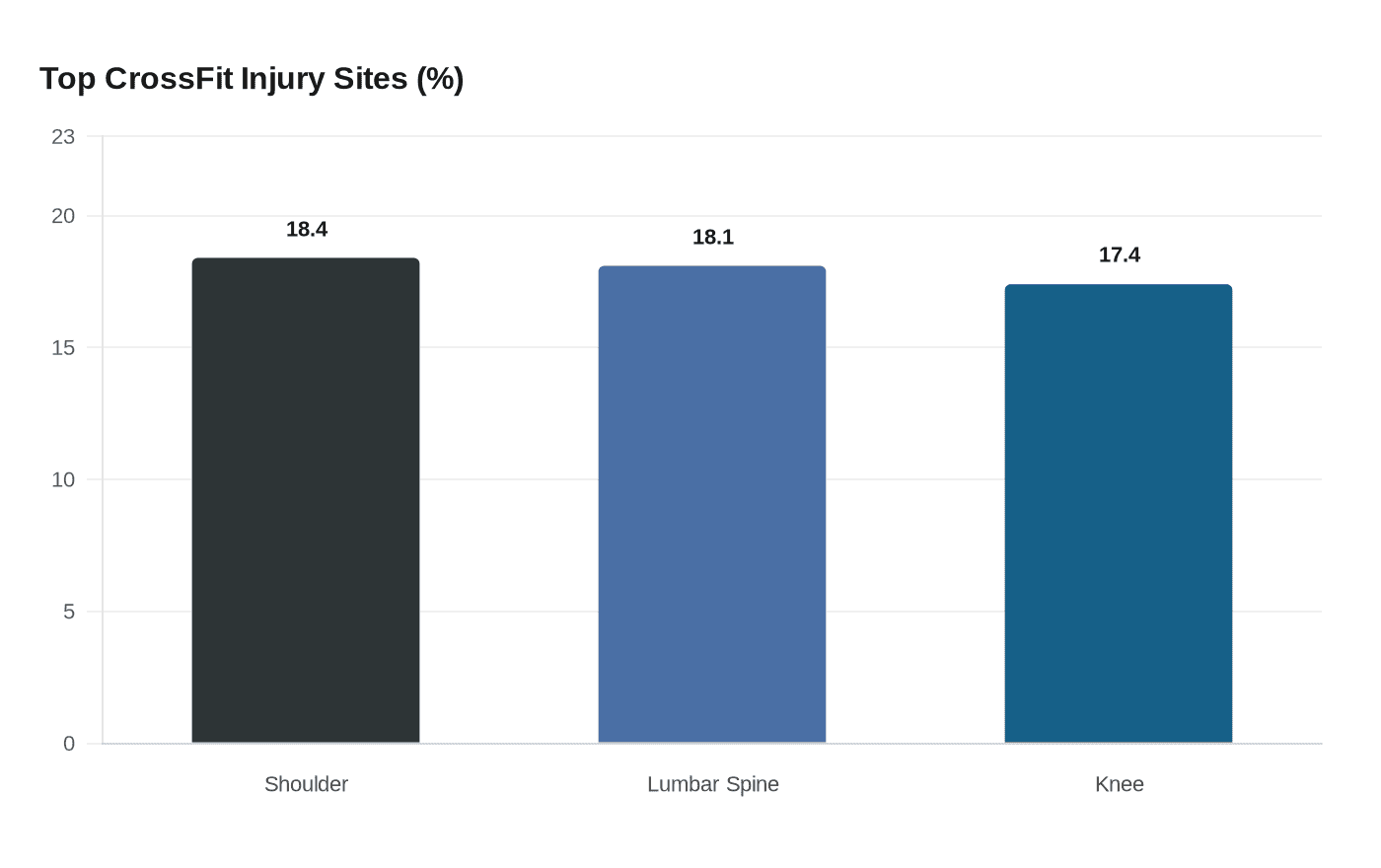
The numbers make the case plainly: a prospective cohort study tracking CrossFit athletes over nine months found an injury incidence rate of 2.04 per 1,000 training hours, with the shoulder (18.4%), lumbar spine (18.1%), and knee (17.4%) consistently leading the damage report. Barbell movements sit at the center of that picture. They are also, not coincidentally, at the center of what makes CrossFit work. Greg Glassman, who co-founded CrossFit in 2000, built the methodology around functional movements performed at high intensity, and the Olympic lifts have been part of that identity from the start. The CrossFit Games, which launched in 2007 at a ranch in Aromas, California, helped cement the clean, snatch, and jerk as competitive benchmarks, not just training tools. Today, around 10,000 affiliated boxes operate across more than 150 countries, and every one of them programs barbell work. Coaching it well is non-negotiable.
This guide condenses the foundational technique and programming principles coaches need for five lifts central to CrossFit: the deadlift, clean, snatch, front squat, and jerk. It is designed for group classes, small-group technique sessions, and 1-on-1 coaching, with the practical constraint of a busy affiliate schedule built in at every step.
Who This Is For
The framework applies across experience levels. New athletes benefit from the structured progression before bad habits calcify. Experienced members use it to identify the specific mechanical gaps that are quietly capping their output. Coaches running group classes get a repeatable teaching structure that works at scale, and affiliate owners get the foundation of a genuine in-house technique curriculum. The CF-L1 is the minimum required credential to apply for CrossFit affiliation, meaning coaches in most boxes are already holding the baseline; this guide is the next layer of practical application on top of that credential.
The 12-Week Programming Framework
Three phases cover the full cycle from motor pattern acquisition to competitive readiness under fatigue.
Phase 1: Motor Control and Breath (Weeks 1-4)
The first four weeks are entirely about establishing the correct movement signature before load enters the picture. Prioritize consistent hip-hinge mechanics, neutral spine position, and diaphragmatic breathing. PVC pipe and empty-bar progressions are the right tools here: they isolate the pattern without the feedback noise of a heavy barbell. Coach-led tempo drills (slow eccentrics, paused positions) let athletes feel what they are often only guessing at. The programming rule for this phase is firm: light loads, high-quality repetitions, zero heavy singles.
Phase 2: Load Tolerance and Speed (Weeks 5-8)
With the motor pattern established, the focus shifts to building the capacity to express it under increasing demand. Add load through doubles and triples rather than singles, introduce submaximal power work such as hang cleans at 50 to 70 percent of 1RM, and run regular mobility checks on ankle dorsiflexion, thoracic extension, and hip flexor length. Athletes with prior injuries are 3.92 times more likely to sustain new ones, and each additional weekly training hour carries a 35% increase in injury risk, which makes the mobility checkpoint in this phase more than administrative: it is genuinely protective.
Phase 3: Integration and Durability (Weeks 9-12)
The final phase introduces what actually happens in CrossFit competition and class: barbell work inside metabolic fatigue. Begin mixing barbell movements into conditioning sets. Clean-to-front-squat complexes and snatch-to-overhead sequences rehearsed under short, planned fatigue windows teach athletes to maintain mechanics when their breathing is compromised. This is where the first two phases pay off, or reveal what still needs work.
Lift-by-Lift Technique Checkpoints
Each lift has a short list of non-negotiable positions that coaches should own and athletes should be able to self-assess.
Deadlift
Bar stays close to the shins throughout the pull. Shoulders sit over or slightly in front of the bar at initiation. The hip hinge precedes knee extension. These three checkpoints catch the majority of faults before they become load-related injuries.
Clean
Full hip extension must happen before the elbows begin to flex. A stable, vertical midline through the receiving position is the second checkpoint. Early turnover drills reinforce the sequencing when athletes are rushing the pull.
Snatch
Active, externally rotated shoulders in the overhead position prevent the most common failure point. Consistent second-pull mechanics are non-negotiable. The teaching progression moves from high-hang to power snatch to full snatch, giving athletes a stable overhead position before asking them to receive the bar in a deep squat.
Jerk
The dip-drive pattern is the engine; imprecise footwork is the most common reason it misfires. Whether athletes use a split or a push jerk, rehearse footwork with slow tempo drills before adding speed. Jerk balance drills and footwork-specific rehearsal build the accuracy that load alone cannot create.
Warm-Up Protocol
Every barbell session starts with a targeted five-to-eight-minute warm-up. The sequence:
- Dynamic hip hinge patterns
- Banded shoulder dislocates
- Thoracic rotations
- Ankle mobility work
- Unloaded or light-bar accelerations
Skipping this is how athletes arrive at the barbell already in a compromised position. The accelerations at the end matter specifically because they prime the nervous system for the bar speed demands of power and Olympic movements.
Common Faults and Corrective Drills
Three faults show up most reliably across skill levels, and each has a direct corrective:
- Rounded back on the deadlift: Reduce load immediately and work Romanian deadlifts and standing hinge drills to rebuild position under control.
- Bar drifting away from the body on deadlifts and cleans: Wall tap drills and tall deadlifts physically constrain the bar path and rebuild proprioception around it.
- Early arm pull on the snatch or clean: Pause high-hang variations and dedicated snatch or clean pulls that force full hip extension before any elbow flexion begins.
The corrective is only as effective as the diagnosis. Coaches need to see the fault first, which requires watching athletes from multiple angles and cuing before the load is heavy enough to mask the problem.
Running Barbell Coaching Inside a Box
The structural challenge in any affiliate is time. The solution is a weekly 15-to-20-minute barbell hour built into the class schedule. The format: brief group coaching cues (three to five minutes), five to ten minutes of group drilling with consistent focus points, and individual coached reps where the coach provides targeted, objective feedback.
Objective targets are more effective than vague cues: "increase bar speed on the second pull" or "maintain three to five degrees less forward thoracic lean" give athletes something measurable to chase. Quick coaching checklists for assistant coaches standardize instruction across trainers, preventing conflicting cues from different staff members undermining the same athlete's progress.
Why Consistent Barbell Coaching Pays Off
Roughly 30.5% of CrossFit participants report experiencing an injury in the previous 12 months, with shoulders (39%), backs (36%), and knees (15%) accounting for the largest share. The movement patterns this guide addresses sit directly in the mechanism of those injuries. A coach who owns these five lifts technically, teaches them progressively, and corrects faults early is not just improving athletic performance across strength, power, and WOD efficiency; they are actively changing the injury math for everyone in their box. That is not a small return on 20 minutes a week.
Know something we missed? Have a correction or additional information?
Submit a Tip