New Study Maps 18 Years of CrossFit Games Tasks to Guide Evidence-Based Training
A University of Lisbon study analyzed 218 CrossFit Games tasks across 18 years, finding gymnastics demands have surged as multidisciplinary events now define elite competition.
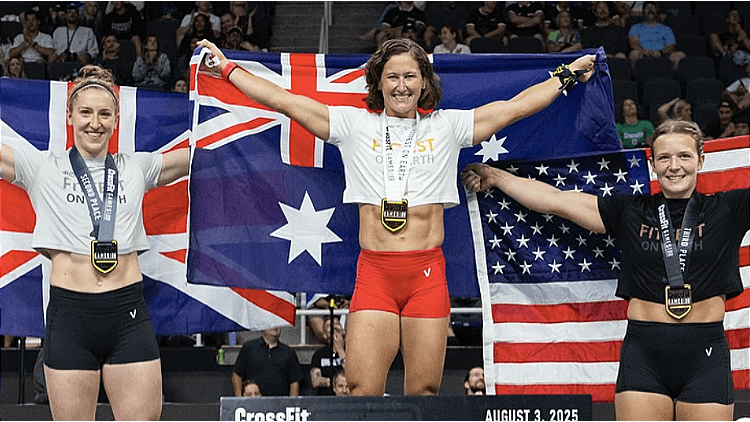
Eighteen years of CrossFit Games competition, distilled into 218 individual tasks, now has a formal taxonomy. A study published in the Journal of Sports Sciences by Tiago Puga de Oliveira Luzes and colleagues at the University of Lisbon's CIPER/SpertLab analyzed every task performed by individual competitors at the Games from 2007 through 2025, using a structured classification tool called the Matrix of Analysis for Sports Tasks, or MAST.
The framework sorted tasks across three analytical phases: taxonomy, which classified movements across weightlifting and throwing, gymnastics, and metabolic conditioning; environment description, covering competition format, setting, and equipment; and task description, which examined whether events demanded single- or multi-disciplinary performance and how they integrated strength, skill, and endurance within a single effort.
The headline finding from that 18-year window is that weightlifting and throwing movements carried the highest historical prevalence across all Games programming. Gymnastics elements have increased notably in recent years, while metabolic conditioning remained a consistent but comparatively smaller component throughout.
More consequential for training design is what the study documented about the structure of events themselves. The authors identified a growing trend toward multidisciplinary tasks within single workouts, events that force athletes to integrate strength, skill, and endurance simultaneously rather than express each domain in isolation. That shift makes siloed preparation, building a dominant snatch or a sub-five-minute mile without ever pairing the two under fatigue, increasingly noncompetitive at the elite level.

The ecological dynamics framework underpinning the study treats performance as the product of interaction among athlete, task, and environment. For a sport that deliberately withholds event details and routinely surprises competitors during competition week, that lens offers a coherent explanation for why adaptability consistently separates the field. The programming isn't arbitrary; it is a shifting landscape of constraints, and athletes who generate effective movement solutions under novel conditions are the ones who hold up through a full competition week.
The MAST tool is designed to be reproducible. Coaches can apply the same categorization logic to audit their own programming, verify whether training tasks reflect the integrated demands the study documents, and build testing batteries that go beyond single-domain benchmarks. The authors specifically recommend evaluating combined capacities, strength and skill under fatigue, rather than relying solely on isolated measures like a 1-rep max or a standalone time trial.
The study acknowledges the methodological tension inherent to analyzing CrossFit longitudinally. The sport's changing season formats and evolving task design make direct year-over-year comparisons difficult. The authors recommend applying MAST in prospective intervention studies to measure whether training designed around competition constraints actually transfers to better competitive outcomes, a test the 18 years of data gathered here is now positioned to support.
Know something we missed? Have a correction or additional information?
Submit a Tip