CrossFit Programming Looks Random, But Coaches Build It Intentionally
Random-looking days are often the point: the real test is whether the program drives progression, balances movements, and keeps the intended stimulus intact.
The whiteboard is not the whole story
The fastest way to tell whether CrossFit programming is thoughtful or just winging it is to stop judging it by whether it looks tidy. A gym that posts a perfectly polished spreadsheet can still miss the mark if it ignores how people actually train, recover, travel, get sick, or show up wrecked from a bad night of sleep. A coach who adjusts in real time is not improvising for sport. More often, they are preserving the point of the day.
That is why CrossFit’s own model keeps coming back to structure plus flexibility. The method is built around “constantly varied, high-intensity, functional movement,” but the variation is not meant to be chaos. It is meant to prepare athletes for the unknown and unknowable without pretending every week of life can be controlled on paper.
What thoughtful variation actually looks like
If you want a practical test, use four questions: progression, movement balance, intended stimulus, and seasonality. Those four checks tell you far more than whether the class felt hard or whether the same lift appeared twice in a week.
- Progression: Is the gym building a quality over time, such as pulling up snatches for several weeks because the group needs more overhead skill, or are the workouts just throwing random movements at you?
- Movement balance: Are the weeks spreading stress across squat, hinge, push, pull, gymnastic, monostructural, and loaded work, or are the same patterns getting hammered while others disappear?
- Intended stimulus: Does the workout ask for a specific adaptation, such as power, pacing, positional strength, or capacity under fatigue, and does the scaling preserve that aim?
- Seasonality: Does the programming shift with the calendar, with more volume, more skill, or more intensity depending on the season, the gym’s goals, or competition prep?
If those boxes are getting checked, the programming is probably more intentional than it first appears.
Why the plan does not have to look rigid to be real
CrossFit’s programming template says the job is to “bridge the gap” between fitness theory and the workout. That is a different philosophy from a rigid 12-week spreadsheet with percentages carved into every day and deload weeks circled months in advance. The template is designed to allow a wide, constantly varied stimulus, randomized within parameters, while still staying true to CrossFit’s aims.
The macro pattern matters here too. CrossFit’s template describes a three-day-on, one-day-off rhythm, which it says allows relatively higher volumes of high-intensity work. That is not accidental. It is a way to keep stress moving without forcing the athlete into a fake calendar that assumes every body and every life runs on the same clock.
That is also why the “it looks random” complaint misses the point. A coach who changes the load, swaps a movement, or pulls back volume after a rough week is not abandoning the plan. They are protecting the plan from becoming detached from reality.
The stimulus is the whole game
CrossFit’s published coaching guidance is blunt about what good coaching should do: program for a specific adaptation, then scale so athletes with different mobility, experience, or skill still get the same stimulus. That is the difference between thoughtful variation and random programming.
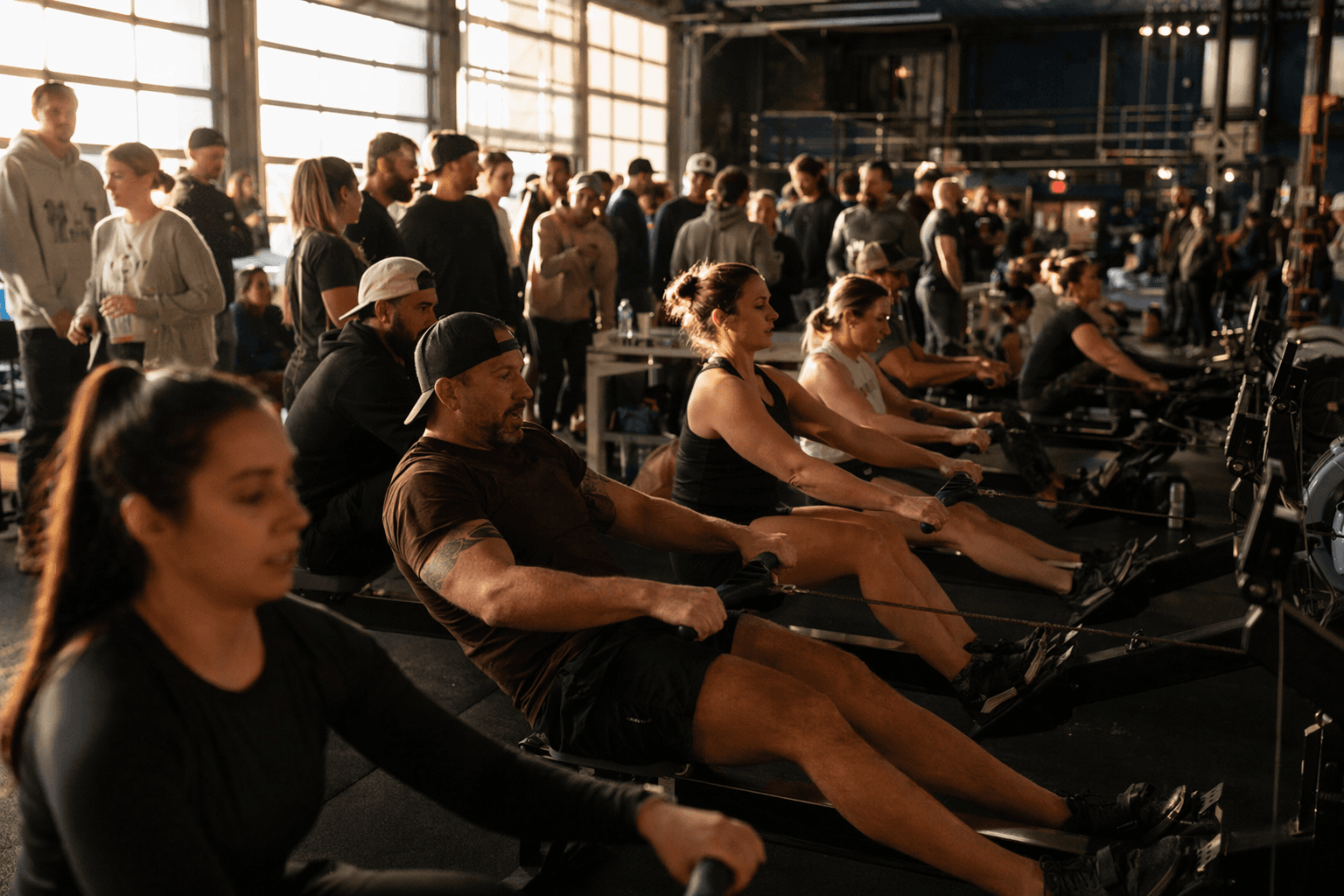
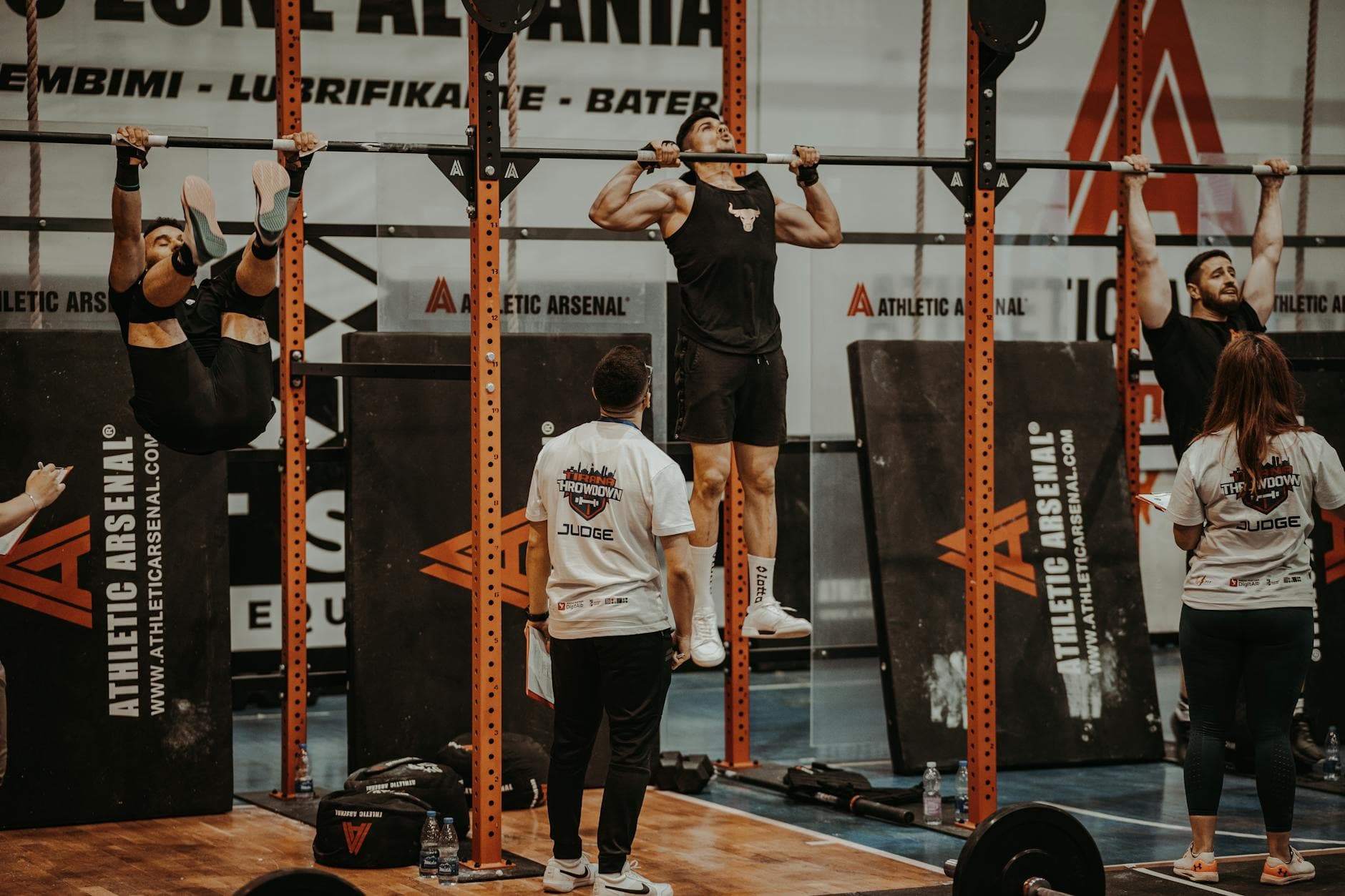
A class may contain the same workout on paper for everyone, but the job of the coach is to make that workout hit the right target for the athlete in front of them. One person might need less load to keep power output high. Another might need a movement swap so the intended training effect is not lost to poor mechanics or a skill ceiling. If scaling changes the outcome, the coaching missed. If scaling preserves the goal, the coach did the job.
This is where a lot of outside criticism falls apart. People see different prescriptions and assume inconsistency. In reality, good CrossFit coaching is often trying to keep the stimulus identical while changing the vehicle.

Seasonality is where the bigger picture shows up
A few weeks spent emphasizing snatches, gymnastic pulling, or aerobic work is not random just because it is not symmetrical on a calendar. It may be there to build a weakness, test a system, or prepare athletes for a known demand. That is seasonality in practice: the program changes because the target changes.
Greg Glassman’s 2007 article on Understanding CrossFit made the philosophy plain. CrossFit’s aim was to forge broad, general, inclusive fitness and prepare people for any physical contingency. That idea still explains why a gym does not need to look predictable to be purposeful. If the point is broad readiness, then the program has to keep exposing athletes to different patterns, different intensities, and different stressors at different times.
For the regular member, the proof is not theoretical. It shows up when a body that once struggled through a mixed-modal session now finishes stronger, moves better, and handles more work without falling apart. The arc matters more than any single day.
Why the evidence still points in CrossFit’s direction
The research picture is not built on endless perfect trials, but the signal that does exist is hard to ignore. A 2018 systematic review in Sports Medicine - Open found 31 CrossFit studies, with only four suitable for meta-analysis and only two qualifying as high level evidence at low risk of bias. Even with that limited pool, the review found preliminary evidence of higher community, satisfaction, and motivation among CrossFit participants.
More recent data points in the same direction. A 2024 prospective controlled workplace study in Germany enrolled 89 employees and had the CrossFit group train at least twice a week for one hour. That group showed significant improvements in mobility and maximal isometric strength compared with controls. In other words, the method is not just selling the idea of adaptation. It is still showing measurable change where it matters.
CAP explains why the system scales beyond one gym
CrossFit also backs this philosophy with formal affiliate support. CrossFit Affiliate Programming, included in the annual affiliation fee, is described as data-driven programming with class plans, daily coaching development tools, logistical support, and more than 60 videos every month. CrossFit says the annual affiliate fee is US$4,500 after a US$1,000 application fee, and that affiliates are independently owned and operated rather than franchises. It also says it does not limit the number of affiliates in any given area.
That matters because it shows how the system is meant to work across different gyms, not just in one headquarters model. The programming support is there to give affiliates a framework, not a script, and the fact that the service includes software integration and coaching resources tells you exactly how serious CrossFit is about making the template usable on the floor.
The practical takeaway
If you are trying to judge a class, do not ask whether every session looks neat on paper. Ask whether the coach can explain the progression, whether movement stress is balanced, whether the workout’s intended stimulus survives scaling, and whether the season makes sense. Those are the signs that the programming has a spine.
CrossFit can look improvised from the outside because it refuses to worship the spreadsheet. But when it is done well, the randomness is only cosmetic. The structure is there, the adaptation is real, and the best gyms use that flexibility to make athletes better, not just busier.
Know something we missed? Have a correction or additional information?
Submit a Tip