CrossFit Shoe Selection Guide: Matching Footwear to Your Training Goals
Wrong shoes don't just hurt your PR — they can wreck your lifts, your runs, and your joints. Here's how to match your footwear to what your box actually programs.
The shoe question comes up at every box, usually within the first week of someone's CrossFit journey. You walk in wearing whatever running shoes you grabbed on sale, you deadlift in them, and a coach quietly winces. Or you go down a Reddit rabbit hole and come out convinced you need four different pairs for four different movement patterns. Neither extreme serves you well. What actually helps is understanding the functional tradeoffs between footwear categories and mapping those tradeoffs to what your gym programs most.
This isn't about which brand is paying for placement. It's about understanding what your feet need to do in a WOD, and why the shoe that makes your 10-mile run feel effortless might actively fight you during a heavy clean and jerk.
Why CrossFit is uniquely hard on footwear
Most sports demand one thing from a shoe. Runners want cushion and energy return. Basketball players want lateral support. Powerlifters want a rigid, flat platform. CrossFit asks for all of it, sometimes within the same 20-minute AMRAP. You might be doing double-unders, then box jumps, then barbell cycling, then a 400-meter run, all back to back. No single shoe is perfect for every demand, which is why understanding the tradeoffs matters more than chasing a single "best" option.
The core tension is between cushion and stability. Cushion absorbs impact and protects joints during running and jumping. Stability, meaning a firm, flat heel with minimal drop, gives you a solid base for squatting, deadlifting, and Olympic lifting. A maximally cushioned running shoe puts a spongy, unstable layer between your foot and the floor during a back squat, which is exactly the opposite of what you want when you're trying to transfer force efficiently. Conversely, a true weightlifting shoe with a raised heel and rigid sole will destroy your ankles during a 5K chipper.
The three categories worth knowing
Rather than shopping by brand, think in functional categories.
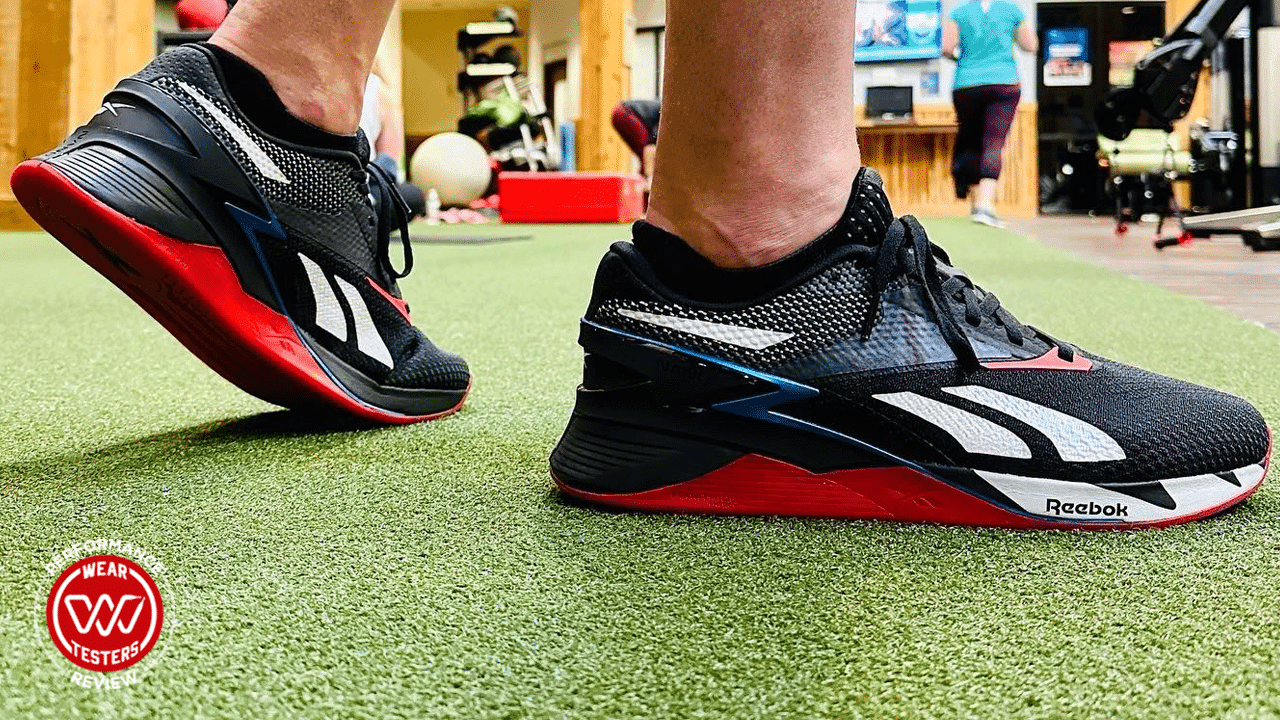
The first is the dedicated CrossFit trainer. Shoes in this category, think the Reebok Nano lineage or the Nike Metcon series, are built as deliberate compromises. They offer a relatively flat, stable heel for lifting, a rope climb patch on the upper, and enough cushion in the forefoot to handle box jumps and short runs without beating up your joints. They are not elite running shoes and they are not elite lifting shoes, but they are genuinely good at the hybrid demands of a typical WOD. If your box programs a mix of everything and you're buying one pair, this is your category.
The second category is the weightlifting shoe. Models like the Adidas Adipower or Nike Romaleos feature a raised heel, typically 0.6 to 0.75 inches, and an almost rigid sole that does not compress under load. That heel elevation improves ankle dorsiflexion, which allows for a more upright torso in the squat and a more aggressive catch position in the snatch and clean. If your programming is Oly-heavy, or if you're competing in a lifting-focused division, owning a dedicated weightlifting shoe and swapping into it for barbell work is worth the investment. You would not, under any circumstances, wear them for a rowing and running couplet.
The third category is the minimalist or flat trainer. Shoes like the Converse Chuck Taylor or purpose-built options like the Vivobarefoot line prioritize ground feel and a zero-drop platform. They work well for deadlifts and some squat variations, and some athletes swear by them for rope climbs. The tradeoff is that they offer almost no protection for high-rep box jumps, double-unders, or any significant running volume. They are a specialist tool, not a daily driver.
How to audit your box's programming
Before you spend money, spend a week logging what actually shows up in your WODs. Track the movement categories:
- Barbell cycling and Olympic lifting (cleans, snatches, jerks)
- Powerlifting patterns (deadlifts, back squats, front squats)
- Gymnastics and bodyweight (pull-ups, handstand push-ups, rope climbs)
- Monostructural cardio (running, rowing, assault bike, double-unders)
- Plyometrics (box jumps, broad jumps, burpees)
If your gym programs heavy Oly work four days a week, the case for a dedicated lifting shoe gets stronger. If your box is known for long chippers and Hero WODs with significant running volume, you want a trainer with more forefoot cushion than a pure lifter. If you're a competitor training for the Open, the hybrid CrossFit trainer remains the most versatile single option because the Open historically tests everything.
Fit details that most guides skip
Heel slip is a red flag that most beginners ignore. During heavy snatches or aggressive rope climbs, any movement between your heel and the shoe's counter creates instability and blister risk. Lace up fully before you assess fit, and test heel lockdown specifically.
Toe box width matters more in CrossFit than in most other sports because your foot spreads under load. A shoe that fits perfectly standing in the store may compress your toes uncomfortably during a heavy squat, which can compromise your proprioceptive feedback on the platform.
Heel drop affects more than just lifting mechanics. If you've spent years in cushioned running shoes with a 10-12mm drop and you switch abruptly to a zero-drop or minimal-drop CrossFit trainer, your Achilles and calves will protest. Make the transition gradually, especially if your programming includes significant running volume.
The two-shoe strategy
The most practical setup for a serious CrossFit athlete who lifts heavy and conditions hard is a two-shoe rotation: a dedicated weightlifting shoe for barbell-intensive sessions or the lifting portions of a WOD, and a hybrid CrossFit trainer for everything else. This isn't an upsell. It's a recognition that the physical demands are genuinely incompatible in one package, and that protecting your mechanics in both contexts pays off in performance and injury prevention over the long term.
For newcomers still finding their footing, one good hybrid trainer is the right starting point. Get into the movements, understand what your programming emphasizes, and then make a more informed call about whether a specialist shoe earns a place in your bag. The best shoe is the one that matches what you're actually doing, not what's on an influencer's gear list.
Know something we missed? Have a correction or additional information?
Submit a Tip