Ada Ferrer traces Cuba exile’s lasting wound through family letters
Ada Ferrer turns one family split into a map of Cuban exile, showing how the child who left and the child who stayed were both marked for life.

The chosen one and the wound
Ada Ferrer’s memoir begins with a family decision that never really ended. In 1963, her mother left Cuba with infant Ada, while Ada’s nine-year-old brother, Poly, stayed behind because their father would not allow him to leave. When Poly later came home and found his mother and baby sister gone, that loss became the fault line running through the family for decades.
Ferrer, born in Cuba in 1962 and now a history professor at New York University, has spent much of her career writing about Cuban history. She won the 2022 Pulitzer Prize for *Cuba: An American History*, but her new memoir, *Keeper of My Kin: Memoir of an Immigrant Daughter*, pushes the question closer to home. The emotional logic is brutal and familiar to many Cuban families: who got out, who was left, and what it meant to survive being the one chosen to go.
Letters in a closet, grief in plain sight
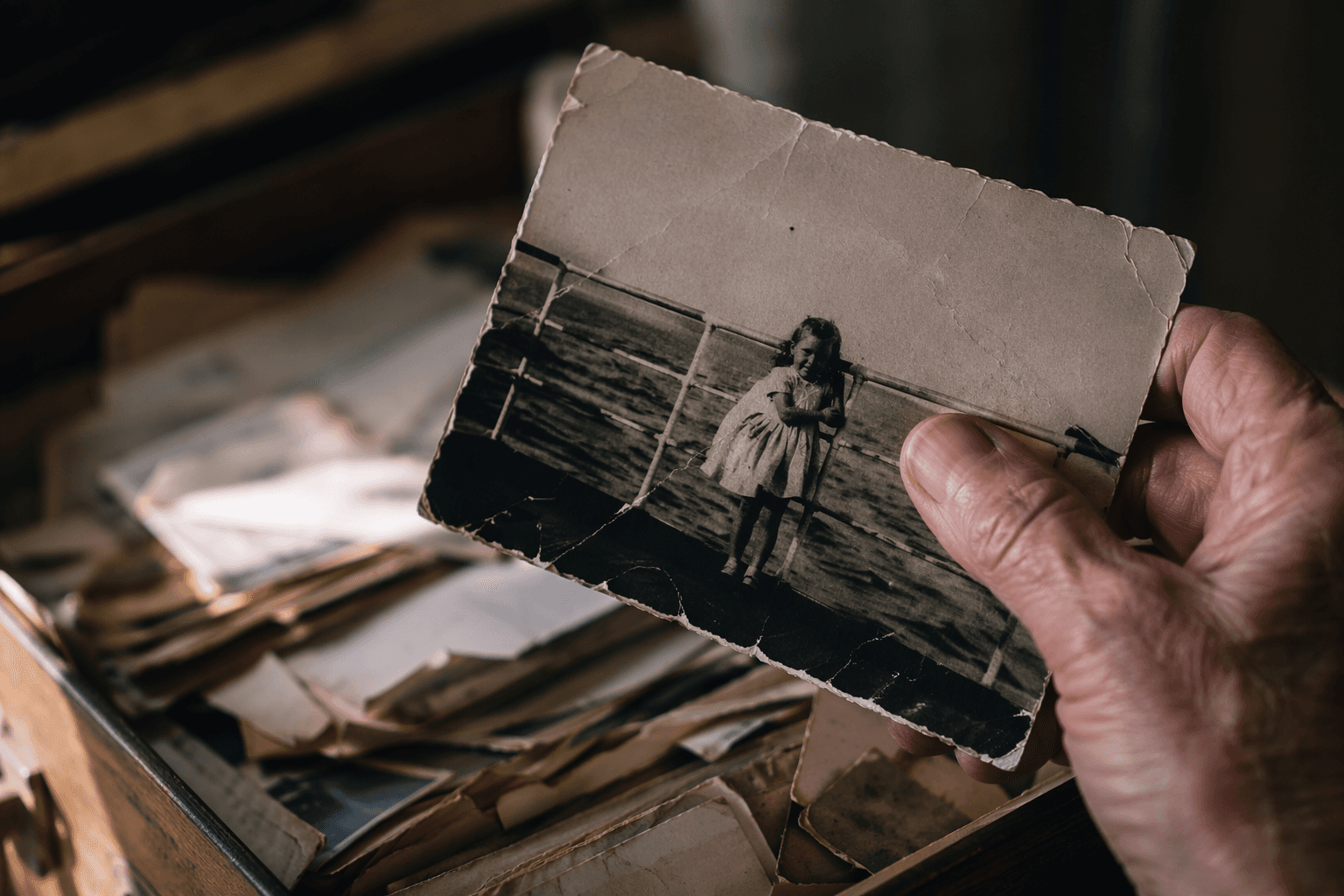
The memoir gains its deepest force from a box Ferrer found after her mother died in 2020. Tied together and tucked in a closet were letters Poly had written to the mother who had left him behind. That detail matters because it turns exile into something tangible. The separation is not just a historical event or a family legend, but a stack of letters that preserved grief, blame, hope, and the long effort to keep speaking across a rupture.
Those letters also give Ferrer a way to rebuild the emotional record, not just the timeline. They show the afterlife of departure in a Cuban home, where memory is often stored in private archives rather than public monuments. A closet, a bundle of letters, a mother’s death years later, these are the objects through which the past keeps pressing on the present.
Why “the chosen one” still stings
Ferrer has described her life’s work on Cuba as a kind of penance for being the child who was taken. That is the sharpest lens on the memoir. Being “chosen” to leave sounds lucky only until you measure the cost: the sibling who stayed, the parent who stayed, the family structure that never recovered its old shape.
This is why the story lands so hard in the Cuban community. It is not only about one household in 1963. It is about the emotional hierarchy created when one child gets on the plane and another is forced to remain behind. That split still echoes through Cuban exile identity, where survival, guilt, and gratitude are often tangled together.
The larger Cuban migration machine
Ferrer’s family story sits inside a much bigger pattern of Cuban movement to the United States, one shaped by policy as much as by pain. The U.S. Department of State says about 260,000 Cuban refugees were officially airlifted to the United States during the Freedom Flights from 1965 to 1971. The Library of Congress describes Operation Pedro Pan, from December 1960 to October 1962, as the largest recorded exodus of unaccompanied children from Cuba. And the State Department says roughly 125,000 Cubans left during the 1980 Mariel boatlift.
Those numbers are not background noise. They explain why so many Cuban families learned to live with absence as a permanent condition. Separation was not an accident of one home; it was built into the history of migration itself, repeated in children sent out alone, parents delayed by paperwork or politics, and relatives stranded by the speed of events.
How Washington helped shape the split
The policy side of this history matters because the United States did not treat Cuban migration like other migration. Harvard-affiliated writing on Cuban migration notes that the U.S. long gave Cubans exceptional treatment compared with other immigrant groups, especially during the Cold War, when refugee policy served foreign policy.
That dynamic sharpened in 1965. A State Department archival document says Fidel Castro announced on September 28, 1965, that Cubans wishing to go to the United States would be permitted to do so, which triggered the Camarioca episode. Another archival record notes that President Lyndon B. Johnson, on October 3, 1965, said those seeking refuge from Cuba would find it in America and that priority would be given to immediate relatives.
That preference for immediate family did not erase the pain of separation. If anything, it made family the unit through which the state managed migration, deciding who could be reunited, who had to wait, and who would remain split across the Florida Straits.
What Ferrer’s memoir shows now
Ferrer’s memoir matters because it refuses to flatten Cuban exile into a clean success story. Too many migration narratives are told as if departure automatically means freedom, and arrival automatically means resolution. Ferrer’s family history shows the opposite: leaving can be both rescue and injury, and the injury can last longer than the escape.
That is why the memoir speaks directly to the Cuban diaspora, from Havana to Miami, from New York City to Key West and beyond. It connects the personal archive of letters with the public archive of policy, showing how a single departure can define identity, memory, and family relationships for generations. The pain is not abstract. It is the brother who stayed behind, the sister who left as an infant, and the letters kept long after the people who wrote them were gone.
Ferrer’s story starts with one impossible choice in 1963, but it does not end there. It keeps circling back to the same Cuban truth: in exile, the wound is often not just that someone left, but that someone else had to remain the one who was not chosen.
This article was produced by Prism’s automated news system from verified source data, official records, and press releases, then run through automated quality and moderation checks before publishing. The system is built and supervised by the people who set the standards it runs under. Read our full AI policy.
Know something we missed? Have a correction or additional information?
Submit a Tip