Begging spreads in Cuba as poverty becomes impossible to ignore
Begging has become a daily gauge of Cuba’s collapse, with Holguin street scenes, rising prices and thinning safety nets all pointing to the same breakdown.
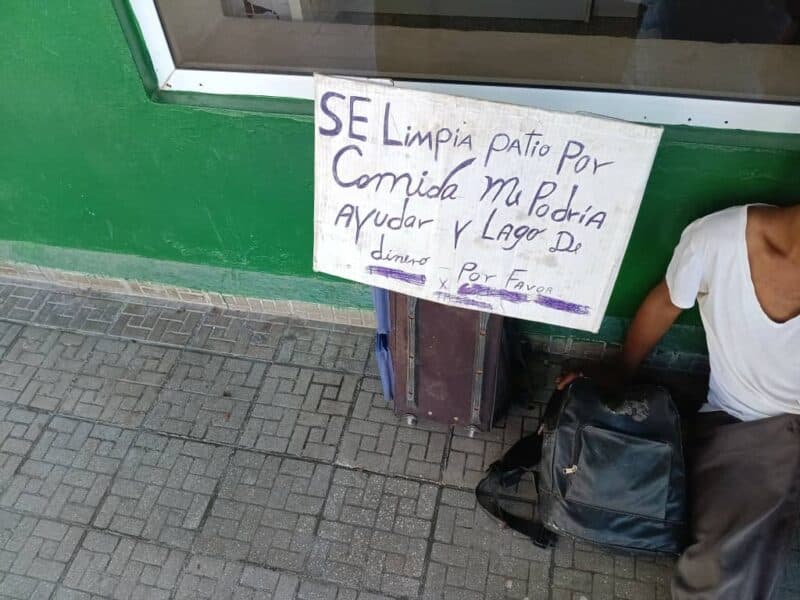
In downtown Holguin, people are now being approached over and over for cash or food. The visible rise in begging shows how far Cuba’s safety nets have thinned. A cup of coffee that once felt like a small treat can cost around 50 pesos, or more than 300 in restaurants and cafés.
Holguin’s street economy
The turning point in the diary is almost ordinary: a neighbor stopped putting food out for a stray dog, and that missing bowl became a symbol of how bad things had gotten. From there, the streets take over the story, with men and women, including elderly people and younger ones, stopping passersby in front of churches, in parks, at markets and on corners to ask for enough for bread or a cup of coffee. The writer describes handing over 20 or 50 pesos and apologizing, because that is often all that can be spared and it buys far less than it once did.
Church teams and independent charitable groups are trying to fill the gap, but the scale of need is already beyond what informal help can cover.
Why the street has filled up
Cuba has suffered a 15 percent contraction in GDP over the last six years, the World Food Programme said, while persistent inflation, declining fiscal resources, fuel shortages and restricted access to foreign currency have reduced the availability of domestic and imported food. The government’s monthly food basket is almost entirely imported and has faced shortages and delays in distribution, while energy problems are disrupting health services, school schedules, water and sanitation, medicine storage and the transport of essential goods.
UNICEF’s 2024 Cuba report said the country’s social and economic challenges deepened in 2024 after a decade of low growth, lost external revenues between 2016 and 2019, tighter US sanctions since 2021, a weak tourism rebound after COVID-19 and global food and commodity shocks. Food production kept falling in 2024, which hurt subsidized food delivery and widened nutrition vulnerabilities and inequality.
WFP reached 1,320,867 people with direct assistance in Cuba in 2024, and the World Bank put the country’s population at 10,979,783 in 2024, or about 11 million people. The UNDP’s 2024 Cuba MPI profile is built on 2019 survey data.
Politics could not keep denying it
The subject became politically explosive in July 2025, when Labor and Social Security Minister Marta Elena Feitó Cabrera said there were no beggars in Cuba, only people disguised as such. President Miguel Díaz-Canel rebuked her, saying these people are “concrete expressions of the social inequalities and the accumulated problems we face” and that “The vulnerable are not our enemies.” She then acknowledged her errors and submitted her resignation.
In April 2025, during a visit to Granma province, Díaz-Canel warned against the spread of “the destitute, the beggars, panhandlers, child labor, and harassment of tourists.” That spring, the Christian Alliance of Cuba described a “deep political, economic, social and spiritual crisis,” and the Cuban Catholic bishops said, “Without hope and joy, there is no future for any people,” while calling for structural change and dialogue.
What the cash means now
The diary’s 20 and 50 peso details show how far purchasing power has slipped. A note of apology now attaches to the smallest handout, since 20 pesos may not buy anything meaningful and 50 pesos may only cover the cheapest coffee. In that environment, charitable food handouts matter, but they are a stopgap against a system in which wages, pensions, subsidies and remittances are all being squeezed by inflation, shortages and transport disruptions.
This article was produced by Prism’s automated news system from verified source data, official records, and press releases, then run through automated quality and moderation checks before publishing. The system is built and supervised by the people who set the standards it runs under. Read our full AI policy.
Did this article answer your question?