Camila Cabello uses Coachella reunion to spotlight Cuba’s crisis
Camila Cabello turned a Coachella reunion of “Havana” into a public plea for Cuba, pairing the set with an “SOS Cuba” pin and a warning about an abused nation.
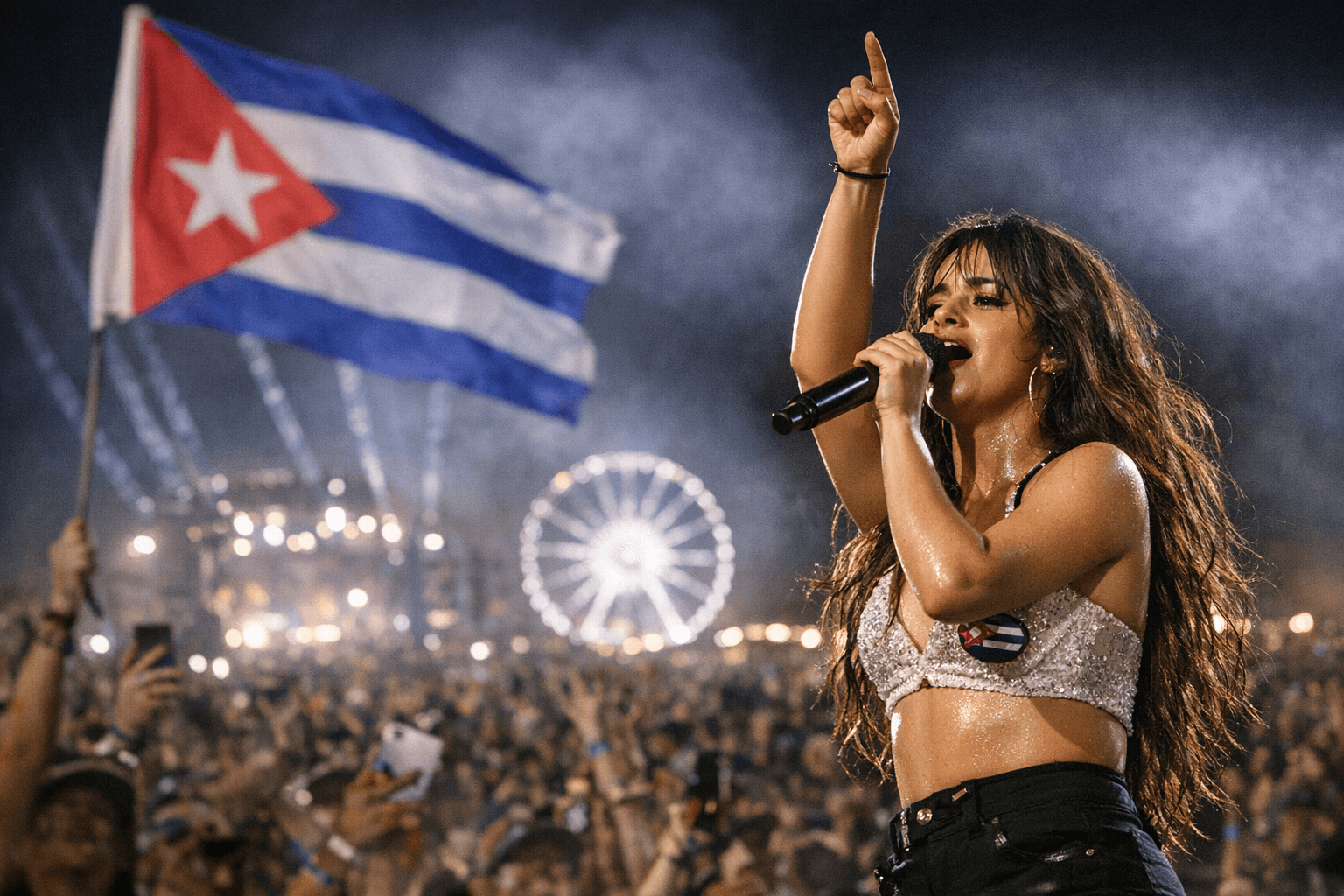
Camila Cabello turned a surprise Coachella reunion into a political broadcast for Cuba, using one of her biggest songs to push the island’s crisis back into view. During Young Thug’s set at Coachella Weekend 1 on April 12 at the Empire Polo Club in Indio, California, Cabello emerged to perform “Havana,” then framed the moment with Cuban flag colors and an “SOS Cuba” pin.
The performance mattered because it was more than nostalgia. Cabello and Young Thug had not done the song live together since their 2019 Grammy-era performance, and the Coachella stage gave her message a reach that exile politics rarely gets on its own. Afterward, she said singing “Havana” felt “moving and bittersweet,” and said her heart was with Cubans living through a country and culture she described as having been “drained and abused” for years under an “oppressive dictatorship.”
Cabello had already sharpened that message in an Instagram post on February 20, when she described Cuba as having suffered “67 years” of a failed dictatorship and urged support for Cáritas Cuba, the Catholic Church’s social services arm. Her Coachella appearance fit a pattern of public advocacy that has followed her for years, from supporting the July 11, 2021 anti-government protests to shouting “Patria y Vida” at the Latin Grammy Awards in 2021 and using a 2024 Halloween look to send a “For a Free Cuba” message.
Her comments landed against a worsening emergency on the island. On February 13, the UN human rights office said it was “extremely worried” about Cuba’s deepening socio-economic crisis, warning that shortages were hitting health, food, water and medicines. The office pointed to the effects of a decades-long embargo, extreme weather and recent U.S. measures restricting oil shipments. The United Nations later said the situation could worsen sharply if Cuba’s oil needs went unmet.
That warning was followed by a deeper shock. On March 16, Cuba’s national electric grid collapsed, leaving around 10 million people without power. The Inter-American Commission on Human Rights then warned of a worsening humanitarian crisis in a country marked by a lack of democratic institutions and systematic human rights violations.
The backdrop reaches back to the Cuban Revolution, which overthrew Fulgencio Batista on January 1, 1959, and to the mass protests that broke out on July 11, 2021, after food and medicine shortages collided with COVID-era economic strain. Cabello’s Coachella moment did not change that history, but it pushed Cuba’s crisis into a space where millions were watching, and where a pop reunion carried the weight of a political appeal.
This article was produced by Prism’s automated news system from verified source data, official records, and press releases, then run through automated quality and moderation checks before publishing. The system is built and supervised by the people who set the standards it runs under. Read our full AI policy.
Did this article answer your question?