Cuba medicine shortages leave newborn dead and expose health system failures
A newborn died after a missing vitamin K shot in Havana, and the same medicine drought is pushing ICU families into deadly scavenger hunts.
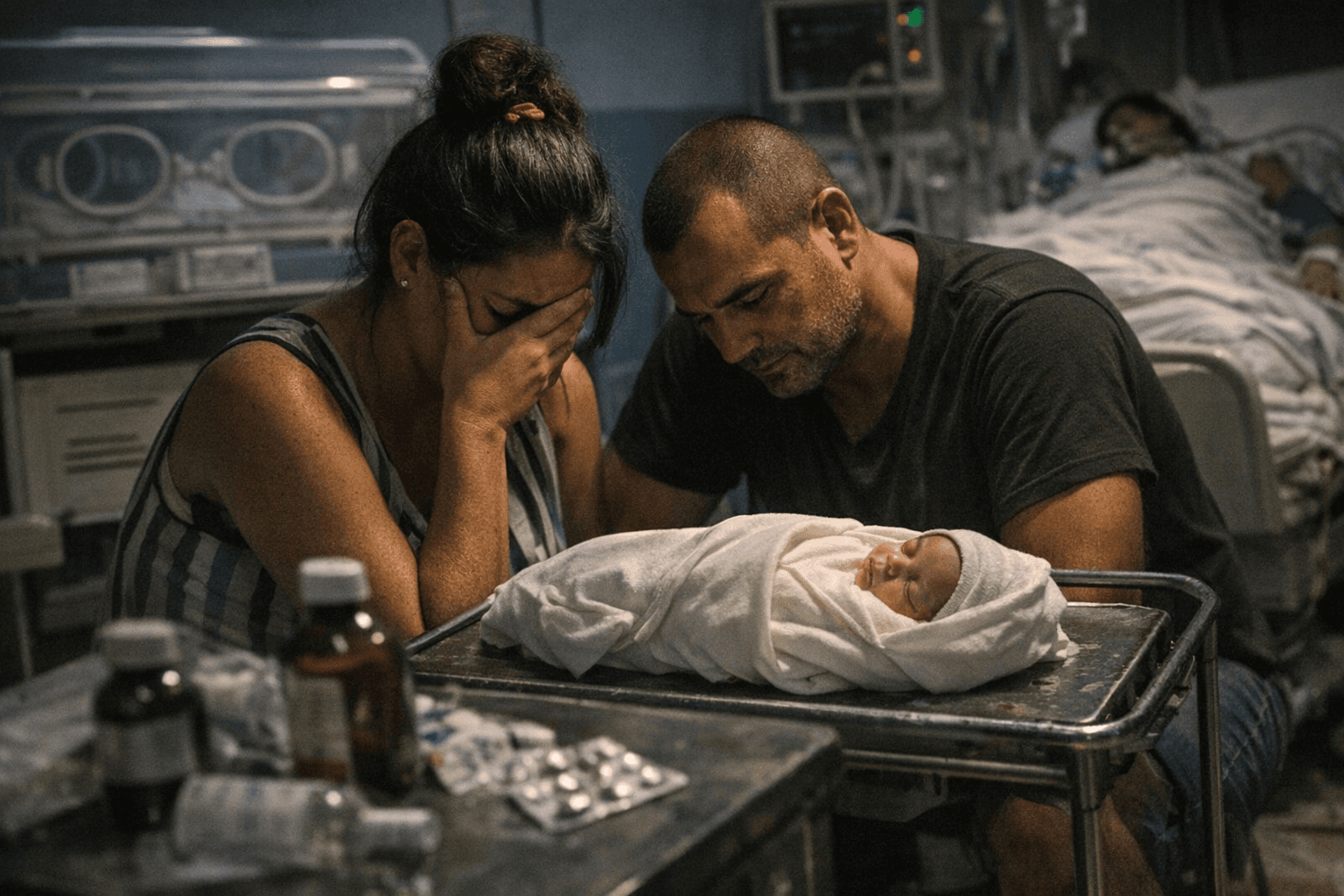
The newborn should have gotten a vitamin K shot at birth. Instead, the family says Hijas de Galicia Hospital in Havana had none, and a routine safeguard against dangerous bleeding became the start of a fatal chain that ended at 5:45 p.m. on October 1, 2025.
A death that should never have happened
The baby was born on September 28, 2025, after the mother was admitted the day before. According to the family, the infant already had a vitamin K deficiency, a condition that normally triggers immediate treatment so a newborn does not bleed internally. The shot never came, because the hospital did not have the medicine, and the child was left without the protection that should have been standard.
Then came the rest of the humiliation. The grandmother says hospital workers asked for 5,000 pesos, about a month’s salary, to guarantee a recovery bed for the mother. After that, the baby suffered a severe hemorrhage, was moved to intensive care, received transfusions and ventilation, briefly improved, and then died. This was not a mystery illness that medicine could not touch. It was a case where the medicine was supposed to be there already.
What shortage looks like inside the hospital
This is the part that makes Cuba’s health crisis harder to dismiss as just long lines or pharmacy frustration. When a hospital lacks vitamin K for a newborn, then cannot secure a recovery bed without informal payment, the system is no longer merely inefficient. It is asking families to absorb the cost of failures that should never reach the bedside.
The same collapse shows up in the daily hunt for basic supplies. AFP reported that Cuba lacked the roughly $300 million needed to import the raw materials required to produce hundreds of critical medicines. It also described hospitals missing basic items such as gauze, suturing thread, disinfectant, and oxygen. In a system where private pharmacies, clinics, and hospitals are illegal, patients are supposed to rely on the state. When the state stock is empty, the only fallback is the black market.
The numbers behind the fear
The shortage is not anecdotal. The Cuban Observatory of Social Rights said in September 2025 that only 3% of citizens could find the medicines they needed in state pharmacies. The same report said 12% could not buy medicines because of price, and 13% could not get them because of shortages. That means the problem is not just one of supply. It is also one of access, affordability, and scarcity hitting at the same time.
A year earlier, the Cuban Observatory of Human Rights found an even broader mood of collapse. In its July 16, 2024 survey, 89% of Cubans rated the public healthcare system negatively. It also said 33% could not obtain the medicines they needed because of price or scarcity, while only 2% found them in state pharmacies. Those numbers explain why so many households now treat every prescription like a countdown clock.
The official admission no one can spin away
In July 2025, health minister José Ángel Portal Miranda publicly acknowledged what patients already knew. He said the healthcare system was in an unprecedented structural crisis and that coverage of the basic medication inventory was only 30%. Reporting on that appearance also said pharmacy availability barely reached 32%, and he tied any improvement to funding and foreign-currency earnings.
That admission matters because it confirmed what people were seeing on the ground: chronic shortages, the exodus of healthcare professionals, and the illegal sale of services inside hospitals. Cuba does not have a parallel private system to catch people when the public one fails. That makes every empty shelf in a state pharmacy much more dangerous.
Who gets hit first
The worst damage falls on the people who cannot interrupt treatment. The UN Office for the Coordination of Humanitarian Affairs said on April 10, 2026, that about 5 million people in Cuba live with chronic illnesses requiring continuous care and medication. It also said current service disruptions are affecting more than 32,000 pregnant women.
That is the real share-holding class of this crisis: pregnant women, newborns, ICU patients, and people who need uninterrupted blood-pressure drugs, insulin, or cardiac medication. When power cuts, fuel shortages, and supply failures stack on top of each other, it is those patients who lose first. OCHA said outages and fuel shortages are disrupting water treatment, cold-chain systems, transport, and health service delivery, which means even a drug that exists on paper may not reach the ward in usable form.
A health system under repeated удар
The Pan American Health Organization has described Cuba as being under pressure from a worsening economic crisis, inflation, medication and supply scarcities, and the migration of healthcare personnel. PAHO also said the island has been hit by converging disasters and an energy emergency, with two hurricanes and two earthquakes damaging 385 health facilities.
That matters because hospitals do not fail all at once. They degrade. A damaged facility loses reliability, then transportation gets harder, then storage becomes unstable, then the pharmacy runs dry, then the patient’s family starts searching on their own. By the time the crisis is visible in a headline, it has usually already been working its way through wards and households for months.
The Camagüey case shows the same pattern
The Havana newborn was not the only death tied to a missing medicine. In Camagüey, a 26-year-old woman died on February 7 after being intubated for three days while her family searched unsuccessfully for norepinephrine, the drug used to stabilize blood pressure in intensive care.
That is the kind of detail that strips away any remaining illusion. Norepinephrine is not a luxury drug. It is the sort of medicine that can decide whether a patient stays alive long enough for a doctor to work. When a family has to find it themselves, the system has already failed in the most basic way possible.
What families are forced to do now
Cubans living through this are not just dealing with inconvenience. They are being forced into pharmacy-hopping, informal buying, and constant improvisation. They are checking state pharmacies that often do not have what is prescribed, then turning to the black market, then watching prices climb beyond reach. Missing one dose is no longer a nuisance. It can be the start of a medical emergency.
That is why the newborn’s death carries so much weight. It shows how medicine shortages have moved beyond scarcity and into preventable death. A health system that cannot guarantee vitamin K at birth, norepinephrine in intensive care, or a recovery bed without a side payment is not simply strained. It is breaking in ways that families can measure in blood, hours, and graves.
This article was produced by Prism’s automated news system from verified source data, official records, and press releases, then run through automated quality and moderation checks before publishing. The system is built and supervised by the people who set the standards it runs under. Read our full AI policy.
Did this article answer your question?