Canadians Shift March Break Plans Away From Cuba Amid Rising Unrest
"The only place that's really a problem is Cuba," one Toronto travel agent said as Canadian March break bookings to the island collapsed.

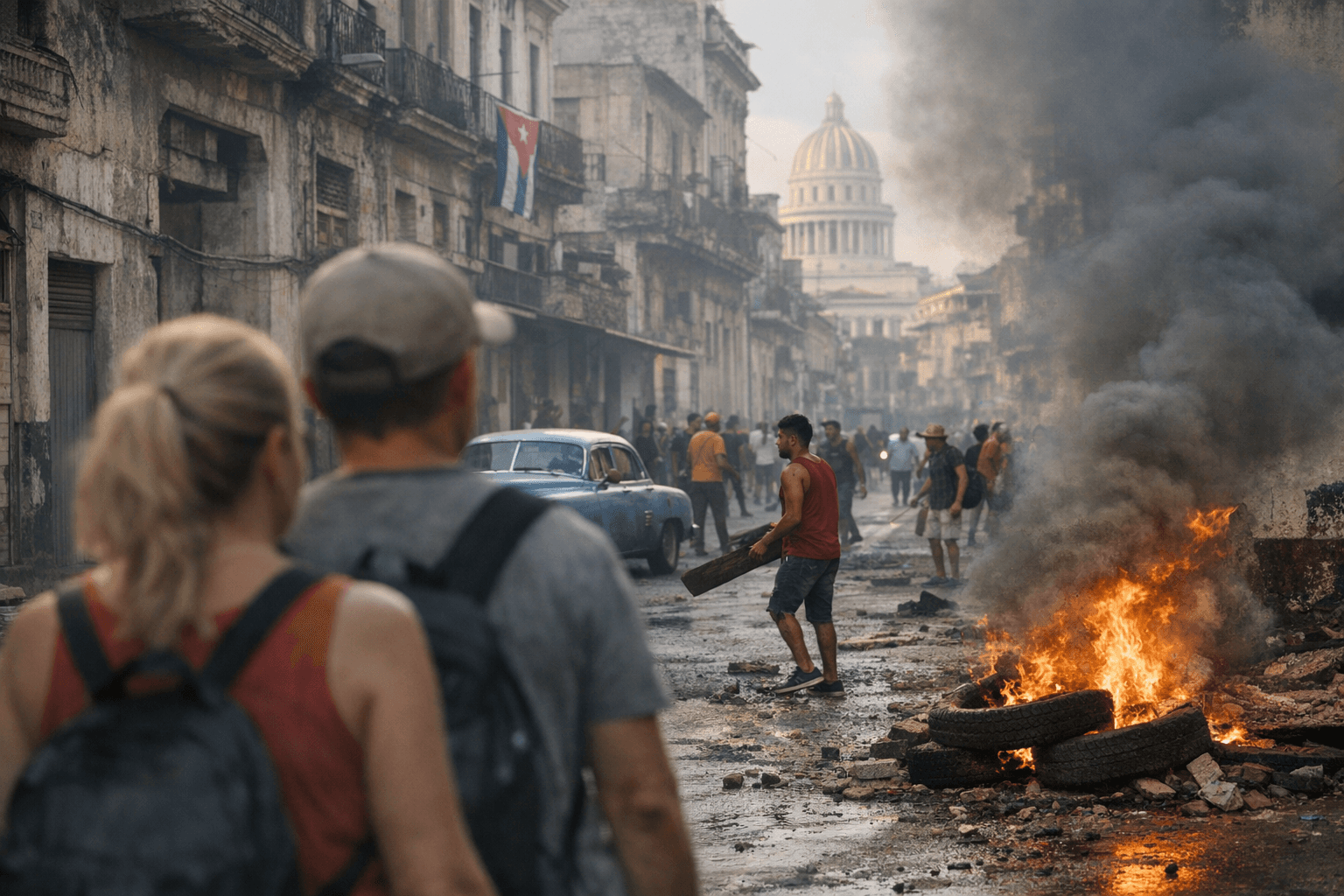
Cuba's humanitarian crisis, fed by fuel, food and medicine shortages attributed to a U.S. oil blockade, has effectively cleared the island off the March break itineraries of Canadian travellers this year. Greater Toronto Area travel agents reported a sharp retreat from Cuba bookings for 2026, with clients choosing alternative destinations, postponing trips, or scrapping international vacation plans altogether.
The pressure on Cuba coincided with turbulence elsewhere in the Caribbean basin. Cartel violence erupted last month in Mexico's Puerto Vallarta, stranding some Canadian visitors in the region for days. Parts of Jamaica are still reeling from October's Hurricane Melissa. And President Donald Trump has said there may or may not be a "friendly takeover" of Cuba, adding political uncertainty to an already fragile situation on the island.
"Cuba and Mexico have long been favoured destinations for Canadian travellers, especially during March break," said John Wood, the president of Durham Travel. "However, with the current challenges both countries are facing, we are noticing a shift in travel behaviour among our clients."
Janet Radley, a travel agent at St. Clair Travel in Toronto, drew a clear line between the two destinations. She said some clients are still booking Mexico, including Puerto Vallarta, despite the recent violence. Cuba is a different story. "The only place that's really a problem is Cuba," she said.
Radley said Jamaica has largely reopened for business and could absorb some of the Canadian travellers whose Cuba plans fell apart. The recovery from Hurricane Melissa has been uneven, with parts of the island still affected, but competitive pricing has driven strong interest. Parker, another travel agent cited in reporting on the trend, noted that despite the ongoing hurricane damage, "the attractive prices offered to visit the country have generated huge interest."
The market shift carries a ceiling, though. Radley warned that fewer attractive options combined with higher prices mean some Canadians may abandon international travel for March break entirely rather than pivot to a costlier alternative.
Cuba's crisis, as described by travel-industry figures, is rooted in cascading shortages. The U.S. oil blockade has choked supply chains for fuel, food and medicine, leaving the island in a state that travel agents are now treating as an indefinite disruption rather than a temporary deterrent.
This article was produced by Prism’s automated news system from verified source data, official records, and press releases, then run through automated quality and moderation checks before publishing. The system is built and supervised by the people who set the standards it runs under. Read our full AI policy.
Did this article answer your question?