Chikungunya outbreak exposes Cuba’s strained hospitals and crumbling sanitation
More than 90% of one western Cuba neighborhood got chikungunya as hospitals overflowed and sanitation collapsed, turning a mosquito outbreak into a daily survival test.
What the illness looks like on the ground
Chikungunya is not arriving in Cuba as a neat fever that passes in a few days. In western Cuba, the illness has been leaving people unable to walk properly, climb stairs, or board buses without pain, as if their joints had simply seized up. One personal account puts the scale in sharp relief: by the autumn of 2025, more than 90% of the people the writer knew had been infected.
That same account also captures the part families are living with long after the fever breaks. The pain does not always end when the temperature drops. Many patients are dealing with joint pain that returns in cycles, sometimes for months and even years, which is why this outbreak feels less like a short burst of sickness and more like a drawn-out disruption to work, school, and movement itself.
Why hospitals are failing to catch up
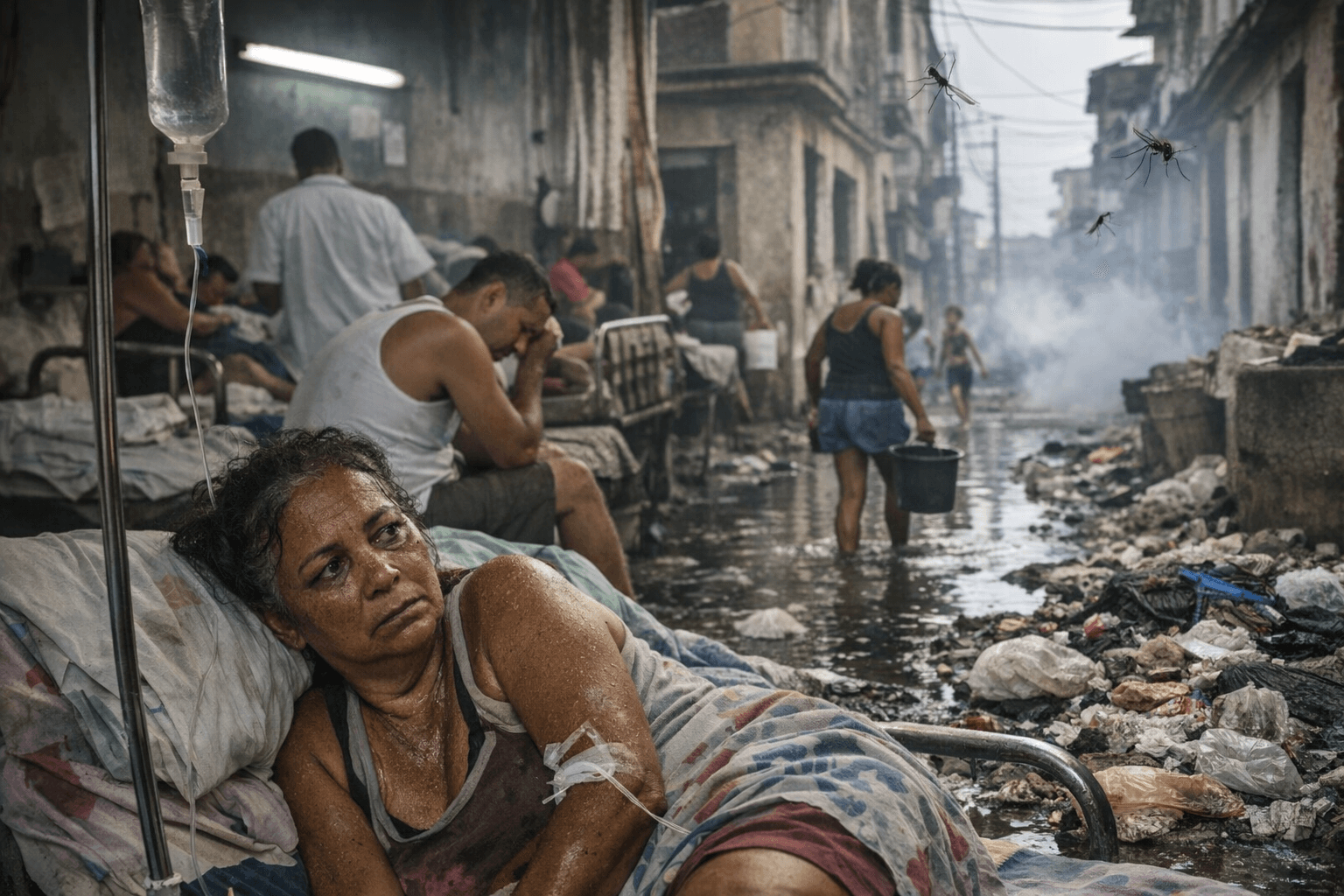
The outbreak is hitting a health system that was already under pressure before the mosquito wave peaked. Hospitals were described as full, with only the most serious cases admitted and many recovering patients sent home quickly because there was no room or staff to keep them. That matters because chikungunya is not just a fever problem. It can leave people too weak or stiff to manage daily life safely, especially older adults and anyone already dealing with chronic illness.
Pan American Health Organization reporting helps explain why the system is buckling so hard. PAHO says Cuba is facing an economic crisis marked by medication and supply shortages, growing migration of healthcare personnel, and an unprecedented energy emergency. Put simply, the outbreak is landing in a country where the backup systems are already failing, so even basic care becomes harder to deliver when wards are crowded and power, staff, and supplies are all under strain.
The sanitation breakdown is part of the outbreak
This is not being caused by mosquitoes alone. The outbreak is tied to blackouts, garbage in the streets, and leaking water pipes that create breeding grounds for mosquitoes. That makes chikungunya part of a wider ecological and social breakdown, not an isolated health event that can be solved with a few sprays and a public warning.
That connection is what turns the neighborhood experience into a public-health reality check. When electricity cuts disrupt water handling, when trash piles up, and when pipes leak into stagnant pools, mosquito control becomes a moving target. In that setting, families are not just fighting a virus, they are dealing with the conditions that keep the virus circulating.
The official alarm grew louder through 2025
Cuba’s Ministry of Public Health officially declared a complex arboviral outbreak in October 2025, naming dengue, Oropouche, and chikungunya together. By early November, Cuban officials were reporting 20,062 chikungunya cases nationwide, with the heaviest burden in Havana, Matanzas, Camagüey, Cienfuegos, Artemisa, and Villa Clara.
The warning signs were already visible by late September, when the U.S. Embassy in Havana issued a health alert tied to the outbreak. That alert was followed by broader travel guidance as the disease spread through the island and into a wider regional resurgence. PAHO said in late August 2025 that several countries in the Americas were seeing localized chikungunya outbreaks and urged stronger surveillance and vector control. By February 2026, PAHO said there had been a sustained increase in cases across the Americas since late 2025, along with a return of local transmission in places that had not reported the virus for years.
Why the symptoms keep coming back
The reason this outbreak is so disruptive is not just the first wave of illness, but the tail that follows it. The CDC and the World Health Organization both note that chikungunya can cause severe joint pain that may last weeks, months, or even years. That lines up with the experience described in western Cuba, where people recovered from the fever only to be hit by recurring pain later.
For families, that means planning around uncertainty. Someone who looked improved one week may still struggle to stand at a market stall, carry water, or get on a bus the next. In an island economy already stressed by shortages and transport problems, lingering joint pain becomes more than a symptom. It becomes a mobility problem, a work problem, and a household budgeting problem all at once.
What travelers and relatives need to know now
The latest CDC update on Cuba’s chikungunya risk came on April 16, 2026, and the guidance is clear: there is an outbreak in Cuba, enhanced precautions are recommended, and travelers can use outbreak maps to help decide whether vaccination makes sense for them. The CDC also says some travelers, including pregnant women, may need to reconsider travel to affected areas altogether.
For pregnant travelers, the warning is especially important. CDC guidance says that if exposure cannot be avoided, pregnant travelers should discuss the risks and benefits of vaccination with a clinician, particularly because chikungunya infection during pregnancy can have adverse outcomes. That makes this different from a routine mosquito-season annoyance. For anyone planning travel, visiting relatives, or sending someone on the island, the decision now needs to factor in outbreak geography, pregnancy status, and the practical reality that exposure can happen fast.
A few points stand out from the guidance:
- There is an active chikungunya outbreak in Cuba.
- CDC says U.S. travelers can use outbreak maps to judge risk and vaccination needs.
- Pregnant travelers should reconsider travel, especially if exposure is likely or cannot be avoided.
- The risk is not abstract, because the outbreak is happening alongside fragile sanitation and a strained health system.
Why this story matters beyond one virus
Chikungunya in Cuba is now a test of infrastructure as much as medicine. A virus that can leave people limping for months has landed in neighborhoods already dealing with blackouts, trash buildup, leaking pipes, staff shortages, and overfilled hospitals. That is why the personal account from western Cuba matters so much: it shows how far the gap has widened between official reassurance and what families are actually living with.
The outbreak is part of a broader surge across the Americas, but in Cuba it has collided with a system that has little slack left. That combination is what makes the current risk feel so hard, and why the impact will be measured not just in case counts, but in the daily routines the virus has already interrupted.
This article was produced by Prism’s automated news system from verified source data, official records, and press releases, then run through automated quality and moderation checks before publishing. The system is built and supervised by the people who set the standards it runs under. Read our full AI policy.
Did this article answer your question?