Cuba Central Bank Posts Feb 23 Official Rates as Market Spikes
The Central Bank of Cuba posted its Feb 23 official exchange-rate table as the gap between the official floating rate and the street dollar widened - the parallel hit about 505 CUP per USD on Feb 21.

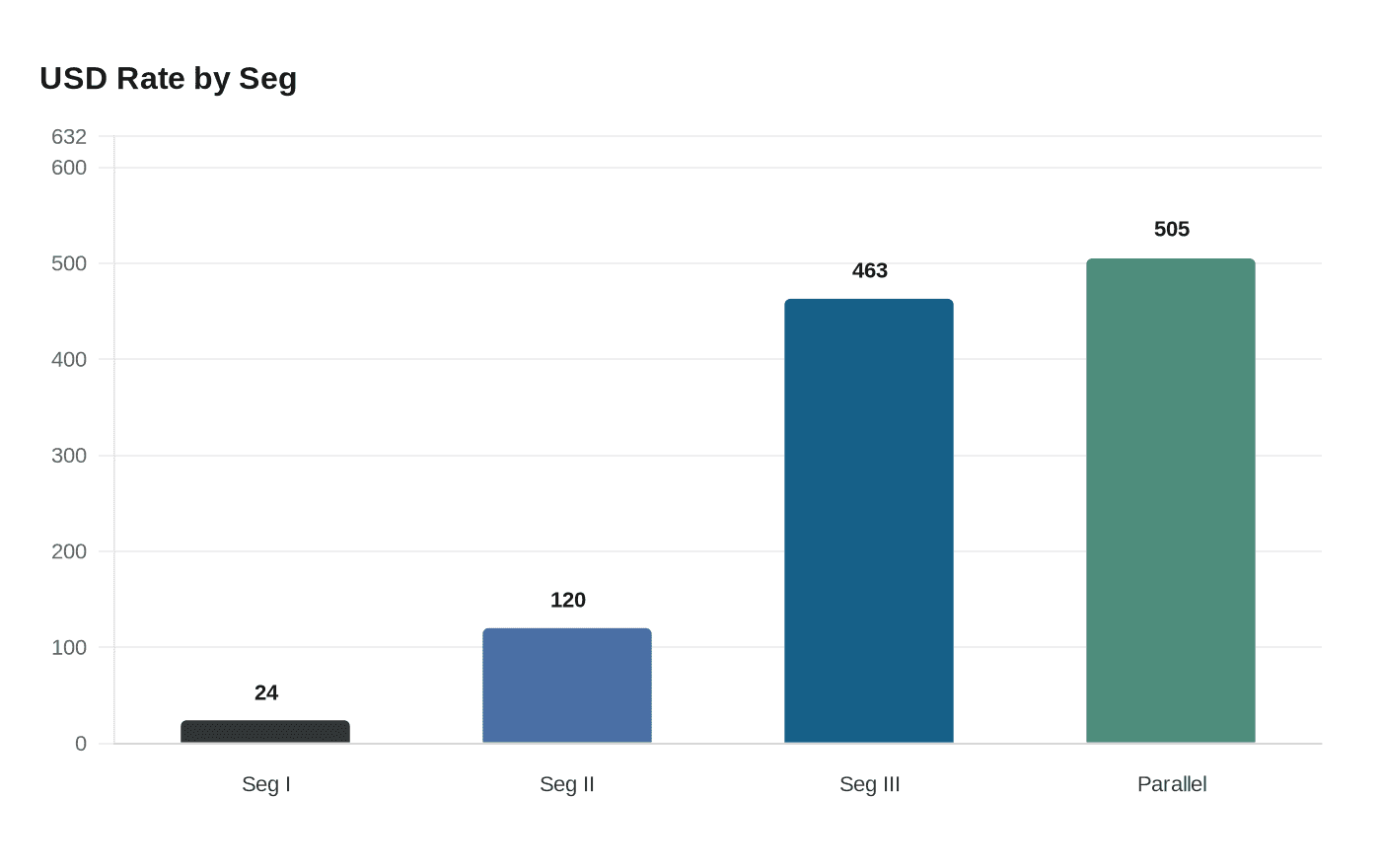
The Central Bank of Cuba (BCC) posted its official exchange-rate table for February 23, 2026, listing cash sale, cash purchase and transfer categories for USD/CUP and EUR/CUP, while the informal market remains sharply above the official floating rate. En Cibercuba reported that the floating segment III jumped to 463 CUP per USD on February 21, 2026, while the parallel market consolidated at roughly 505 CUP per USD that day, a gap the outlet calculated at "around 42 pesos."
The exchange-rate transformation that created three regulated segments took effect on December 18, 2025, when the legal provisions were published in the Official Gazette and Juana Lilia Delgado Portal, Minister President of the Central Bank of Cuba, made a special appearance. Segment I is fixed at 1 USD = 24 CUP for centralized state allocations such as fuel, medicines, electricity, public transportation and basic food rations. Segment II remains fixed at 1 USD = 120 CUP and is applied to certain entities with foreign-currency capacity, notably the tourism sector and CADECA. Segment III is a daily managed floating rate intended for individuals and private forms of management.
Segment III began at launch at 1 USD = 410 CUP and 1 EUR = 481.42 CUP on December 18, 2025, according to HavanaTimes and the Caribbean-council. The Caribbean-council also reported that "as at 2 January 2026 the rates stood at CUP466 to US$1 and CUP396 to €1," reflecting daily movement in the floating segment. En Cibercuba’s timeline shows segment III hovering near 458 CUP per USD between February 13 and 19 before the vertical adjustment to 463 CUP on February 21; for euros on February 21 En Cibercuba reported segment III at 544.67 CUP versus a parallel market euro at 560 CUP.
BCC officials have framed the managed float as a mechanism to capture informal foreign-exchange flows and channel them through the financial system. Ian Pedro Carbonell, Director of Macroeconomic Policies at the Central Bank, said the floating rate will be based on "real transactions" and "not on speculative expectations, as he claims occurs in the informal market." Granma framed the change as measured policy, writing that the measure is "not to replace one distortion with another, but to gradually close the monetary gaps that affect the economy and families." Cadenagramonte Cu underscored the transparency step: "The legal provisions implementing the transformations of the foreign exchange market are published in the Official Gazette and took effect on December 18, 2025. Going forward, the Central Bank of Cuba will publish the daily exchange rates on its website."
Macro context remains fragile: Joaquín Alonso, Minister of Economy and Planning, forecasted 1% growth in 2026 even as the presidency reported the economy contracted by more than 4% in the first three quarters of 2025. CADECA activity appears to be expanding - En Cibercuba noted CADECA announced new offices for currency exchange - which matters because tourism-linked CADECA rates sit under the three-segment architecture. Travellers and anyone transacting in Cuba should consult the Central Bank’s daily posting and CADECA counters for the precise Feb 23 cash sale, cash purchase and transfer rates before converting cash, since the official floating rate and the informal ask can differ by tens of pesos.
This article was produced by Prism’s automated news system from verified source data, official records, and press releases, then run through automated quality and moderation checks before publishing. The system is built and supervised by the people who set the standards it runs under. Read our full AI policy.
Did this article answer your question?