Cuba Promotes TURNAT 2026 Nature Tourism Event Amid Deepening National Crisis
Cuba's tourism ministry is pushing TURNAT 2026 as "unmissable" while the island recorded its worst visitor numbers since 2002 and black-market gasoline hits 5,000 pesos per liter.
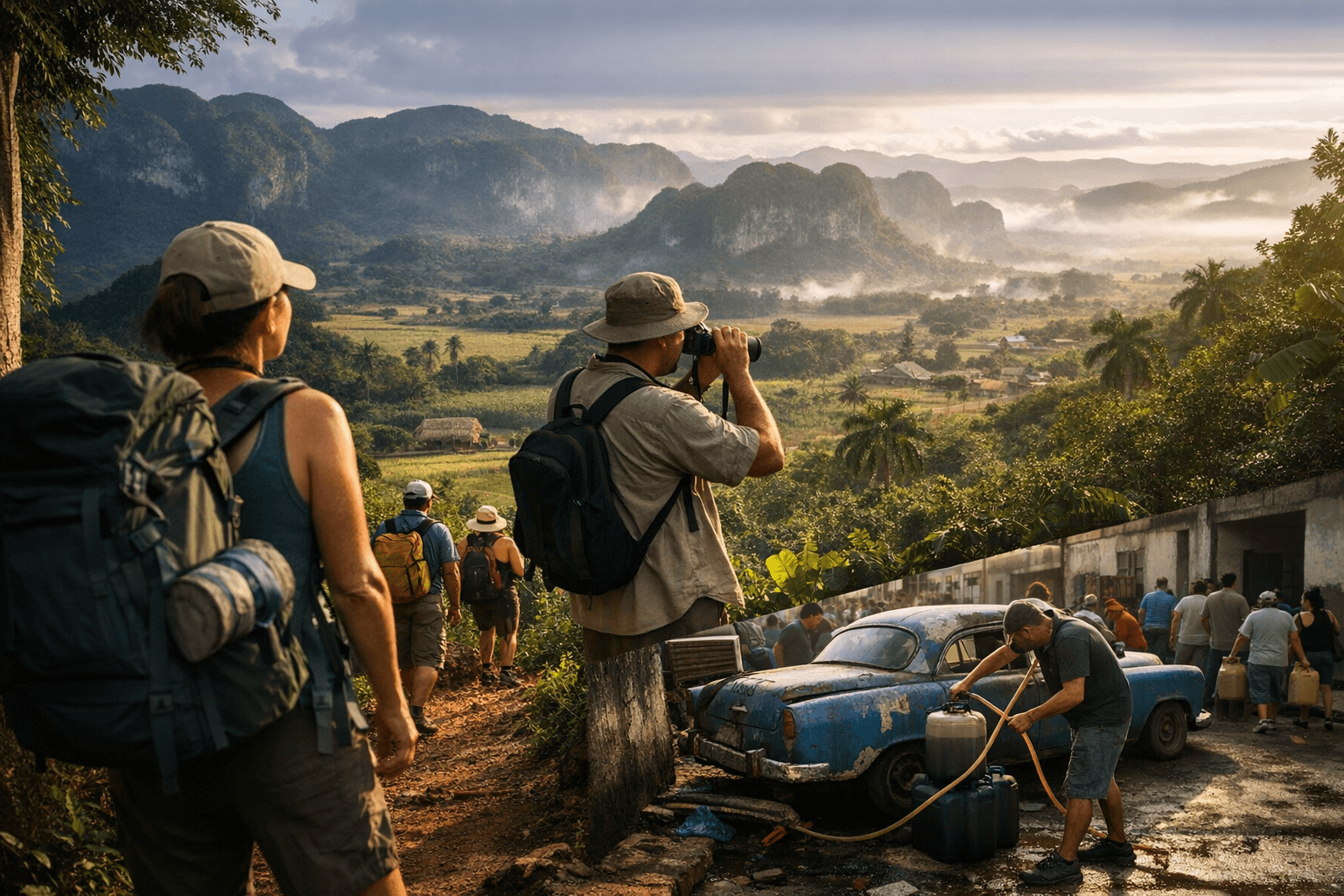
Cuba's Ministry of Tourism and state agency Ecotur S.A. are formally promoting TURNAT 2026, the XV edition of the International Nature Tourism Event, scheduled for September in the Ciénaga de Zapata in Matanzas province, even as the island grapples with what observers are calling its worst energy crisis in decades.
The biannual event, now in its 15th edition, will take place in the Zapata Swamp, the largest preserved wetland in the insular Caribbean and a site holding both UNESCO Biosphere Reserve and Ramsar Site designations. The official press has declared that "Turnat 2026 is presented as an unmissable event" for tourism in Cuba, a characterization that sits uncomfortably alongside a cascade of damaging economic indicators.
Cuban tourism closed 2025 with only 1.8 million visitors, a 17.8% drop compared to 2024 and the worst total since 2002. The trend held into the new year: January 2026 recorded just 240,578 arrivals, a 9.2% decrease from the same month the year before. Arrivals from the United States fell by more than 40%. Hotel chains Meliá and NH have shuttered establishments on the island citing the energy crisis, and hotel occupancy across the first half of 2025 sat at just 21.5%, seven points below the prior year's already-depressed figure.
The backdrop is stark. More than 1,700 flights have been canceled, and gasoline on the black market has reached 5,000 pesos per liter. The energy crisis has become the defining operational constraint for an industry the Cuban state continues to treat as a strategic priority, pushing forward event promotion while the infrastructure supporting tourist arrivals deteriorates.
TURNAT has a documented circuit-tourism history across Cuba's most ecologically and historically rich provinces. The 14th edition in 2024 incorporated Guantánamo province, Cuba's easternmost territory, where more than 500,000 inhabitants live across a landscape 70 percent covered by mountains. The program included stops near Baracoa, a municipality of 78,214 inhabitants spread across 97,600 hectares at a density of 84.5 people per square kilometer, and the Loma de la Gobernadora viewpoint, known locally as Loma de La Herradura, situated 27 kilometers from the provincial capital on the road connecting Guantánamo and Baracoa. Historian Luis Figueres has recalled that Admiral Christopher Columbus visited that elevated vantage point on April 30, 1494, during his second voyage to the island.
For TURNAT 2026, the shift to Zapata represents a return to one of the hemisphere's most significant protected wetland ecosystems. The question of how MINTUR and Ecotur S.A. intend to manage energy supply, transportation, and accommodation logistics within a designated UNESCO reserve during a national blackout crisis remains unanswered in official communications. Specific dates of September 7-14 have been reported, though MINTUR and Ecotur have not publicly confirmed the day-range in their published materials, listing only September and the Zapata location.
The gap between state messaging and on-the-ground conditions is the defining tension of this promotion cycle. Whether TURNAT 2026 can deliver on its "unmissable" billing will depend on whether Cuba's energy and transport infrastructure stabilizes in the six months between now and September.
This article was produced by Prism’s automated news system from verified source data, official records, and press releases, then run through automated quality and moderation checks before publishing. The system is built and supervised by the people who set the standards it runs under. Read our full AI policy.
Did this article answer your question?