Cuba Sees Surge in Demonstrations Amid Blackouts and Shortages, ACLED Reports
Cubalex counted 156 protests and 47 arrests through March 17 alone, as ACLED's new data confirms the surge is nationwide, not isolated.
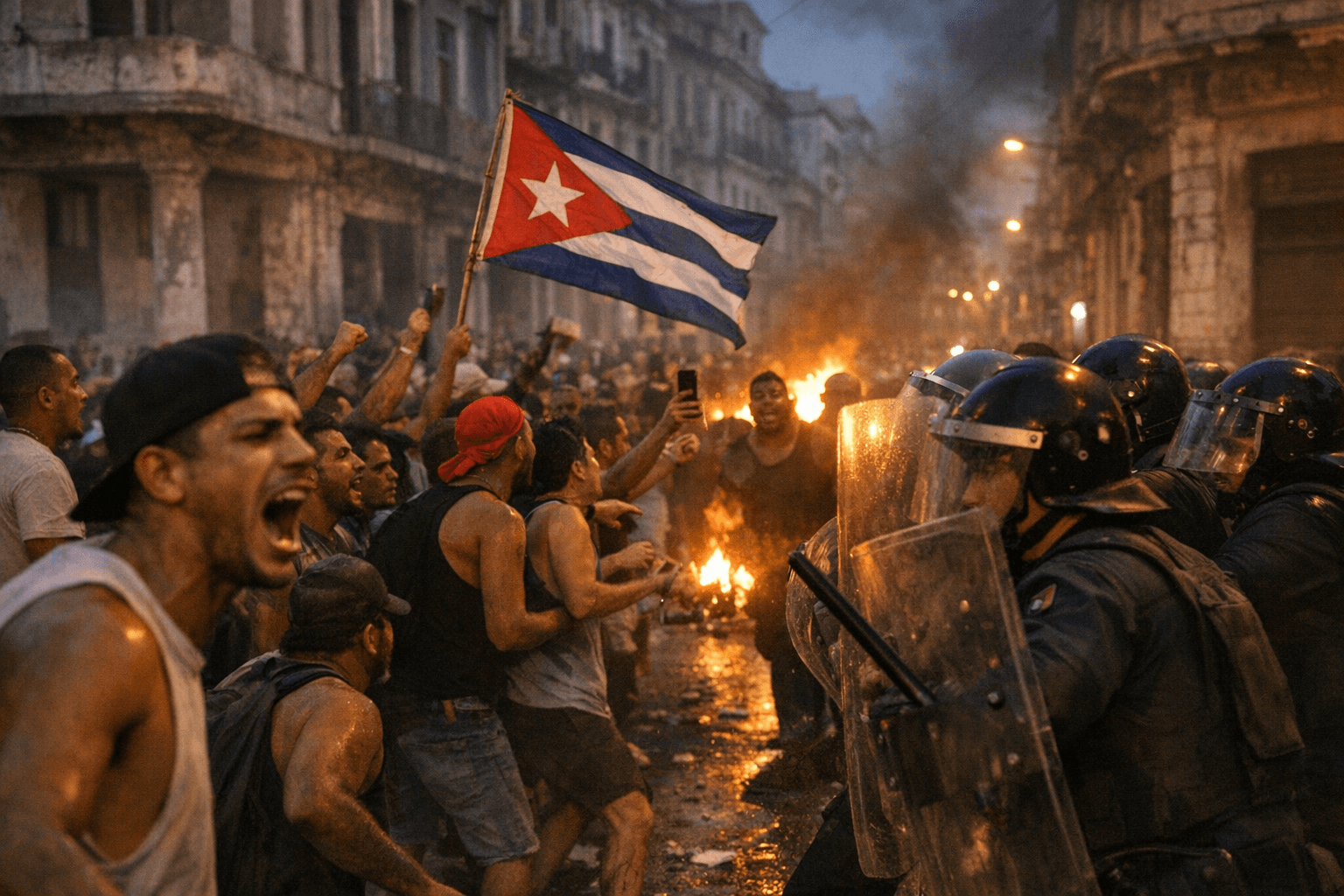
A new conflict-data report from ACLED places Cuba among the most protest-active countries in Latin America and the Caribbean for March 2026, the month when pot-banging demonstrations spread from Havana's neighborhoods to provincial capitals and a Communist Party office in Morón burned.
ACLED's April 8 Latin America and Caribbean monthly overview tracks demonstration events by location and type across the region, and Cuba's entry reflects a wave that human-rights monitors had already been quantifying on the ground. Cubalex, the Cuban legal-advisory organization, documented at least 156 protests and 47 arrests through March 17 alone, cataloging incidents across Havana, Santiago de Cuba, Ciego de Ávila and Matanzas provinces.
The trigger has been unmistakable: U.S. President Donald Trump's move to cut off Cuba's access to oil, depriving the island of the Venezuelan and Mexican fuel supplies its electrical grid depends on. By mid-March, Havana was seeing blackouts of up to 15 hours at a stretch, and on March 16 and again on March 21, the entire country went dark simultaneously, affecting an estimated six million Cubans during the peak outage periods.
The most widely circulated incident came on March 13, when a march through the streets of Morón, in Ciego de Ávila province, ended with protesters storming and burning the local Communist Party headquarters. Authorities arrested five people and described the episode as "vandalism." Cacerolazo protests, the pot-banging demonstrations Cubans have used as a signal of defiance since the 11J uprising of July 2021, also erupted in Havana's Arroyo Naranjo and Marianao districts, in Diez de Octubre as recently as early April, and in Ceballos and Jagüey Grande farther east. In Santiago de Cuba, authorities dismantled an entire billboard near the University of Oriente after being unable to scrub graffiti reading "Down with communism" and "Down with the dictatorship."
Miguel Díaz-Canel acknowledged publicly that public "discomfort is understandable" given the blackouts, while attributing the entire crisis to what his government calls the U.S. "energy blockade." His administration sent rice and milk to affected protest areas as a containment measure. Cuba's Foreign Ministry escalated on March 18, summoning U.S. chargé d'affaires Benjamin Ziff, with Deputy Foreign Minister Carlos Fernández de Cossío delivering a formal protest note accusing Washington of "interventionist conduct."
Juanita Goebertus, Americas director at Human Rights Watch, captured the stakes clearly: "The humanitarian situation in Cuba was already extremely fragile, but the electricity crisis is pushing many essential services to the limit."
ACLED's utility in tracking this wave lies precisely in its systematic scope. The dataset is geolocated and event-level, allowing analysts to map which provinces are seeing concentrated activity and whether demonstrations are escalating toward violence or holding as civil unrest. The same April 8 update flagged a parallel surge in Venezuela, placing Cuba's protest wave within a regional pattern rather than treating it as an isolated national breakdown.
Cubalex has warned that transparency from Havana remains almost nonexistent: "there is still a lack of official information about the total number of arrests and the legal status of those who remain in custody." With no confirmed petroleum shipments arriving as of Díaz-Canel's own admission, and the grid still unrepaired, ACLED's event counts are not likely to fall anytime soon.
This article was produced by Prism’s automated news system from verified source data, official records, and press releases, then run through automated quality and moderation checks before publishing. The system is built and supervised by the people who set the standards it runs under. Read our full AI policy.
Did this article answer your question?