Cubalex Reports at Least 20 Protest Detainees Freed After Cuba Announces 51-Person Release
Cubalex confirmed at least 20 July 2021 protest detainees freed after Havana announced 51 releases tied to Vatican talks, even as 15 new arbitrary detentions were recorded across the island.
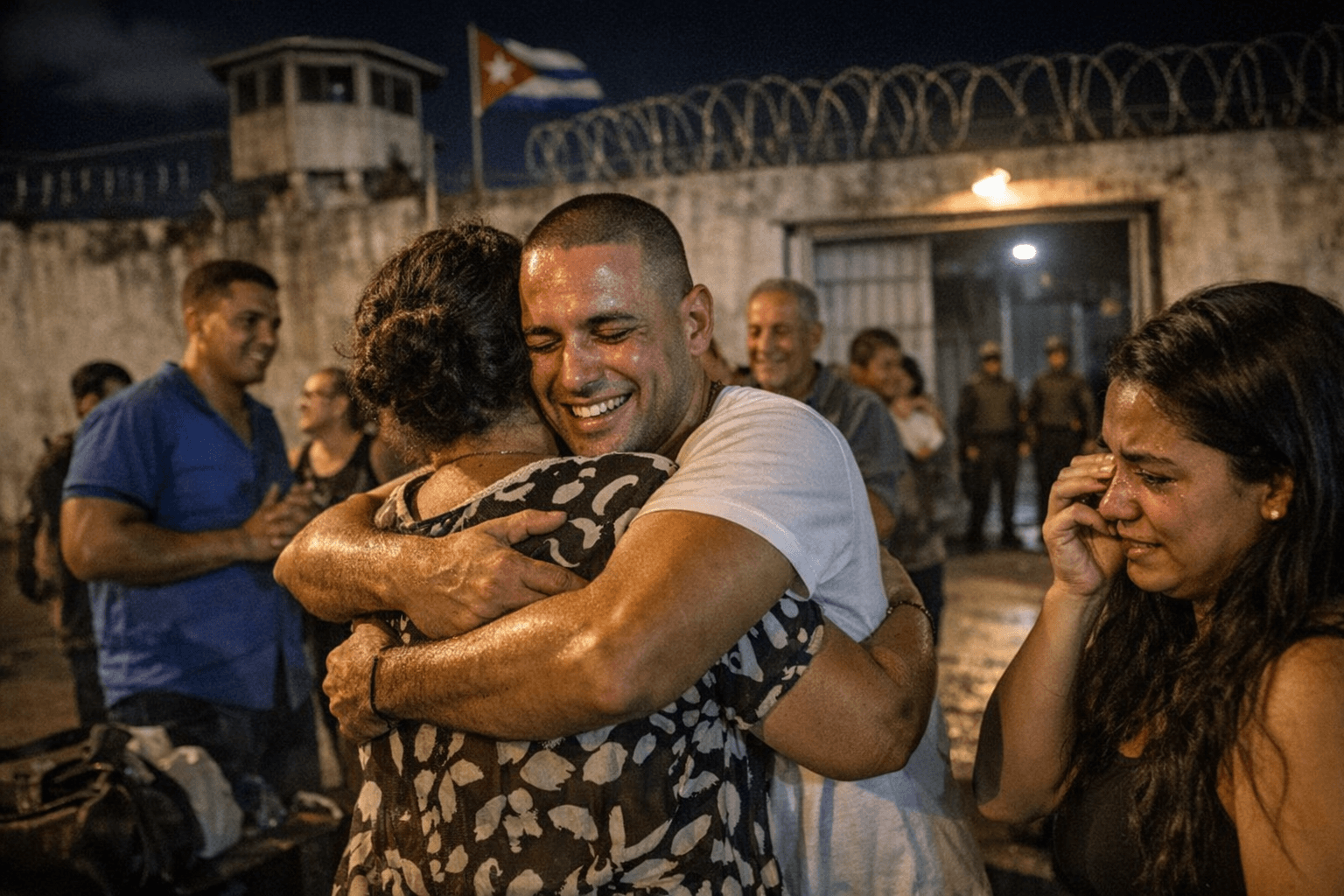
Cuba's government confirmed it would release 51 prisoners following Vatican talks, but without specifying whether political prisoners were among them. A week later, the Miami-based rights group Cubalex cut through the ambiguity: Cubalex said it had been able to verify the release of prisoners involved in the protests. By March 24, that verified count stood at at least 20 people jailed for their roles in the July 2021 mass demonstrations.
The Cuban regime announced it would release 51 individuals sentenced to imprisonment, framing it as a gesture made within the context of relations between the Cuban state and the Vatican, following historically held discussions with the Holy See. The statement indicated the beneficiaries had served a significant portion of their sentences and had maintained good behavior, but did not mention names or clarify whether political prisoners were included.
NGOs filled the gap. By March 17, the list of political prisoners released under the Vatican deal had reached 21 confirmed names, most convicted of sedition, contempt, public disorder, assault, or resistance, the same charges routinely used by the Cuban justice system to punish protest. Among those freed were Adael Jesús Leyva Díaz, Frank Aldama Rodríguez, José Luis Sánchez Tito, Roberto Ferrer Gener, and Wilmer Moreno Suárez, several of whom had been serving sentences of between 13 and 18 years. Adael Leyva Díaz, 29, had been serving a 13-year sentence, and Ronald García Sánchez, 33, sentenced to 14 years, were neighbors in the municipality of Arroyo Naranjo, south of Havana; both had taken part in the historic anti-government protests of July 11, 2021.
Many of the released came from Havana, with others originating from Artemisa, Holguín, Villa Clara, Santiago de Cuba, Camagüey, and Mayabeque, a geographic spread that reflects how thoroughly the July 2021 uprising had reached beyond the capital before authorities moved to suppress it.
Freedom, however, has come tethered. At the time of release, authorities informed at least one freed prisoner that the decision was based on his "good behavior" while incarcerated, but the benefit came with several restrictions, including the obligation to maintain a limited routine between his home and a job assigned by the State.
The releases also unfolded alongside a documented surge in new repression. While some inmates walked free, the Cuban Observatory of Human Rights reported at least 15 people arbitrarily detained for taking part in protests in various provinces. Among the most recent incidents were arrests following demonstrations in Morón, in the province of Ciego de Ávila. The OCDH documented threats, constant police surveillance outside homes, de facto house arrests, police brutality, summonses, harassment of activists and journalists, and fresh reports of abuse inside prisons. "These events show a pattern of pressure and control aimed at silencing protest and limiting the exercise of fundamental rights," the NGO warned.
The nonprofit Prisoners Defenders put Cuba's total political prisoner count at 1,214 as of February 2026. The NGO Justicia 11J had previously reported that 359 people connected specifically to the July 2021 protests remained behind bars, with sentences running as long as 22 years. Against those numbers, 20 verified releases represent something real to the families who received their relatives back but something very partial to the organizations still tracking hundreds of names.
The discussions appear to have intensified after a meeting at the Vatican on February 28 between Pope Leo XIV and Cuban Foreign Minister Bruno Rodríguez Parrilla, who attended as a special envoy of President Miguel Díaz-Canel. That diplomatic channel, however quiet, has now produced two successive waves of releases, following the January 2025 freeing of 553 detainees after negotiations involving the Vatican and the United States. Whether the current 51-person release represents a genuine shift or another managed gesture calibrated to ease external pressure is precisely the question Cubalex, Prisoners Defenders, and Justicia 11J are now working to answer, one verified name at a time.
This article was produced by Prism’s automated news system from verified source data, official records, and press releases, then run through automated quality and moderation checks before publishing. The system is built and supervised by the people who set the standards it runs under. Read our full AI policy.
Did this article answer your question?