Cuban doctors leave Guatemala as medical pact winds down under U.S. pressure
Cuban doctors were filmed leaving Guatemala with flags and chants as 93 departed in the first phase of a 2026 wind-down. Rural clinics in Quiché, Petén and Alta Verapaz now face the gap.

Cuban doctors are leaving Guatemala in plain view, suitcases in hand, as a years-long medical arrangement unravels under U.S. pressure and rural clinics brace for the gap.
Reuters video showed the Cuban team gathered at the José Martí monument in Guatemala City on April 25, waving flags and shouting “Long live Cuba” before heading to the airport. The next day, the same doctors were filmed at Guatemala City international airport, lined up at the bag-drop counter and then moving through the international departures area while chanting “mission accomplished.”
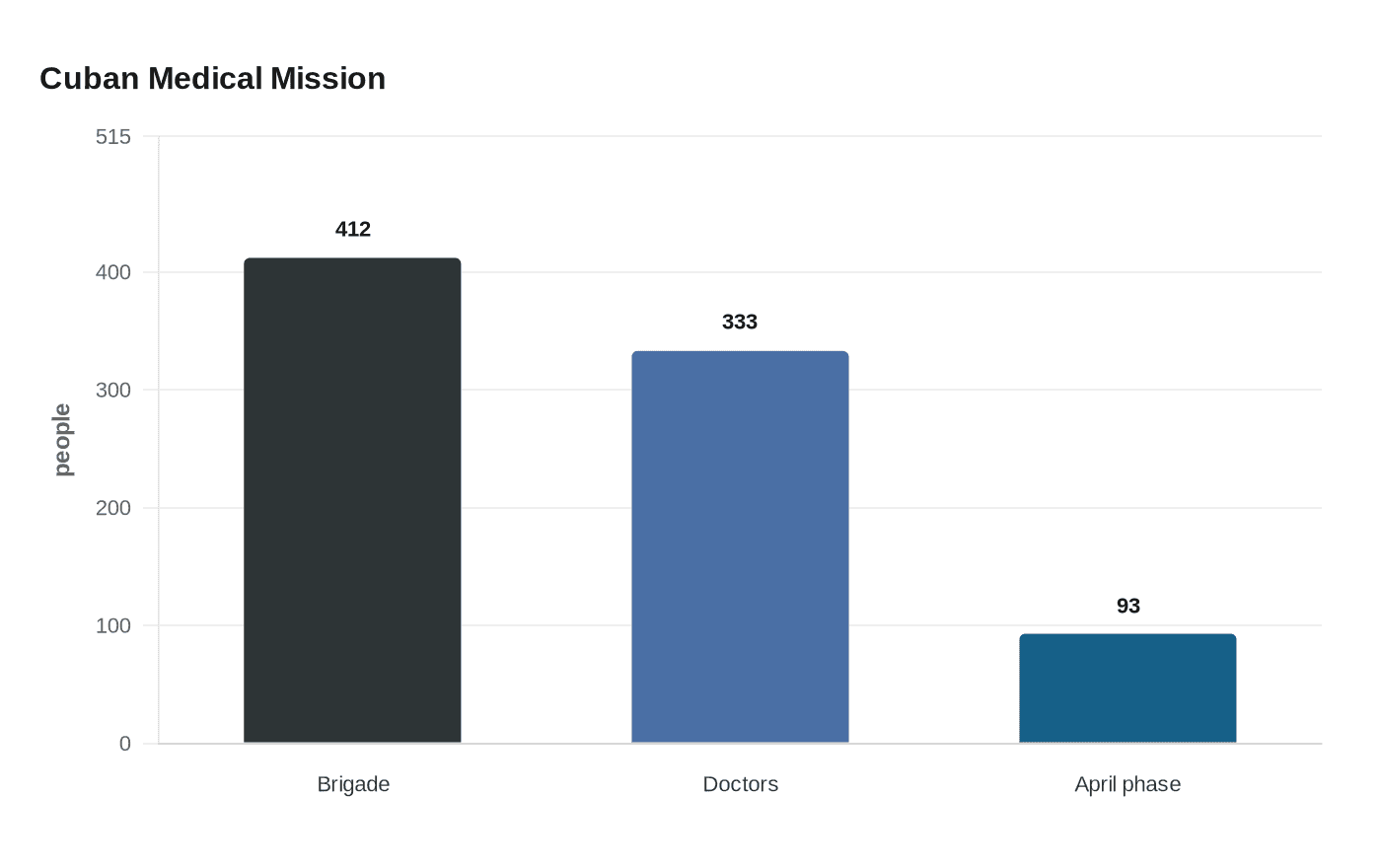
The departure is the first visible phase of Guatemala’s decision to wind down its Cuban doctors program over the course of 2026 after signing a trade deal with the United States in January. The brigade included 412 Cuban health workers, among them 333 doctors, spread across 11 kinds of public-health facilities. One report said 93 doctors were scheduled to leave in this April phase, with another contingent set for August.
The impact is sharpest outside the capital. Forty-five percent of the brigade was concentrated in Quiché, Petén and Alta Verapaz, where Cuban clinicians were working in rural and hard-to-reach communities that often struggle to keep enough staff on hand. Those are the places most likely to feel the change first: longer waits, fewer regular checkups and a thinner safety net for patients who had come to rely on the same doctors month after month.
That strain matters because Havana’s overseas medical work is not just diplomacy, it is income. U.S. State Department material says Cuba’s export of services, especially medical missions, generates an estimated $6 billion to $8 billion a year, and that medical professionals made up 75% of Cuba’s exported workforce by the end of 2022. The same material says the 2023 TIP report documented government-affiliated Cuban workers in 56 countries.
Washington, including Secretary of State Marco Rubio, has pushed Latin American and Caribbean governments to end those cooperation agreements, arguing that the programs amount to forced labor. Similar moves have already hit Jamaica, Guyana, The Bahamas and Honduras, where arrangements were ended, paused or reviewed. Guatemala now joins that list, and the cost is visible on both sides of the corridor: fewer Cuban doctors on the ground in Central America, and one more foreign posting stripped from an already squeezed Cuban medical machine.
This article was produced by Prism’s automated news system from verified source data, official records, and press releases, then run through automated quality and moderation checks before publishing. The system is built and supervised by the people who set the standards it runs under. Read our full AI policy.
Did this article answer your question?