Cuban Think Tank Envisions Post-Crisis Future Through Dialogue and Ethics
A Pinar del Río think tank is sketching Cuba’s rebuild from the ground up, arguing that recovery starts with ethics, dialogue and local civic muscle.
What this blueprint is actually trying to do
Yoandy Izquierdo is not selling a miracle cure for Cuba. He is laying out something more practical and, in the Cuban context, more demanding: a way to keep the country from stumbling into its next chapter unprepared.
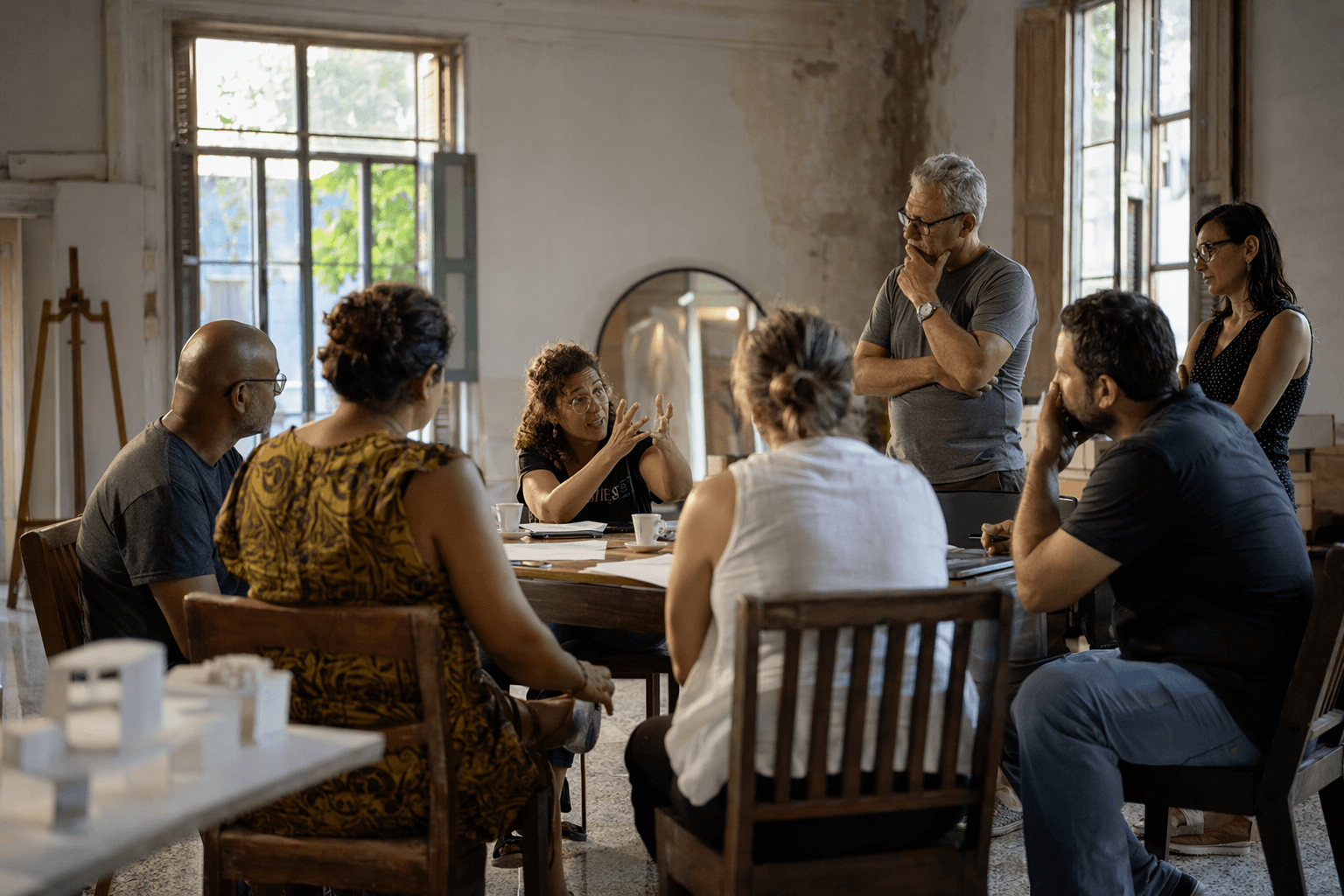
That is the real weight of the Centro de Estudios Convivencia’s work in Pinar del Río. For more than a decade, the center has been thinking about Cuba’s future through meetings on proposals and possible transition scenarios, bringing together researchers, professionals and citizens from inside and outside the island. The point is not to lock the country into a rigid script. It is to have tools ready so that if the political map changes, the response does not become another round of improvisation.
Why the center matters
The Centro de Estudios Convivencia does not appear out of nowhere. It presents itself as the heir to the Centro de Formación Cívica y Religiosa, which ran from 1993 to 2007, and to the magazine Vitral, published from 1994 to 2007. That lineage gives it more than 20 years of experience in civic formation and dialogue, and that matters because Cuba has spent years with very little room for either.
The center’s own frame is important: communication, exchange and cooperation among Cubans inside and outside the island. That is not just institutional language. It is a survival strategy for a country where so many families, skills and memories are now split across borders, and where any serious reconstruction will need more than state orders from Havana. In practice, this means building conversations that can survive censorship, exile, distance and distrust.
What “returning to our roots” means here
Izquierdo’s argument is not a call to romanticize the past. It is a refusal to keep treating ideology as a substitute for social repair. In his view, Cuba’s crisis is not only economic. It is moral, cultural and educational, and any serious rebuilding has to start there.
He says future Cuban academia should be open to new forms and content in the humanities, which is a sharper point than it first sounds like. If the schools and universities keep narrowing the idea of knowledge to what can be measured, controlled or politically managed, then the country keeps producing technicians without public conscience. Izquierdo pushes in the opposite direction: recover the humanities, reopen ethical debate, and rebuild the habits that let people live together without fear or constant opportunism.
That is where his language about Cuba’s best traditions comes in. He argues that those traditions were rooted in Christian values and virtues, and that rebuilding Cuba means recovering those roots rather than simply importing another ideology. In his reading, the problem with decades of materialist thinking is not only scarcity. It is a culture where power and possession outrank being, leaving behind a damaged social fabric and a dehumanized public life.
Why this is really about schools, not slogans
This is where the interview becomes more concrete than it first looks. If Cuba ever moves into a transition, the first battle will not be over a constitution or a cabinet list. It will be over what kind of people and institutions can hold that transition together.
Izquierdo’s emphasis on the humanities suggests a practical test for any reform effort in places like Pinar del Río, Havana or smaller towns across the island: can local schools, study circles, churches, neighborhood groups and independent civic spaces teach people how to speak honestly, disagree without destroying each other, and cooperate without waiting for orders from above? That is what community survival looks like when the system no longer guarantees stability.
The center’s proposals, in that sense, are less about grand design than about civic muscle. They try to prepare the ground for public life after crisis, when the hardest work is often boring and local: building trust, naming shared rules, and making sure there is some common language left when the old slogans stop working.
The pressure behind the ideas
These arguments land differently in a country whose numbers keep getting worse. In July 2024, Cuba’s National Assembly acknowledged a population of about 9.7 million, with some experts suggesting the real figure may be lower. At the same time, Americas Society/Council of the Americas has described Cuba as being in what is believed to be its deepest financial and demographic crisis since the Special Period of the 1990s.
That is not abstract background. It is the environment in which every civic proposal now lives. The current migration wave, widely linked to the aftermath of the July 11, 2021 protests, has been fed by repression, falling living standards and the collapse of basic services. When people leave, they do not only take labor and youth. They take confidence, social memory and the daily routines that make institutions function.
That is why Izquierdo’s insistence on ethics and education is more than philosophical. In a country losing people and trust at the same time, civic reconstruction is not a luxury. It is the only way any future settlement becomes livable.
The Catholic memory behind the argument
There is also a religious and historical layer here that gives the discussion weight beyond Pinar del Río. Pope John Paul II visited Cuba in 1998, Pope Benedict XVI in 2012, and Pope Francis from September 19 to 22, 2015. Those visits once carried hopes for thawing relations and broader social openness, and they remain part of the island’s memory of dialogue, public encounter and moral reflection.
That memory helps explain why a center like this frames its work the way it does. It is not only trying to preserve ideas. It is trying to preserve the habit of conversation in a country where institutions have often demanded silence or conformity. The Christian language in Izquierdo’s argument is not decorative. It is part of a civic vocabulary that still tries to connect dignity, virtue and public responsibility.
The real test for Cuba’s next move
For all the theory, the practical lesson is clear. Cuba will not rebuild itself through slogans, and it will not be saved by another imported formula. If the country is to move beyond today’s collapse, it will need the kind of groundwork the Centro de Estudios Convivencia has spent years assembling: dialogue before decree, ethics before improvisation, and civic formation before any promise of renewal.
That is the hard truth inside Izquierdo’s vision. Rebuild the person, rebuild the neighborhood, rebuild the public culture, and only then can the institutions have any chance of lasting.
This article was produced by Prism’s automated news system from verified source data, official records, and press releases, then run through automated quality and moderation checks before publishing. The system is built and supervised by the people who set the standards it runs under. Read our full AI policy.
Did this article answer your question?